Best Turntables Under $500 2026: Rega vs Pro-Ject vs Audio-Technica

Vinyl collector for over thirty years. Found my first turntable and a box of records in the loft at twelve — Nashville Skyline, After the Gold Rush, Disraeli Gears. Still spinning on a vintage Sony PS-X600.
Just so you know, some links on this page are affiliate links. If you buy something via them, we get a small kickback. You don't pay more, but it helps toward the next record.
Most people have a moment. A record they know so well they could hum the tape hiss, a favourite album played a hundred times. Then they hear it on a proper turntable for the first time and realise they've been hearing a shadow of it. That's what spending $350 to $600 on a turntable does.
My recommendation for most people: the **Audio-Technica AT-LP120X**. Direct-drive motor, removable headshell, built-in preamp with bypass switch for when you want to upgrade, it's the turntable that professional reviewers reach for when they want a reliable US-available benchmark. I've tracked the vinyl community on r/vinyl and r/turntables for years and the AT-LP120X is the one that keeps coming up in "still using mine after eight years" posts. If you care more about pure sound and already have a receiver with a phono input, the Rega Planar 1 is the other serious contender, British-made, 50 years of refinement, and a musicality the LP120X doesn't quite match.
The differences between competitors in this range are real but subtle. Your choice depends more on what you care about, features versus pure sound, flexibility versus focus, than which is objectively "best." This guide cuts through to what actually matters.
Quick Picks
Not sure which setup is right for you?
Take Our QuizSide-by-Side Comparison
| Turntable | Drive | Built-in Preamp | USB | Bluetooth |
|---|---|---|---|---|
| AT-LP120X | Direct | Yes (bypass switch) | Yes | No |
| Rega Planar 1 | Belt | No | No | No |
| Pro-Ject Debut Carbon EVO | Belt | No | No | No |
| AT-LP120XBT-USB | Direct | Yes (bypass switch) | Yes | Yes |
| Rega Planar 2 | Belt | No | No | No |
Take our quiz for personalized recommendations based on your setup.
Why These Picks
I put together this list by tracking what the vinyl community actually keeps long-term, not just what gets good review scores at launch. The methodology is straightforward: cross-reference professional reviews (Stereophile, What Hi-Fi, SoundStage) with community longevity data from r/vinyl, r/turntables, and Discogs forums. Turntables that reviewers praise but communities abandon inside three years don't make the cut.
Every ASIN in this guide was verified against current US Amazon listings. Prices are what the community is actually paying, not promotional anomalies. Products are only included if US support and parts availability are confirmed, a turntable that's hard to service in North America is a turntable I can't recommend with a straight face.
Re-checked for 2026: newer entry-level arrivals like Pro-Ject's E1.2 have landed since this guide first published, and the sub-$500 field keeps filling with Bluetooth-equipped decks. Neither shift unseats the AT-LP120X or the Rega Planar 1 as the picks to beat here, so the five decks below are still the ones I'd spend the money on this year.
Audio-Technica AT-LP120X makes the list because it earns it. It's the standard against which competitors in this range get measured. Massive US distribution, decade-plus service records from actual owners, and a direct-drive motor with no belt to replace. The stock cartridge is the weak link, budget $59 for the AT-VM95E upgrade and it transforms.
Rega Planar 1 is here because musicality is real, and Rega has it in a way competitors at this price rarely do. Made in Southend-on-Sea, England. Available through US dealers including Crutchfield, Turntable Lab, and Amazon with proper warranty support. The lack of a built-in preamp is a design choice, not an oversight.
Pro-Ject Debut Carbon EVO earns a place because it has a genuine upgrade ecosystem. Buy it now, swap the cartridge next year, add an acrylic platter the year after. It's a platform more than a product. Austrian-made with solid US distribution through Music Direct and Amazon.
AT-LP120XBT-USB is the LP120X with Bluetooth added, a legitimate option if wireless convenience matters, not a compromised product. The same direct-drive motor and removable headshell, plus aptX Adaptive streaming.
Rega Planar 2 sits slightly above $500 but belongs in the conversation because the RB220 tonearm is a genuine upgrade over the Planar 1's RB110. Pair it with speakers in the $300-500 range and you'll hear the difference the better arm makes.
Audio-Technica AT-LP120X: The Do-Everything Deck
The AT-LP120X descends from the Technics SL-1200, the turntable that defined DJ culture. Direct-drive motor for instant start and unwavering speed stability. Pitch control. Removable headshell so you can swap cartridges as your tastes develop.
The built-in preamp has a bypass switch. Start with the internal, then add an external when you want better sound. The USB output lets you digitize vinyl to your computer. It's a turntable designed to grow with you.
Search any vinyl subreddit for "still using my LP120" and you'll find people on year ten, year fifteen. The direct-drive motor has no belts to replace. The construction is tank-like. Audio-Technica has massive US distribution, so parts and support are never an issue.
The stock cartridge is serviceable. Budget $59 for an AT-VM95E upgrade and the improvement is immediately obvious. That's the expected path: run it stock, upgrade the cart once you've developed your ears.
If you want one turntable that does everything and will last until you're ready to spend seriously big money, this is it. Check Price on Amazon
Honest note: The stock AT-VM95E cartridge is decent but has room to grow. Budget an extra $79 for the AT-VM95EN (nude elliptical stylus) upgrade; it's the single most impactful improvement you can make to this setup.

Best all-rounder under $500. Direct drive, USB, upgradeable, tank-like build.
Rega Planar 1: The Purist's Choice
The Rega Planar 1 takes a fundamentally different approach. No built-in preamp. No USB. No pitch control. Just a precisely engineered motor, platter, and tonearm designed to extract music from grooves, nothing more.
Rega has been making turntables in England since 1973. Fifty years of refinement focused on one thing: sound. Put on an album you know by heart and you'll hear things cheaper turntables hide. The bass has shape. The midrange breathes. The soundstage extends beyond the speakers.
In the US, Rega is available through authorized dealers and Amazon. Crutchfield and Turntable Lab both stock them with proper support. You'll need a phono preamp (either built into your amplifier or purchased separately ($39-$150 for good options). Our phono preamp guide covers what to get.
These aren't drawbacks for the target buyer. Rega owners want pure sound and are willing to engage with the gear to get it. If that's you, the Planar 1 rewards the commitment.
Honest note: The Rega Planar 1 ships without a phono preamp and no USB output. Budget an extra $50-80 for the Pro-Ject Phono Box E or similar before anything plays.
Pro-Ject Debut Carbon EVO: The Tinkerer's Platform
The Pro-Ject Debut Carbon EVO comes from Austria with serious credentials. The carbon fiber tonearm is not marketing filler: carbon genuinely reduces resonance versus aluminum. The steel/TPE sandwich platter damps vibrations better than solid alternatives.
What sets Pro-Ject apart is the upgrade ecosystem. Cartridge, platter, feet, belt, power supply: every part can be improved over time. Buy the Debut Carbon EVO now, swap the cartridge next year, add an acrylic platter the year after. It evolves with you.
The Pro-Ject community is active on r/vinyl and r/turntables. People love sharing their mods. It's a platform as much as a product. Multiple color options too, if your living room aesthetic matters.
Like the Rega, you'll need an external phono preamp. Like the Rega, purists consider that a feature. Check Price on Amazon
Honest note: At around $599, it sits above the stated price range and requires an external phono preamp. Factor in an additional $79-129 for a quality preamp before committing.

Best upgrade platform. Carbon tonearm, every component upgradeable.
AT-LP120XBT-USB: Wireless Without Compromise
The AT-LP120XBT-USB is exactly what the name suggests: an LP120X with Bluetooth added. Same direct-drive motor. Same removable headshell. Same preamp with bypass. Plus aptX Adaptive wireless streaming.
Stream wirelessly when convenience matters. Wire up for critical listening. You're not sacrificing the turntable to gain wireless.
Bluetooth does compress audio. Modern codecs minimize it, but purists will hear the difference. Most listeners, in most rooms, won't care. The convenience of wireless often wins. Check Price on Amazon

Best wireless enthusiast deck. LP120X features plus aptX Adaptive Bluetooth.
Rega Planar 2: The Better Arm
The Rega Planar 2 sits a tier above the Planar 1 because of its tonearm. The RB220 uses better bearings and tighter tolerances. The improvements are audible: tighter bass, better stereo imaging, more detail.
The RB220 arm shows up on turntables that cost considerably more. Rega's vertical integration lets them offer it at this price. Worth the upgrade if your speakers can show the difference. Pair it with speakers costing at least $400 to actually hear what the arm does.
Honest note: The Planar 2 exceeds the $500 ceiling. It belongs here because many buyers stretching to this range will find the tonearm upgrade worth the extra spend; just go in with eyes open. If you are already stretching to Planar 2 money, it is worth seeing the full best turntables under $1,000 tier first, where the Planar 2 and Pro-Ject Debut Carbon EVO line up against the Rega Planar 3 they lead toward.

Best tonearm for the money. RB220 arm, superior bearings, audible upgrade.
What This Money Buys
Compared to budget turntables under $200:
Better motors with more consistent speed. Lower wow and flutter. The audible result: cleaner, more stable sound. Piano holds pitch. Vocals don't waver.
Heavier, better-damped platters that absorb vibration rather than transmitting it. Blacker silence between notes, cleaner attacks.
Quality tonearms with precision bearings. The stylus tracks more accurately, extracting more from grooves while treating them more gently.
Build quality designed for decades. Real metal. Proper engineering tolerances. Components designed to be serviced, not discarded. Torn between the two big names? Our Rega vs Pro-Ject comparison breaks it down.
What to Avoid
Skimping on speakers. A $475 turntable through $100 speakers sounds worse than a $200 turntable through $250 speakers. Balance your system: roughly equal spend on turntable and speakers works for most setups.
Cheap USB turntables under $150 that advertise digitizing capability usually compromise the mechanism to include mediocre recording features. If you actually need USB, our USB turntable guide covers what's worth it.
Turntables with built-in speakers. They exist at every price point and should be avoided at all of them. Speakers vibrate. Bolting them to a turntable creates feedback.
Completing Your Setup
The Rega Planar 1 and Pro-Ject Debut Carbon EVO ship without a built-in phono preamp. You'll need one before anything plays. Budget $50 to $100 and you'll be well covered. The Pro-Ject Phono Box E is the value pick that matches well with either deck. The Schiit Mani 2 is what most serious listeners upgrade to once they want to hear what the turntable is really capable of.
The AT-LP120X has a built-in preamp with a bypass switch. Run it through the internal for the first year. When you're ready to hear the difference an external preamp makes, plug into the bypass and connect a dedicated unit. The improvement is real and immediately obvious.
For speakers, the rough rule holds: spend roughly what you spent on the turntable. The Klipsch R-41PM work well with the AT-LP120X, powered with no receiver needed, and detailed enough to show what the turntable is doing. For the Rega or Pro-Ject, you'll want passive speakers with a proper amplifier. The Cambridge Audio AXA35 paired with a bookshelf speaker from KEF or ELAC is the standard starting point that the community recommends.
How to Choose: Three Things That Actually Matter
The five turntables here are all genuinely good. Choosing between them comes down to three questions most buying guides never ask directly.
1. Will you want to upgrade your cartridge?
The cartridge is the single most impactful upgrade in vinyl. Swap the stock cartridge on an LP120X for an Ortofon 2M Blue and it sounds like a different turntable, one that competes with decks costing $800 or more. The AT-LP120X, Pro-Ject Debut Carbon EVO, and Rega turntables all accept standard 1/2-inch cartridges (Rega's mounting system limits you to Rega-compatible models, but there are plenty of options). If you know you'll want to chase better sound through cartridge upgrades over the next few years, prioritise a turntable that welcomes them. If you want to set it and forget it, any of these will serve you fine on the stock cartridge.
2. Does your system already have a phono stage?
Check your amplifier or receiver for a "PHONO" input. If it has one, you don't need a turntable with a built-in preamp, and Rega or Pro-Ject make more sense. If you're connecting to powered speakers or a modern receiver without a phono input, you need either a built-in preamp (the AT-LP120X has one with a bypass switch for upgrading later) or a separate phono preamp box. The Rega Planar 1 and Pro-Ject Debut Carbon EVO ship without one; budget $50 to $100 extra if you need it. The Pro-Ject Phono Box E is the standard pairing for both.
3. What are your speakers actually capable of?
This is the most honest question in audio. Premium turntables reveal their character through capable equipment. The gap between the AT-LP120X and the Rega Planar 1 is real, but you only hear it if your speakers can show it.
- Speakers under $200: The AT-LP120X is the right call. Built-in preamp simplifies the chain, and the sound advantage from Rega or Pro-Ject is modest at this speaker level. - Speakers in the $200-$400 range: The Rega Planar 1 or Pro-Ject Debut Carbon EVO reward you clearly. The gap between them and the LP120X opens up through capable equipment. - Speakers costing $500 or more: You'll hear the difference the Rega Planar 2's RB220 tonearm makes. At this level, the better arm justifies every dollar of the premium.
Your Decision Matrix
| If you value... | Buy |
|---|---|
| Versatility and easy setup | Audio-Technica AT-LP120X |
| Pure sound quality | Rega Planar 1 |
| Tinkering and upgrades | Pro-Ject Debut Carbon EVO |
| Wireless flexibility | AT-LP120XBT-USB |
| Best tonearm for the money | Rega Planar 2 |
Questions People Actually Ask
Do the Rega and Pro-Ject really sound better than the AT-LP120X?
Yes, but conditionally. On mediocre speakers or with a budget preamp, the gap is small. Through good equipment, it opens up. The Rega Planar 1 has a character (warmer, more musical) that the AT-LP120X doesn't match. If your speakers cost over $300 and you have a decent external preamp, you'll hear it clearly.
How long will these turntables actually last?
The AT-LP120X has a direct drive motor with no belt to replace. Properly maintained, it should run for 20-plus years. Rega turntables are routinely serviced and upgraded for decades; Rega itself still services turntables from the 1980s. The Pro-Ject Debut Carbon EVO has a belt that needs replacing every 3-5 years. All three are built to a fundamentally different standard than sub-$200 turntables, which are essentially disposable.
Should I upgrade the cartridge straight away?
No. Run the stock cartridge for six months and develop your ears first. Then upgrade. The AT-LP120X ships with a cartridge one step below the AT-VM95E, a $59 upgrade that the community agrees is the single most impactful change you can make. For the Rega Planar 1, the stock Rega Carbon is decent but the Ortofon 2M Red is the standard first upgrade.
Is the AT-LP120X actually good, or just popular?
Both. It's genuinely good: direct drive motor, heavy platter, real pitch control, removable headshell. It also doesn't have a serious challenger at its price; the competition there is thin. That's why it shows up everywhere. It earned the reputation.
Do the Rega Planar 1 and Pro-Ject Debut Carbon EVO need an external phono preamp?
Yes, both require one. Neither includes a built-in phono stage, audiophile manufacturers prefer to spend that budget on motor and tonearm quality instead. You need either an amplifier with a built-in PHONO input or a standalone preamp box before anything will play. The Pro-Ject Phono Box E is the most commonly recommended pairing for both decks: it's well-matched to their cartridges and accurate enough to not become the bottleneck. The Schiit Mani 2 is the upgrade step when you want to hear what the turntable is genuinely capable of. Budget for whichever when calculating your total system cost.
Record cleaning at this investment level becomes important. A Spin-Clean record washer or an ultrasonic cleaner (around $150-200 for a basic unit) removes embedded dirt that surface brushing cannot reach. Clean records reveal detail that dirty records obscure, and the improvement is immediately audible on any turntable in this range. Clean records also reduce stylus wear, extending the life of your cartridge investment. Cartridge upgrades: the biggest bang for your buck
Every turntable in this range ships with a competent but basic cartridge. Upgrading the cartridge is the single most impactful change you can make, often more noticeable than the difference between turntable models. The stock Audio-Technica AT-VM95E on the LP120XUSB is good. Swapping to the AT-VM95ML (around $100 for the stylus upgrade alone since the body is compatible) transforms detail retrieval. The micro-line stylus traces the groove with more precision, extracting information the stock elliptical stylus cannot reach.
For turntables with standard half-inch mount headshells, the Ortofon 2M Red and Nagaoka MP-110 are popular upgrades that bring more warmth, detail, and stereo separation than stock cartridges. The improvement is audible through any speaker system above $150.
Setting up properly: alignment and tracking force
A turntable out of the box is not fully optimised. The factory sets approximate tracking force and basic cartridge alignment. Taking fifteen minutes to set these correctly makes an audible difference.
Tracking force: use a digital stylus gauge rather than the counterweight markings, which are approximate. Set the force to the middle of the manufacturer's recommended range. Too light causes distortion and groove damage. Too heavy dulls detail.
Cartridge alignment: download a free protractor (Baerwald or Stevenson geometry) and align the cartridge to the grid lines. Proper alignment reduces distortion at the inner grooves of records where most people notice harshness.
Anti-skate: set it equal to tracking force as a starting point. If the stylus pulls toward the centre of the record, increase anti-skate. If it drifts outward, decrease it. Fine-tune by listening to a record with a centred vocal and adjusting until the voice sits squarely between the speakers.
Dust and record care
Vinyl sounds best when records are clean. Dust in the groove creates pops and crackle that no turntable or cartridge eliminates. A carbon fibre brush used before every play removes surface dust. For deeper cleaning, a Spin-Clean record washer removes embedded dirt that brushing cannot reach. Clean records also extend stylus life because the stylus encounters less abrasive debris in the groove.
Where to Buy in the US
All five turntables are available on Amazon with US warranty and support. But there are dealers worth knowing if you want to talk to someone before buying or want the option of returning something properly.
**Crutchfield** is the gold standard for US audio retail. They stock Rega, Pro-Ject, and Audio-Technica, match prices, and have advisors who actually know what they're talking about. Their return policy is genuinely good. If you want to buy Rega with confidence and talk through your setup first, Crutchfield is the call.
**Turntable Lab** is the specialist. They stock turntables, cartridges, accessories, and phono preamps. Community-respected, knowledgeable staff, and they often have products that Amazon doesn't carry. If you're building out a proper system and want a dealer who understands vinyl, this is the place.
**Music Direct** leans toward the audiophile end. They stock Pro-Ject, Rega, and a deep inventory of cartridges and accessories. If you're buying the Rega Planar 2 or planning to upgrade your cartridge seriously, Music Direct often has the combination of products you need.
Amazon works for any of the five decks here. All have established US listings and are widely available through major US retailers. The AT-LP120X and AT-LP120XBT-USB are particularly well-supported through Amazon, with extensive community reviews that give you a clear picture of long-term ownership.
Can we use the AT-LP120X for DJing?
Yes, and it's genuinely capable for home and bedroom use. The direct-drive motor delivers the torque needed for scratching. Pitch control lets you beat-match. The removable headshell means you can swap in a DJ-oriented cartridge like the Shure M44-7 without replacing the turntable. The LP120X descends directly from the Technics SL-1200, the deck that defined DJ culture for decades, and retains that DNA. For learning, practice, and casual gigging, the LP120X handles everything. Club-level use with demanding riders is where you'd eventually want actual Technics, but most people never get there.
we're upgrading from a cheap box-store turntable, is this a meaningful jump?
More significant than moving from mid-range to high-end. Entry-level turntables under $100 typically have motors with inconsistent speed (causing wow and flutter, piano sounds slightly underwater), tonearms that track at 5g or more and accelerate stylus and record wear, and no upgrade path. Moving to any turntable in this guide eliminates all three problems simultaneously. The improvement from a cheap turntable to the AT-LP120X is dramatically larger than the improvement from the LP120X to a $700 deck. Put on an album you know cold, something you've heard dozens of times on the old deck. The difference is immediate and obvious.
What's the difference between belt drive and direct drive at this price?
At sub-$200, direct drive often means cheaper motors with audible noise. At $300-$600, the distinction matters far less than the specific implementation. The AT-LP120X is a well-executed direct-drive design with negligible motor noise. The Rega and Pro-Ject use belt drives that isolate motor vibration from the platter. Neither is inherently superior: a poorly designed belt-drive turntable sounds worse than a well-designed direct-drive one. What matters at this price level is engineering execution, and all five decks in this guide execute well enough that drive type should not be the deciding factor. Choose based on features and sound character, not drive mechanism.
Put on the record you know best. Not something new, something familiar, something you've heard a hundred times. On any of these decks, it'll sound different. Fuller. More present. The bass you knew was there but couldn't quite hear. The vocal detail that streaming compresses away. This is what buying at this level does: it doesn't just play records, it lets you hear what's actually on them. Pick the one that fits how you listen and where you want to go. Then go.
What You'll Need With It
Clean your records before play. Even new pressings carry mould-release compound from the pressing plant, and dust at this level of turntable becomes audible. Thirty seconds with a proper cleaning kit protects both the stylus and the groove.
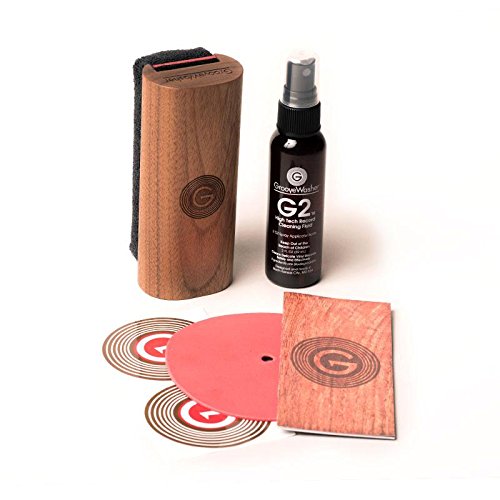
Professional cleaning system with microfibre brush, cleaning solution, and storage pouch. Safe for all vinyl types. Essential maintenance for preserving record quality.
If you choose the AT-LP120X, the AT-VM95E is the standard first cartridge upgrade. At around $74, it improves detail retrieval and tracking over the stock cartridge immediately. Most LP120X owners fit one within the first year.

Popular replacement cartridge with excellent tracking and detail retrieval. Easy to install, compatible with most turntables, and exceptional value. Direct upgrade for AT-LP120X owners.
As an Amazon Associate, we earn from qualifying purchases.
Products Mentioned in This Guide
Find Your Perfect Setup
Answer a few quick questions and get personalised recommendations.
Start the QuizFrequently Asked Questions
What is the best turntable for under $500?
The Rega Planar 1 (around $475) is the top recommendation for sound quality purists. The Audio-Technica AT-LP120X (around $349) is best for versatility with direct drive, pitch control, and USB output. The Pro-Ject Debut Carbon EVO (around $599) suits those who want premium build with upgrade potential.
Is a premium turntable worth it over an entry-level one?
Yes, if you have decent speakers to match. Better motors provide more consistent speed. Higher quality tonearms and bearings extract more detail from grooves. Build quality means decades of reliable use rather than years. Budget around $300-600 for speakers to appreciate the difference.
Should I buy Rega or Pro-Ject?
Both are excellent. Rega turntables are made in the UK and focus on simplicity and sound quality - plug in and play. Pro-Ject (Austrian) offers more features and customization options for tinkerers. Choose Rega for pure listening pleasure, Pro-Ject if you enjoy upgrading components over time.
Do I need a separate phono preamp?
The Audio-Technica AT-LP120X includes a built-in preamp. Rega and Pro-Ject turntables typically do not. Check if your amplifier has a phono input - most do. If not, add a dedicated preamp like the Cambridge Audio Alva Duo (around $299) or budget Pro-Ject Phono Box (around $59).
Is direct drive or belt drive better?
Belt drive (Rega, Pro-Ject) isolates motor vibration for quieter playback - preferred for home listening. Direct drive (Audio-Technica) offers faster startup and precise speed control - preferred by DJs and those who want USB digitizing features. Both sound excellent at this price point.
Related Guides
Best Record Players 2026: Expert Picks at Every Budget
Buying GuideBest Speakers for Turntables 2026 | From $99 to $500
Buying GuideBest Budget Turntables 2026: Top Picks Under $200
Buying GuideBest Turntable Under $1000 2026 | Rega, Pro-Ject and Technics Compared
Buying GuideBest Bluetooth Turntables 2026 | Wireless from $179
Buying GuideBest Turntables Under £500 UK 2026: Rega vs Pro-Ject vs Audio-Technica vs Sony
Ready to find your perfect setup?
Our quiz matches you with the right turntable, speakers, and accessories.
Take the Quiz - It's FreeNo email required