Best Turntables Under £500 UK 2026: Rega vs Pro-Ject vs Audio-Technica vs Sony

Vinyl collector for over thirty years. Found my first turntable and a box of records in the loft at twelve — Nashville Skyline, After the Gold Rush, Disraeli Gears. Still spinning on a vintage Sony PS-X600.
Just so you know, some links on this page are affiliate links. If you buy something via them, we get a small kickback. You don't pay more, but it helps toward the next record.
This is where vinyl gets serious. In the mid-range, you're shopping the same equipment that professional reviewers use as reference points. The Audio-Technica AT-LP120X and Rega Planar 1 are the names that come up most at this price; they represent two genuinely different approaches to the same problem. These turntables aren't "good for the price." They're just good. Built to last decades. Sound quality that makes you hear familiar albums differently.
The differences between competitors at this level are genuine but subtle. Your choice depends more on what you value than which is objectively "best."
Who this guide is for: You own a few hundred records or plan to. You want a deck you won't replace in five years. You've started noticing terms like "belt drive," "phono preamp," and "tracking force." This guide settles which deck fits your particular situation.
The main decision at this price is sound purity versus convenience. Rega and Pro-Ject trade features for sonic performance. Audio-Technica and Sony pack in wireless, USB, and automation. Neither path is wrong. Take our quiz if you want a personalised recommendation based on your specific setup.
Best For at a Glance
Not sure which setup is right for you?
Take Our QuizTake our quiz if you want personalised recommendations based on your specific situation.
Audio-Technica AT-LP120X: The Do-Everything Deck
The AT-LP120X descends from the Technics SL-1200, the turntable that powered decades of DJ culture. Audio-Technica took the design lineage and kept what worked: direct-drive motor for instant start and unwavering speed stability. Pitch control for those who want it. Removable headshell so you can swap cartridges without buying a new deck.
The built-in phono preamp has a bypass switch. Start with the internal preamp for simplicity. Later, when you're ready to chase better sound, add an external preamp and bypass the internal one. The USB output lets you digitise vinyl to your computer. It's a turntable designed to grow with you.
Professional reviewers consistently praise its reliability. Search any vinyl forum for "still using my LP120" and you'll find people on their second decade with the same unit. The direct-drive motor has no belts to replace. The construction is robust rather than delicate.
The stock cartridge is basic. Budget £50 for an AT-VM95E upgrade and the improvement is immediately audible. That's the expected path: buy the deck, run it stock for a while, upgrade the cartridge when you've developed your ears. It won't compete with a Rega on sheer sound quality, but nothing else at this price matches it for features, versatility, and reliability in the same package.
If you want one turntable that does everything competently and will last until you're ready to spend properly serious money, this is it. Check Price on Amazon

The do-everything deck, direct drive, upgradeable cartridge, grows with you
Rega Planar 1: The Purist's Choice
The Rega Planar 1 represents a fundamentally different philosophy. No built-in preamp. No USB. No pitch control. No features at all beyond the essential function of spinning a record at exactly the right speed while the stylus extracts music from grooves.
Rega have been making turntables in Southend-on-Sea since 1973. They've spent fifty years refining one thing: sound reproduction. The results show. Put on an album you know intimately and you'll hear details that cheaper turntables mask. The bass has definition. The midrange breathes. The soundstage extends beyond the speakers.
What Hi-Fi? regularly names Rega the brand to beat at every price point they compete in. The Planar 1 won their budget turntable award multiple years running. Audiophile forums are full of people who started with a Rega and never switched brands.
The trade-offs are real. You need a phono preamp, either built into your amplifier or purchased separately (£50-130 for decent options). Setup requires more care than plug-and-play alternatives: you're manually cueing the tonearm rather than pressing a button. There's no USB if you want to digitise vinyl. There's no automatic stop when the record ends.
These aren't drawbacks for the target audience. Rega buyers want pure sound and are willing to engage with the equipment to get it. If that describes you, the Planar 1 rewards the commitment.
Pro-Ject Debut Carbon EVO: The Tinkerer's Platform
The Pro-Ject Debut Carbon EVO comes from Austria with serious engineering credentials. The carbon fibre tonearm isn't marketing fluff: carbon genuinely reduces resonance compared to aluminium. The steel/TPE sandwich platter damps vibrations better than alternatives.
What distinguishes Pro-Ject is the upgrade ecosystem. Every component can be improved: cartridge, platter, feet, belt, even the power supply. Buy the Debut Carbon EVO today, upgrade the cartridge next year, add an acrylic platter the year after, swap the feet for isolation platforms eventually. The base turntable evolves with your tastes and budget.
The Pro-Ject community is active and helpful. Reddit's vinyl subreddits are full of Debut Carbon owners sharing mod recommendations. It's a platform as much as a product.
Available in multiple colours if aesthetics matter to your living room. Build quality feels genuinely premium: pick it up and you understand where the money went. Sound quality is excellent but slightly behind the Rega Planar 1 in direct comparison at this price; the real advantage is the expandability, not a sonic edge.
Like the Rega, you'll need an external phono preamp. Like the Rega, purists consider that a feature rather than a limitation. If you're torn between this purist approach and the do-everything AT-LP120XBT-USB below, the Pro-Ject Debut Carbon EVO vs AT-LP120XBT-USB head-to-head settles the features-versus-fidelity question. Check Price on Amazon

The tinkerer's platform, carbon tonearm, endless upgrade paths, premium build
AT-LP120XBT-USB: Wireless Without Compromise
The AT-LP120XBT-USB is exactly what the name suggests: an LP120X with Bluetooth added. Same direct-drive motor. Same removable headshell. Same built-in preamp with bypass. Plus aptX Adaptive wireless streaming to Bluetooth speakers or headphones.
Stream wirelessly when convenience matters. Connect wired when critical listening matters. The flexibility is genuine: you're not sacrificing the core turntable to gain wireless capability.
Bluetooth does compress audio. Modern codecs like aptX Adaptive minimise the damage, but audiophiles will notice. Most listeners, in most rooms, with most speakers, won't mind or won't notice. The convenience of wireless often outweighs theoretical fidelity concerns.
One honest note: the initial Bluetooth pairing process can be finicky on some devices. Keep the manual nearby for the first setup. After that, it's seamless. If your listening setup involves Bluetooth speakers, or if you want late-night listening through wireless headphones, the premium over the standard LP120X makes good sense. Check Price on Amazon

Wireless without compromise, full LP120X features plus aptX Bluetooth
Sony PS-LX3BT: The Modern Wireless Pick
The Sony PS-LX3BT arrived in 2026 as part of Sony's first new turntable range in years. It takes a different approach to the AT-LP120XBT: fully automatic operation, belt drive, and a focus on the wireless listening experience rather than DJ versatility.
It runs aptX Adaptive Bluetooth and a USB output, with a switchable built-in phono preamp, so it drops straight into a wireless setup or a wired one as your system grows. The cartridge is fixed rather than user-replaceable, which keeps setup simple at this price, and the fully automatic arm means you press one button and the record plays.
Both Sony and Audio-Technica have aptX Adaptive Bluetooth at this price. The difference is philosophy: the AT gives you direct drive, pitch control, and manual operation for hands-on engagement. The Sony gives you automatic play and a design that prioritises convenience. The choice depends on how you listen, not which is objectively better.
If you're buying a wireless turntable specifically for the wireless experience, the Sony is hard to beat for the money. If you want a turntable that also happens to have Bluetooth, the AT-LP120XBT is the stronger pick. Sony's step-up, the PS-LX5BT, adds a removable, upgradeable cartridge and a more rigid build; it is on sale in the US but not yet listed on Amazon UK, so the LX3BT is the Sony to buy here for now. See the PS-LX3BT vs PS-LX5BT comparison for the full breakdown.
For those considering stepping beyond the £500 boundary, the Audio-Technica AT-LP7X represents the next tier, a proper audiophile deck with a VM95C/CK cartridge.

Sony's 2026 wireless deck. Fixed cartridge, aptX Adaptive Bluetooth, USB output, auto-play.
Rega Planar 2: The Better Arm
The Rega Planar 2 sits £150 above the Planar 1 primarily because of its tonearm. The RB220 uses better bearings and tighter tolerances than the RB110 on the Planar 1. The improvements are audible: tighter bass, better stereo imaging, more detail retrieval.
The RB220 arm appears on turntables costing considerably more than the Planar 2. Rega uses economies of scale and vertical integration to put it here. If arms matter to you, and they should, the Planar 2 represents genuine value at this price.
Worth the upgrade if your speakers can reveal the difference. Pair the Planar 2 with speakers costing at least £300. Below that threshold, the speakers become the bottleneck and the arm's advantages go unheard.
One honest caveat: the Planar 2 has no built-in preamp, no USB, no auto-stop, and no Bluetooth. If you need any of those features, the Rega range is the wrong direction. But if you want the best-engineered tonearm you can buy in this price bracket, and your speakers are good enough to reveal what it does, the Planar 2 is genuinely special. It's a foundation that many owners build serious systems around over years. Pair it with an external phono preamp (Rega Fono Mini, around £95) and speakers costing at least £200, and you have a system that would have cost three times more a decade ago.
What This Money Buys
Compared to budget turntables under £200:
Better motors with more consistent speed. The technical term is lower wow and flutter. The audible result is cleaner, more stable sound. Piano holds pitch. Vocals don't waver.
Heavier, better-damped platters that absorb vibration rather than transmitting it to the stylus. The result is blacker backgrounds between notes and cleaner transients.
Quality tonearms with precision bearings. The stylus tracks more accurately, extracting more information from grooves while treating them more gently. Tracking force drops from 4-5g on budget decks to 1.5-2g here, which is meaningfully kinder to your vinyl over time.
Build quality designed for decades rather than years. Real metal. Proper engineering tolerances. Components designed to be serviced and replaced rather than binned when something wears.
Upgrade potential. These turntables grow with you. Swap cartridges. Add preamps. Improve incrementally rather than replacing entirely. If you're torn between the two big names at this level, the Rega vs Pro-Ject comparison breaks down the differences in detail.
What to Avoid
Cheap USB turntables under £150 that promise digitising. These compromise the mechanism to include mediocre recording features. The result is a turntable that digitises poorly and also sounds poor as a playback device. If you genuinely need USB output, the AT-LP120X does it properly without compromising the core mechanism. See the turntable with USB guide for what's worth buying.
Turntables with built-in speakers. Speakers vibrate. Attaching them to a turntable creates acoustic feedback. This is physics, not opinion. Buy separate components. This applies at every price point, but especially here where the budget is sufficient to do it properly.
Mismatched systems. A £300 turntable through £50 speakers sounds worse than a £150 turntable through £200 speakers. Balance matters. Roughly equal spend on turntable and speakers is a solid starting point. The best speakers for turntable guide covers what to pair with each deck here.
Before you commit, run your full figure through my budget builder tool and see how the split between deck, speakers, and phono stage should look at this level.
Brands with no service history. At this level and above, you want a manufacturer that will still be shipping replacement styluses and belts in ten years. Rega, Pro-Ject, and Audio-Technica all have that track record. Some newer entrants at this price do not, and a turntable without replacement parts is eventually just a display piece.
Side-by-Side Comparison
| Turntable | Drive Type | Built-in Preamp | Bluetooth | USB Out |
|---|---|---|---|---|
| AT-LP120X | Direct | Yes (bypass switch) | No | Yes |
| Rega Planar 1 | Belt | No | No | No |
| AT-LP120XBT-USB | Direct | Yes (bypass switch) | Yes (aptX Adaptive) | Yes |
| Sony PS-LX3BT | Belt | Yes (line switch) | Yes (aptX Adaptive) | No |
| Pro-Ject Debut Carbon EVO | Belt | No | No | No |
| Rega Planar 2 | Belt | No | No | No |
The pattern is clear: if you need Bluetooth or USB, the choice narrows to Audio-Technica or Sony. If you want the best sound for the money without those features, Rega wins. Pro-Ject sits between the two: Austrian engineering and an upgrade path, but no built-in preamp and no wireless.
Your Decision Matrix
| If you value... | Buy |
|---|---|
| Versatility and easy setup | Audio-Technica AT-LP120X |
| Pure sound quality | Rega Planar 1 |
| Wireless convenience | Sony PS-LX3BT |
| Tinkering and upgrades | Pro-Ject Debut Carbon EVO |
| Wireless + DJ features | AT-LP120XBT-USB |
| Best tonearm in budget | Rega Planar 2 |
Questions Buyers Actually Ask
Do the Rega and Pro-Ject need a separate phono preamp?
Yes. Neither the Rega Planar 1, Planar 2, nor the Pro-Ject Debut Carbon EVO includes a built-in phono stage. You need either an amplifier with a PHONO input or a standalone preamp. The Pro-Ject Phono Box E is the most common pairing for both brands, matched to their cartridges and quiet enough not to be a bottleneck. Many receivers from the last 15 years have phono inputs built in; check before buying separately. The AT-LP120X and AT-LP120XBT-USB both include built-in preamps with bypass switches, so they work straight from the box with powered speakers.
Is the AT-LP120X actually worth it, or is it just popular because of marketing?
Both. It's genuinely good and popular because there's no serious competitor at its price. Direct-drive motor with no belts to replace, heavy platter for stable playback, removable headshell for cartridge swaps, a preamp bypass switch. Rega and Pro-Ject beat it on pure sound quality but don't match it on features at this price. The LP120X earns the reputation it has.
we're upgrading from a budget turntable. Will the difference be noticeable?
More than you'd expect. Entry-level turntables under £100 typically have motors with inconsistent speed (audible as slight pitch wavering), tonearms that track at 5g or more (this damages records over time), and no upgrade path. Every turntable in this guide eliminates all three problems simultaneously. Play an album you know intimately through any of these decks and it'll sound different immediately. Fuller bass, cleaner midrange, more stable pitch. Piano holds pitch. Vocals have presence. The jump from entry-level to this range is one of the most immediately audible improvements in the entire hobby.
Which turntable works best with powered speakers?
Any turntable with a built-in phono preamp: the AT-LP120X, AT-LP120XBT-USB, or Sony PS-LX5BT. Powered speakers have amplification built in, so you connect directly from the turntable's LINE output to the speaker's RCA inputs. If you choose a Rega Planar 1 or Pro-Ject, you need a standalone phono preamp between the turntable and speakers. The Pro-Ject Phono Box E is the most natural pairing for both brands. For a complete no-fuss setup, the AT-LP120X into the Edifier R1280DB works perfectly out of the box. The best speakers for turntable guide covers specific pairing recommendations at different budgets.
When should I upgrade the cartridge, and which one?
The AT-LP120X ships with an acceptable stock cartridge. Budget around £55 for an Audio-Technica VM95E at purchase and you'll unlock noticeably better detail and tracking, most LP120X owners do this within the first year. The Pro-Ject Debut Carbon EVO comes with an Ortofon OM5e; the OM10 is a worthwhile step up without changing the body. The Rega Planar 1 ships with a Rega Carbon cartridge: upgrading to the Rega Elys 2 lets the tonearm perform properly. The Sony PS-LX5BT comes with a capable cartridge already tuned for the deck; leave it alone until you've lived with it for at least a year. The cartridge upgrade guide covers the full range of upgrade options and what each one actually changes.
What You'll Need Alongside the Turntable
Phono preamp (Rega and Pro-Ject only): The Planar 1, Planar 2, and Debut Carbon EVO have no built-in phono stage. Many stereo receivers and amplifiers built since 2000 include a PHONO input on the back panel, check yours before buying anything separately. If yours doesn't, the Pro-Ject Phono Box E is the correct first choice for both brands: electrically matched to Ortofon and Rega cartridges and quiet enough not to be the weakest link in the chain.
Amplifier and speakers: The AT-LP120X, AT-LP120XBT-USB, and Sony PS-LX5BT connect directly to powered/active speakers without additional amplification. Rega and Pro-Ject need a phono preamp plus either a stereo amplifier with passive speakers or powered speakers that accept LINE-level RCA input. For a complete Rega setup under £600, the Planar 1 with a Pro-Ject Phono Box E and Edifier R1280DB powered speakers is a well-matched combination that needs nothing else.
Record care basics: A stylus brush and an anti-static record cleaning brush. Neither accessory is urgently needed, but both prevent the kind of slow damage that accumulates over months. Start with the stylus brush, it takes ten seconds before each side and keeps your stylus clean, which matters more for record preservation than anything else at this price.
All six are excellent turntables. None is wrong. Buy any of them and you'll stop thinking about the equipment and start thinking about the music. These are decks people keep for fifteen years, foundations for proper systems, not temporary stepping stones.
Where to buy: All six are available from Amazon UK. Richer Sounds stocks the Audio-Technica and Sony ranges with in-store demonstrations, worth visiting if you’re spending £350 or more and want to hear before buying. For Rega and Pro-Ject, specialist hi-fi dealers (Sevenoaks Sound and Vision, Audiobarn, Sound Components, and others) offer setup assistance and proper auditioning in a listening room. Buying Rega from an authorised dealer means cartridge, stylus, and counterweight tracking force have all been professionally verified and set before it leaves the shop, a small but worthwhile benefit at this price point. The Rega website lists all UK authorised dealers by postcode. For Pro-Ject, Henley Audio is the official UK distributor and their site lists dealers with demonstration stock.
What You'll Need With It
Clean your records before play. Even new pressings carry mould-release compound from the pressing plant, and dust on a turntable at this level becomes audible. A basic cleaning routine takes 30 seconds and protects both stylus and groove.
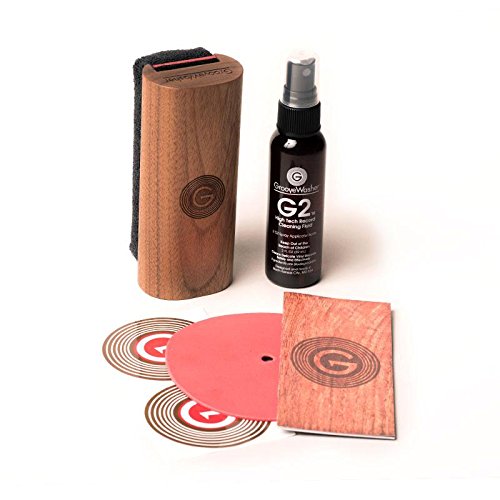
Professional cleaning system with microfibre brush, cleaning solution, and storage pouch. Safe for all vinyl types. Essential maintenance for preserving record quality.
If you choose the AT-LP120X, the AT-VM95E is the standard first cartridge upgrade. It costs around £39 and improves detail retrieval and tracking over the stock cartridge immediately. Most LP120X owners fit one within the first year.

Popular replacement cartridge with excellent tracking and detail retrieval. Easy to install, compatible with most turntables, and exceptional value. Direct upgrade for AT-LP120X owners.
What You'll Need With It
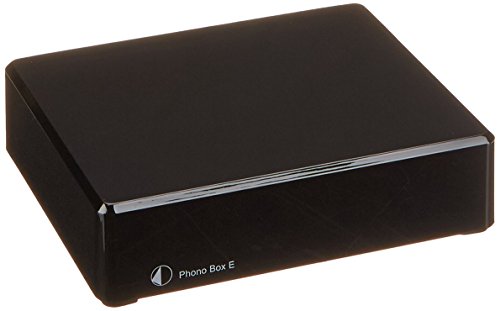
Affordable MM phono preamp offering significant upgrade over built-in preamps. Clean sound, low distortion, and compact design. Perfect for budget-conscious vinyl enthusiasts.

Legendary MM cartridge delivering warm, musical sound with excellent detail. The benchmark for mid-range cartridges. Massive improvement over stock cartridges on Rega and Pro-Ject decks.
Professional cleaning system with microfibre brush, cleaning solution, and storage pouch. Safe for all vinyl types. Essential maintenance for preserving record quality.
As an Amazon Associate, we earn from qualifying purchases.
Products Mentioned in This Guide
Find Your Perfect Setup
Answer a few quick questions and get personalised recommendations.
Start the QuizFrequently Asked Questions
What is the best turntable for under £500?
The Rega Planar 1 (around £300) is the top recommendation for sound quality purists. The Audio-Technica AT-LP120X (around £270) is best for versatility with direct drive, pitch control, and USB output. The Pro-Ject Debut Carbon EVO (around £450) suits those who want premium build with upgrade potential.
Is a premium turntable worth it over an entry-level one?
Yes, if you have decent speakers to match. Better motors provide more consistent speed. Higher quality tonearms and bearings extract more detail from grooves. Build quality means decades of reliable use rather than years. Budget around £200-400 for speakers to appreciate the difference.
Should I buy Rega or Pro-Ject?
Both are excellent. Rega turntables are made in the UK and focus on simplicity and sound quality - plug in and play. Pro-Ject (Austrian) offers more features and customisation options for tinkerers. Choose Rega for pure listening pleasure, Pro-Ject if you enjoy upgrading components over time.
Do I need a separate phono preamp?
The Audio-Technica AT-LP120X includes a built-in preamp. Rega and Pro-Ject turntables typically do not. Check if your amplifier has a phono input - most do. If not, add a dedicated preamp like the Cambridge Audio Alva Duo (around £130) or budget Pro-Ject Phono Box (around £50).
Is direct drive or belt drive better?
Belt drive (Rega, Pro-Ject) isolates motor vibration for quieter playback - preferred for home listening. Direct drive (Audio-Technica) offers faster startup and precise speed control - preferred by DJs and those who want USB digitising features. Both sound excellent at this price point.
Related Guides
Best Record Players UK 2026: Expert Picks at Every Budget
ComparisonSony PS-LX3BT vs PS-LX5BT: Which Should You Buy?
ComparisonRega vs Pro-Ject Turntables UK 2026 | From £300
How-ToPhono Preamp Guide UK 2026 | Do You Need One? From £35
Setup GuideTurntable Cartridge Upgrade Guide UK 2026 | From £50
ComparisonBelt Drive vs Direct Drive Turntables UK 2026 | Compared
Buying GuideBest Turntables Under $500 2026: Rega vs Pro-Ject vs Audio-Technica
Ready to find your perfect setup?
Our quiz matches you with the right turntable, speakers, and accessories.
Take the Quiz - It's FreeNo email required