
Best Turntable Under $1000 2026 | Rega, Pro-Ject and Technics Compared

Vinyl collector for over thirty years. Found my first turntable and a box of records in the loft at twelve — Nashville Skyline, After the Gold Rush, Disraeli Gears. Still spinning on a vintage Sony PS-X600.
Just so you know, some links on this page are affiliate links. If you buy something via them, we get a small kickback. You don't pay more, but it helps toward the next record.
There is a reason serious vinyl people keep coming back to turntables in the $600 to $1,200 range. Budget decks sound like vinyl, warm, analogue, pleasant. Turntables in this bracket sound like the specific recording that was made, in the room where it was made. The noise floor drops. Instruments stop blurring together. You hear things in familiar records you have never noticed before.
My pick for most setups: the Rega Planar 3 still delivers the most musically engaging sound in this class, based on everything I've read across Stereophile, What Hi-Fi? and long-term owner reports on r/vinyl and r/audiophile. If you want that flagship level of sound with a switchable phono stage already built in, the Audio-Technica AT-LP7X is the one I'd point you to: it goes toe to toe with the Rega and adds the electronics the Rega leaves out. Want everything in one box with nothing else to buy? The Technics SL-1500C does that, sitting right at the top of this budget.
Picks refreshed for July 2026.
My Picks at a Glance
Not sure which setup is right for you?
Take Our QuizTake our quiz if you want a personalised recommendation based on your system and budget.
Why These Picks
Each deck here has to pass a straightforward test: genuine step up from the $300–$500 range, not a cosmetic one. I looked at what actual owners report after two or three years of use, what happens when you upgrade the cartridge or phono preamp, and whether the deck earns its reputation across multiple review cycles. The ones here do. The ones I excluded have recurring issues, speed instability, noisy motors, build quality inconsistencies, that show up a year or two in.
Rega Planar 3: The One I'd Recommend for Most US Setups
The Rega Planar 3 is made in Southend-on-Sea, England, and the fact that Rega still hand-assembles and measures their tonearm bearings in the UK is not marketing copy, it is why the RB330 tonearm outperforms competitors at significantly higher prices.
Stereophile has reviewed Rega turntables across multiple generations and consistently positions them as reference-level value. The r/vinyl wiki lists the Planar 3 as a benchmark recommendation in its price class. The pattern from long-term owners is consistent: they upgrade their cartridge, upgrade their phono preamp, upgrade their speakers, and keep the deck for a decade or more. That is the mark of a turntable that is not the bottleneck.
The 2026 model ships with Rega's Nd3 Moving Magnet cartridge, a significant upgrade over the carbon cartridge on earlier models. The phenolic platter reduces resonance. The double-brace plinth reinforcement stiffens the structure against low-frequency vibrations that smear bass on cheaper decks.
What it does not have: a built-in phono preamp, motor-switched speed changes, or auto-return. You lift the belt manually to change from 33 to 45rpm. You lower the stylus manually. If you listen to a lot of 7-inch singles or want auto-stop at record's end, the Technics below handles both. For most LP listeners who want the music to sound as good as possible without mechanical compromises, the Rega's stripped-down approach is the right one.
You need a phono preamp or an amplifier with a phono input. The iFi Zen Phono is a natural US pairing. Check Price on Amazon
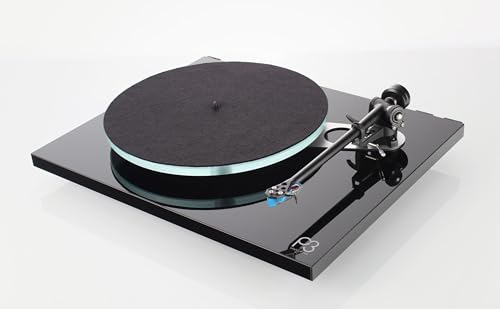
2026 model with Nd3 cartridge and hand-assembled RB330 tonearm. The US benchmark at this price.
Audio-Technica AT-LP7X: The Flagship With Electronics Built In
The Audio-Technica AT-LP7X is the deck I reach for when someone wants the Rega's flagship sound but also wants the electronics handled for them. It is Audio-Technica's most serious belt-drive turntable, built for the same $700 to $1,200 bracket Rega and Pro-Ject have owned for years, and it belongs there. I go deeper on it in my full AT-LP7X review.
The tonearm is a J-shaped 9.7-inch aluminium arm with a removable AT-LT10 headshell, so you can mount a second cartridge and swap between them without realigning anything. It ships with Audio-Technica's AT-VM95E dual moving magnet cartridge, factory-fitted, and the VM95 line gives you a clean upgrade path when your ears outgrow the stock stylus. Underneath sits a 20mm high-density acrylic platter on a dense MDF plinth, turned by a DC servo motor with an optical sensor that watches platter speed continuously.
Here is the part the Rega cannot match: a built-in phono stage that is both switchable and bypassable, and handles moving magnet and moving coil cartridges. Plug it straight into any line input and you are playing records in minutes. Bypass it later when you add a dedicated preamp. Based on What Hi-Fi? and the long-term owner consensus, the sound sits a fraction behind the Rega on outright musical flow, but the gap is small, and the AT wins the ground back on convenience and the built-in phono stage the Rega makes you buy separately. Check Price on Amazon
J-shaped tonearm, AT-VM95E cartridge, switchable MM/MC phono stage built in. Flagship sound with the electronics included.
Pro-Ject Debut Carbon EVO: Feature-Rich Austrian Engineering
The Pro-Ject Debut Carbon EVO comes with a Sumiko Rainier MM cartridge pre-mounted, a cartridge that you would otherwise need to purchase and align yourself. That changes the real comparison with the Rega considerably.
The 8.6" one-piece carbon fibre tonearm is the specification that earns attention. Carbon is light and rigid, the ideal combination for a tonearm that needs to track a groove without adding its own resonance to what the stylus reads. Pro-Ject makes these in-house in Austria, and the EVO version is a meaningful improvement over the earlier aluminium Debut iterations.
Electronic speed switching between 33 and 45rpm is a practical win. Press a button, the motor adjusts. No lifting belts, no waiting. If your collection includes a serious number of 7-inch singles alongside albums, this matters day to day.
Most careful reviewers position the Planar 3 slightly ahead on pure sound quality. But the EVO is $346 cheaper before accounting for the included cartridge, which closes the value gap considerably. If 45rpm records are a significant part of your collection and the Rega's belt-switching friction is a concern, the EVO is the sensible choice. Check Price on Amazon

Carbon fibre tonearm, electronic speed selection, Sumiko Rainier cartridge pre-mounted. Made in Austria.
Rega Planar 2: The Entry Point to Rega Sound
The Rega Planar 2 gives you the Rega philosophy, minimal resonance, maximum tonearm precision, no features that do not serve the record, at a lower price than the Planar 3.
The RB220 tonearm (compared to the Planar 3's RB330) and a steel platter rather than phenolic are the main differences. In practice, the Planar 2 sounds like a Rega: fast, rhythmically alive, low motor noise. The improvements the Planar 3 brings are real but incremental rather than transformational.
If the Planar 3 is at the edge of your budget, the Planar 2 is a genuinely good turntable, not a compromised one. The upgrade path is clear: better phono stage, better cartridge, eventually the Planar 3 when it makes sense. Check Price on Amazon

Rega's entry to the premium tier. RB220 tonearm, same Rega philosophy at a lower price point.
Technics SL-1500C: When You Want Everything Included
The Technics SL-1500C is the most expensive deck here, and the only one with direct drive. It comes with a built-in phono stage, an Ortofon 2M Red cartridge pre-mounted, and auto-lift at side's end. For someone who wants serious sound quality without additional purchases or setup decisions, nothing else in this guide matches it.
The motor technology comes directly from Technics' SL-1200 series, the standard in professional DJ use for over fifty years. Coreless direct drive eliminates the cogging that plagued older direct-drive designs. Speed accuracy and consistency are measurably better than belt-drive alternatives. For classical music and jazz, where sustained notes expose any pitch drift, this measurable advantage becomes an audible one.
The internal phono stage is designed specifically for the deck rather than added as an afterthought. Technics engineers matched it to the 2M Red cartridge's output characteristics. Most owners report it performs better than external budget phono stages at similar prices, the internal matching gives an advantage that separate components at the same combined cost struggle to replicate.
No Bluetooth, no streaming, no USB. The SL-1500C is a pure analogue turntable. It does one thing exceptionally well and does not apologise for the limitations.
Fluance RT85: The Value Pick That Punches Up
Not everyone needs to spend a grand to get most of the way there, and the Fluance RT85 is the deck I point people to when they want audiophile ingredients without the flagship price. It is the cheapest way into this guide's level of sound, and it earns the spot.
The headline is the cartridge. It comes with a factory-fitted, factory-aligned Ortofon 2M Blue, a genuine moving magnet cartridge that costs around $220 on its own, so a good chunk of the RT85's value is bolted to the headshell before you plug anything in. It spins a 12-inch clear acrylic platter that does the same job as the acrylic on decks costing far more, adding mass and damping resonance, turned by a belt and a DC servo motor that samples its own speed hundreds of times a second to hold pitch steady.
The S-shaped aluminium tonearm is static-balanced with a removable H-4 headshell, so cartridge upgrades later are simple. One thing to know before you buy: there is no built-in phono stage. You need an amplifier with a PHONO input or a standalone preamp like the Schiit Mani or the iFi Zen Phono. Budget for that and the RT85 still comes out ahead of anything else near its price. Reviewers from SoundStage to Trusted Reviews land in the same place, this is the value benchmark in the sub-$600 audiophile bracket. Check Price on Amazon
Factory-fitted Ortofon 2M Blue and a 12-inch acrylic platter for around half the flagship price. Needs an external phono stage.
What to Avoid
U-Turn Orbit at $400–$600: The Orbit is well-built at its price, but the fixed headshell limits future cartridge upgrades to those that fit the proprietary mount. At the prices in this guide, you should have full flexibility to upgrade to any standard half-inch mount cartridge.
Cheap direct-drive decks from new brands: Several brands have launched $500–$800 direct-drive turntables in recent years. Speed stability problems, motor noise, and poor factory cartridge alignment appear repeatedly in owner reports. Technics' fifty-year professional track record is not something a new entrant can replicate quickly.
Any deck specifying a ceramic cartridge: If a turntable in this range specifies a ceramic stylus, you are paying for audiophile branding on budget components. Every deck in this guide uses a genuine moving magnet cartridge.
Home theatre receivers as the phono source: Most home theatre AV receivers either lack a phono input entirely or include one of very low quality. If your Rega or Pro-Ject deck ends up connected to an AV receiver's phono input and sounds disappointing, the receiver is almost certainly the bottleneck. Add a dedicated phono preamp before concluding the turntable is the problem.
Buyer's Guide: What the Money Actually Buys
Tonearm precision: This is where the most audible difference lives. A well-made tonearm bearing holds the stylus precisely in the groove with minimal friction and no lateral play. The Rega RB330 is hand-assembled and measured to tolerances that budget tonearms cannot approach. This translates directly into lower distortion, better channel separation, and longer stylus and record life.
Speed stability: Budget motors produce wow and flutter audible on piano and orchestral strings. In this price range, the variation tightens to the point where it is no longer a factor. The Technics direct-drive motor takes this further, its coreless design produces more consistent speed under varying load conditions.
Platter quality: Heavy, rigid platters store rotational energy more smoothly and resist external vibration. The Rega's phenolic platter and the Technics' aluminium die-cast platter are genuine improvements over the plastic platters on budget decks.
Upgrade headroom: All four decks accept cartridge upgrades, work with better phono stages, and can grow with your system. Below $300, the deck becomes the bottleneck before anything else can improve. In this range, the bottleneck shifts to the amplifier and speakers, which is the right order for a system that compounds over time.
FAQ
Do I need a phono preamp for the Rega turntables? Yes. Neither the Planar 2 nor the Planar 3 includes a built-in phono preamp. If your amplifier has a dedicated PHONO input (most stereo integrated amplifiers do, most home theatre AV receivers do not), use that. If not, add a standalone preamp, the iFi Zen Phono or Pro-Ject Phono Box MM S3 are both well-matched to Rega's cartridges.
Is Rega or Pro-Ject better? Both are genuinely excellent and the difference is smaller than forum debates suggest. Rega prioritises sonic simplicity, everything non-essential is stripped away. Pro-Ject prioritises features and flexibility, electronic speed, more cartridge options, MC-capable tonearms on higher models. Most listening tests between the Planar 3 and Debut Carbon EVO end very close, with the Rega described as slightly more alive and the Pro-Ject slightly more detailed. Try both at a dealer if you can.
Is the Technics SL-1500C worth the premium? Accounting for the included phono stage and cartridge, the effective price gap versus the Rega Planar 3 narrows to around $100–$150. At that difference, the choice becomes about sound character preference and features. The Technics gives measurably better speed stability and complete plug-in convenience. The Rega gives a sonic presentation many listeners find more compelling. Neither is wrong.
What amplifier should I pair with a turntable in this range? A turntable here will reveal the limitations of a budget integrated amplifier. For US buyers, the Denon PMA-600NE is the benchmark mid-range choice, Analog Mode, built-in phono stage, enough headroom for most speakers. The Yamaha A-S301 is the alternative if build quality and longevity are priorities. See the amplifier guide for the full breakdown.
Can I use these with powered speakers? Yes, with conditions. The Rega decks need a phono preamp regardless of what they connect to. The signal chain is: Rega turntable to phono preamp to powered speakers line input. The Pro-Ject EVO is the same. The Technics SL-1500C has a built-in phono stage and connects directly to powered speakers without anything else in between.
What record cleaning setup do I need at this level? More than at budget level, because the turntable is resolving enough to hear the difference between clean and dirty records. A carbon fibre anti-static brush for surface dust before every play is the minimum. A manual wet cleaning kit handles deeper contamination. For serious collections, the Spin-Clean record washer is the most cost-effective thorough clean available without a vacuum machine. Running dirty records on a Rega Planar 3 is a mistake, grit in grooves accelerates stylus wear, and at this resolution level you will hear the debris as noise.
Does cartridge alignment matter more at this price? Yes. A turntable in this range will reveal misalignment that a budget deck masks. The Rega and Pro-Ject decks come with cartridges pre-aligned at the factory, but if you upgrade cartridges, use a protractor to verify alignment. The free Baerwald alignment template (printable online) is sufficient for most standard half-inch mount cartridges. Misalignment by even a few degrees increases inner-groove distortion audibly on well-recorded material.
How These Decks Compare Side by Side
| Rega Planar 3 | Pro-Ject Debut Carbon EVO | Rega Planar 2 | Technics SL-1500C | |
|---|---|---|---|---|
| Value | Upper-mid | Lowest | Low-mid | Highest |
| Drive type | Belt | Belt | Belt | Direct |
| Built-in preamp | No | No | No | Yes |
| Included cartridge | Nd3 MM | Sumiko Rainier | Carbon (basic) | Ortofon 2M Red |
| Speed switching | Manual (belt lift) | Electronic (button) | Manual (belt lift) | Electronic (button) |
| Auto-stop | No | No | No | Yes (auto-lift) |
| Tonearm | RB330 (hand-assembled) | 8.6" carbon fibre | RB220 | Technics S-shaped |
| Best for | Pure sound quality | Features and 45rpm use | Rega on a budget | Complete plug-and-play |
Setting Up a Turntable in This Range
Setup at this level requires more care than a budget plug-and-play deck, but it is not technically demanding. The payoff is significant, a correctly set up Rega sounds noticeably better than a carelessly set up one, and the same is true across all four decks.
Rega Planar 2 and Planar 3: The cartridge and counterweight arrive separately. You mount the cartridge to the headshell with the supplied screws, connect the four color-coded cartridge leads, fit the counterweight, and set the tracking force using the dial on the counterweight. Rega's instructions are clear. Plan for twenty minutes the first time. The critical step: balance the tonearm to zero (floating freely, parallel to the platter) before dialling in the tracking force. The Nd3 cartridge on the 2026 Planar 3 tracks at 1.75g. Correct tracking force protects both the stylus and your records.
Pro-Ject Debut Carbon EVO: The Sumiko Rainier arrives pre-mounted. Counterweight installation and tracking force setting (1.8g) are still required. Electronic speed switching means no belt to move between 33 and 45rpm. Faster to configure than the Rega, and with no alignment step since the cartridge is factory-set.
Technics SL-1500C: The most straightforward. The Ortofon 2M Red comes factory-fitted and aligned. Set the counterweight to 1.75g, connect to your system (either through the built-in phono stage to any line input, or directly if your amplifier has its own phono stage), and play. The auto-lift at end of side is a feature you will appreciate more than you expect, particularly at 2am when you have fallen asleep during a record.
Building a System Around These Turntables
A turntable in this range deserves a system that can reveal what it is doing. A rough guide to matching the rest of the chain:
For the Rega Planar 3: Pair with the Denon PMA-600NE amplifier and bookshelf speakers in the $200–$400 range, the ELAC Debut 2.0 B6.2 or Q Acoustics 3020i are proven matches. Total system around $1,600–$1,800. At this level, the turntable, amplifier, and speakers are each pulling their weight.
For the Pro-Ject Debut Carbon EVO: A Cambridge Audio AXA35 and mid-range bookshelf speakers work well. Add a standalone phono preamp, the Pro-Ject Phono Box MM S3 pairs naturally with Pro-Ject turntables, for a complete system around $1,100–$1,300.
For the Technics SL-1500C: Already includes phono stage, so you need amplifier and speakers only. The Denon PMA-600NE or Yamaha A-S301 at the amplifier stage, with speakers in the $300–$500 range, creates a system where each component justifies the others.
On isolation: At this resolution level, the turntable will pick up vibrations from speaker output and footfalls far more clearly than a budget deck. Put it on a solid surface, well away from speakers. An isolation platform (around $30–$60 for a quality foam/cork option) is worthwhile if your furniture resonates. Feedback through the floor thickens bass and creates inner groove distortion, isolation is easier and cheaper than chasing those problems separately.
On record care: If you are committing to a system at this level, a basic record cleaning routine is not optional. A carbon fibre brush before every play takes ten seconds and removes the surface particles that cause clicks. A wet cleaning kit handles deeper contamination, run through your whole collection once and maintain from there. The stylus on a Rega or Technics at this level is fine enough to track detail that dirt will obscure, and abrasive particles in grooves accelerate stylus wear. Clean records, a well-set-up stylus, and correct tracking force: these are the three things that protect both the records and the investment you are making in the turntable.
A turntable in this price range changes your relationship with records you already own. The same pressing you have played a hundred times sounds different, not a different master, not a better pressing, just more of what was actually recorded. That is what this money buys. Start playing.
What You'll Need With It
At this level of turntable, the source material quality becomes audible. Clean records before every play. Pressing compound on new records and surface dust on older ones create surface noise a resolving deck will reproduce faithfully.
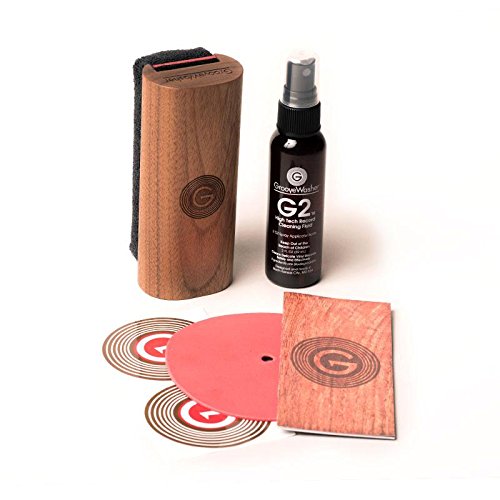
Professional cleaning system with microfibre brush, cleaning solution, and storage pouch. Safe for all vinyl types. Essential maintenance for preserving record quality.
The AT-VM95E is the standard first cartridge upgrade for the AT-LP120X. At around $74, it improves detail retrieval and tracking accuracy immediately. Most LP120X owners fit one within the first year, and it is a compatible upgrade for other decks in this guide.

Popular replacement cartridge with excellent tracking and detail retrieval. Easy to install, compatible with most turntables, and exceptional value. Direct upgrade for AT-LP120X owners.
Set tracking force correctly after any cartridge change. This gauge reads to 0.01g precision. The difference between correct and incorrect tracking force is audible at this resolution and affects both stylus longevity and record preservation.

Accurate digital gauge ensuring optimal tracking force for cartridge longevity and sound quality. LCD display with 0.01g precision. Essential tool for turntable setup.
As an Amazon Associate, we earn from qualifying purchases.
Products Mentioned in This Guide
Find Your Perfect Setup
Answer a few quick questions and get personalised recommendations.
Start the QuizFrequently Asked Questions
What is the best turntable for under $1000?
The Rega Planar 3 (around $945) is the top recommendation for most US buyers — hand-assembled RB330 tonearm, 2026 Nd3 cartridge, and a sonic reputation that holds across decades of reviews. The Pro-Ject Debut Carbon EVO (around $599) is the better value choice if you want electronic speed switching and an included cartridge at a lower price.
Does the Rega Planar 3 need a phono preamp?
Yes. The Rega Planar 3 has no built-in phono stage. You need an amplifier with a dedicated PHONO input, or a standalone preamp — the iFi Zen Phono (around $149) is a well-matched choice. Without a phono stage, the turntable produces almost no audible output. The Technics SL-1500C includes a built-in phono stage and does not need anything extra.
Is the Technics SL-1500C worth the premium over the Rega Planar 3?
Accounting for the included phono stage (saving $100–150) and Ortofon 2M Red cartridge (around $100), the real price gap narrows considerably. The Technics also adds auto-lift and direct-drive speed stability. The Rega counters with a sonic character many listeners prefer and a lighter, simpler design. This one genuinely comes down to preference rather than a clear winner.
What amplifier pairs best with a Rega Planar 3?
The Denon PMA-600NE (around $499) is the benchmark mid-range pairing — built-in phono stage, Analog Mode for pure signal path, and enough power for most speakers. The Yamaha A-S301 (around $549) is the alternative for those who prioritise build quality and longevity. Both have built-in phono stages that work directly with the Rega without a separate preamp.
Can I use a Rega or Pro-Ject turntable with powered speakers?
Yes, but you still need a phono preamp. Powered speakers have a built-in amplifier but no phono stage. The signal chain is: turntable to phono preamp to powered speakers line input. The iFi Zen Phono (around $149) handles this cleanly. The Technics SL-1500C and AT-LP120X have built-in preamps and connect directly to powered speakers without anything additional.
Related Guides
Best Turntables Under $500 2026: Rega vs Pro-Ject vs Audio-Technica
Buying GuideBest Amplifier for Turntable 2026 | From $150 to $500
Buying GuideBest Speakers for Turntables 2026 | From $99 to $500
Setup GuideTurntable Cartridge Upgrade Guide 2026 | From $59
ComparisonRega vs Pro-Ject Turntables UK 2026 | From £300
How-ToPhono Preamp Guide UK 2026 | Do You Need One? From £35
Buying GuideBest Turntable Under £1000 UK 2026 | Rega, Pro-Ject and Technics Compared
Ready to find your perfect setup?
Our quiz matches you with the right turntable, speakers, and accessories.
Take the Quiz - It's FreeNo email required