
Phono Preamp Guide UK 2026 | Do You Need One? From £35

Vinyl collector for over thirty years. Found my first turntable and a box of records in the loft at twelve — Nashville Skyline, After the Gold Rush, Disraeli Gears. Still spinning on a vintage Sony PS-X600.
Just so you know, some links on this page are affiliate links. If you buy something via them, we get a small kickback. You don't pay more, but it helps toward the next record.
A phono preamp is the box that makes your turntable work with any speaker or amplifier that wasn't designed specifically for vinyl. Most modern turntables have one built in. Many amplifiers have one too. The question is whether yours does, and this guide tells you how to find out in sixty seconds.
My pick: For most people who need a standalone phono preamp, the Cambridge Audio Alva Solo is the right answer, clean, quiet, properly built, and widely available. If budget is tight, the ART DJ Pre II does the job and has a decades-long track record.
Quick Picks
Not sure which setup is right for you?
Take Our QuizWhat a Phono Preamp Does
The signal from a turntable cartridge is tiny and frequency-adjusted. Records are cut with reduced bass and boosted treble (called RIAA equalisation) to fit more music into grooves. A phono preamp does two things:
1. Amplifies the weak signal to line level 2. Applies reverse RIAA equalisation to restore the original sound
Without a phono preamp, your turntable's output is barely audible and sounds thin and harsh. Something in your chain needs to provide phono preamp functions.
Built-In Preamps: The Common Solution
Many modern turntables include phono preamps. Look for a switch labelled "phono/line" on the back. Set to "line" when connecting to powered speakers or a regular amplifier input.
The Audio-Technica AT-LP60X, AT-LP120X, Sony PS-LX310BT, and most budget-to-mid-range turntables have built-in preamps. If yours does, you may never need an external one.
Amplifiers with Phono Inputs
Many stereo amplifiers and receivers include phono preamps. Look for an input labelled "phono" rather than "aux" or "line." If your amp has one, use it. Built-in phono stages in decent amplifiers often outperform built-in turntable preamps.
If using an amp's phono input, switch your turntable to "phono" output (if it has a switch) to bypass the internal preamp.
When External Preamps Matter
For beginners with turntables that have built-in preamps: external preamps are unnecessary. Spend that money on better speakers instead.
External preamps become worthwhile when:
- Your turntable lacks a built-in preamp (most Regas, for example) - Your amplifier lacks a phono input - You want to upgrade sound quality beyond built-in options - You're using a moving coil cartridge (needs different amplification)
Budget External Preamps
If you do need one, start modest.
ART DJ Pre II: surprisingly capable for the price. Adds proper RIAA equalisation without breaking the bank. Popular among budget-conscious vinyl enthusiasts.

Best budget phono preamp, proper RIAA equalisation without breaking the bank
Cambridge Audio Alva Solo: cleaner sound, lower noise floor, better build quality. Excellent value.
Cleaner sound, lower noise floor, better build, excellent value step-up preamp
Rega Fono Mini A2D: Rega quality in a compact box. Also includes USB output for digitising records.
Pro-Ject Phono Box and Phono Box S2: reliable options from a respected turntable manufacturer.
How to Connect
Turntable → Phono Preamp → Amplifier/Powered Speakers
Use standard RCA cables. Red to red, white to white. Connect the ground wire from turntable to preamp (the little screw terminal) to prevent hum.
If your turntable has a phono/line switch, set it to "phono" when using an external preamp.
MM vs MC Cartridges: Why It Matters for Preamps
Most beginners own a moving magnet (MM) cartridge. The AT-LP60X, AT-LP120X, and most turntables under £500 use MM cartridges. All the preamps mentioned above handle MM.
Moving coil (MC) cartridges are different. They produce a weaker signal than MM, typically 10 to 40 times weaker, and require higher gain from the preamp. Many budget preamps don't support MC at all. If you upgrade to an MC cartridge later (common on Rega, Pro-Ject, and Clearaudio turntables), you'll need a preamp that specifically supports MC input.
The Cambridge Audio Alva Solo handles MM only. The Rega Fono MC handles MC. For both in one box, the Pro-Ject Phono Box S2 switches between them.
For now: this distinction doesn't matter unless you own or plan to buy an MC cartridge. Start with MM. Worry about MC when it becomes relevant.
Phono Preamp Comparison
| Preamp | MM | MC | Notes |
|---|---|---|---|
| ART DJ Pre II | Yes | No | Budget standard, surprisingly clean |
| Cambridge Audio Alva Solo | Yes | No | Significant step up from ART |
| Pro-Ject Phono Box S2 | Yes | Yes | Good all-rounder |
| Rega Fono Mini A2D | Yes | No | Also digitises records via USB |
| Rega Fono MC | No | Yes | Dedicated MC, excellent quality |
Prices are approximate at time of writing.
When Does Preamp Quality Matter?
The phono preamp has a larger impact on sound quality than most people expect. A turntable with a decent cartridge running through a cheap built-in preamp sounds flat, lacking bass depth and treble detail. The same turntable through a dedicated external preamp at £50–100 sounds noticeably more open, with better stereo separation and a wider dynamic range.
This happens because dedicated preamps use higher-quality components for the RIAA equalisation curve, the precise frequency correction that vinyl playback requires. Built-in preamps cut corners on component quality to save space and cost. External preamps have room for better capacitors, resistors, and circuit layouts that handle the delicate phono signal with less noise and distortion.
The sweet spot for most vinyl listeners is £50–100. Below that, you're paying for a box without meaningful improvement over built-in options. Above £200, improvements become increasingly subtle and harder to hear without trained ears and high-quality speakers.
Tube vs Solid State Preamps
Tube (valve) phono preamps add a subtle warmth and harmonic richness that many vinyl listeners find appealing. The sound is slightly softer in the treble and fuller in the midrange compared to solid state designs. Popular tube preamps like the Pro-Ject Tube Box S2 have dedicated followings among vinyl enthusiasts who value that character.
Solid state preamps tend to be more accurate and neutral. They reproduce the signal with less coloration, run cooler, require no tube replacement, and are generally more reliable long-term. Most phono preamps under £200 are solid state.
The choice between tube and solid state is genuinely a matter of taste, not quality. Neither is objectively better. If you listen primarily to jazz, classic rock, and folk, a tube preamp's warmth complements those genres. If you listen to electronic music or modern productions, solid state accuracy serves better.
Understanding Gain and Impedance Settings
More expensive preamps have adjustable gain and impedance settings. These terms appear on the Schiit Mani 2, Pro-Ject Phono Box S2, and similar mid-range units. Here is what they mean in practice.
Gain is how much the preamp amplifies the signal. MM cartridges need around 40dB of gain. MC cartridges need 50 to 65dB depending on their output level. Most preamps with MM support only need one setting. Multi-gain preamps let you match different cartridges precisely.
Impedance (or load) affects how the cartridge performs in the circuit. MM cartridges typically want 47k ohms, which is standard on virtually every preamp. MC cartridges are more sensitive: the right impedance loading affects frequency response and channel balance. Entry-level MC setups rarely reveal this difference. It matters more as your system becomes more resolving.
If your preamp has a single switch or no settings at all, it is optimised for MM at 47k ohm. This is correct for the vast majority of turntables on the market.
Subsonic filters appear on some preamps. These remove very low-frequency rumble produced by the motor and tonearm. Worth having if you play a lot of used records with warps. The filter has no audible effect on music.
Common Preamp Problems and Fixes
Hum or buzz: The most common phono preamp issue. Usually caused by a ground loop between the turntable, preamp, and amplifier. Fix: connect the turntable's ground wire to the ground terminal on the preamp. If there's no ground terminal, try connecting it to a screw on the preamp chassis. If hum persists, try a different power outlet for the preamp or a ground loop isolator.
Low volume or thin sound: Often means the preamp gain is set incorrectly for your cartridge. Check that the MM/MC switch matches your cartridge type. If the sound is thin even with correct settings, the cartridge output may be at the low end of MM range, and a preamp with adjustable gain helps.
One channel quieter than the other: Usually a cable issue, not the preamp. Check the RCA connections at both ends. Swap left and right cables at the preamp input to determine whether the imbalance follows the cable or stays on the same channel.
How Long Does a Phono Preamp Last?
A decent phono preamp will outlast your turntable, cartridges, and probably your speakers. The ART DJ Pre II has been in production since the 1990s and units from that era still work. Cambridge Audio, Rega, and Pro-Ject preamps from ten years ago remain in daily use. There are no moving parts to wear out and no consumables to replace.
Buy once, buy right. At the budget level, that means the ART DJ Pre II or Cambridge Audio Alva Solo. At the mid level, the Pro-Ject Phono Box S2 or Rega Fono Mini A2D. Neither will need replacing unless you significantly upgrade your entire system.
Budget Allocation for a Complete Vinyl Setup
A common mistake is spending the entire budget on the turntable and skimping on everything downstream. A balanced allocation for a first setup: 40% turntable, 20% phono preamp, 40% speakers. A £150 turntable with a £60 preamp and £150 speakers sounds better than a £350 turntable with a built-in preamp through £60 speakers. The weakest link in the chain determines overall sound quality.
When budgeting for the preamp specifically: the jump from nothing (built-in) to a £50–80 dedicated unit is the most cost-effective upgrade in a mid-range vinyl setup. The improvement in detail, bass control, and noise floor is audible through almost any speakers above £100. Beyond £150, gains become genuinely hard to hear without high-quality transducers to reveal them. Spend on preamp before spending on cables, the preamp difference is measurable; cable differences at this price level mostly aren't.
What to Avoid
Buying a preamp you don't need. If your turntable has a built-in preamp or your amplifier has a phono input, an external preamp adds nothing. Check before you buy. Many first-time buyers spend money on a preamp, then discover they already had one.
Running two preamps simultaneously. If your turntable is set to "line" output and you connect to an amp's phono input, you're applying RIAA equalisation twice. The sound is unmistakably wrong: boomy bass, shrill treble. Match the turntable setting (phono or line) to what your chain expects.
Skipping the ground wire. The thin wire with a bare copper end labelled "GND" exists to prevent hum. Forget it and you'll hear a low buzz through the speakers. Takes thirty seconds to connect.
Spending over £100 before upgrading speakers. The preamp sits in the middle of your chain. If the end point, the speakers, can't reveal the difference, the upgrade is wasted. Sort speakers first.
Buying MC-capable preamps speculatively. MC preamps cost more. If your turntable uses a standard MM cartridge (as most do), MM-only preamps deliver the same result at lower cost. Only pay for MC capability if you already own or plan to own an MC cartridge.
Expecting miracles at any price. A £50 preamp won't transform your system. Differences are real but subtle. Focus on speakers and cartridge if you want bigger improvements.
What I'd Buy Today
For most setups: Cambridge Audio Alva Solo. It costs around £80, handles all MM cartridges cleanly, and is meaningfully better than any built-in preamp at this price. The noise floor is low, the build is solid, and it doesn't colour the sound. It's what I'd put between a Rega Planar 1 or Pro-Ject Debut and a set of powered speakers.
On a tighter budget: ART DJ Pre II. Around £35, been in production for decades, well-reviewed by people who've actually measured it. Perfectly adequate for a budget to mid-range setup.
If you're using an MC cartridge or planning to: Pro-Ject Phono Box S2 handles both MM and MC with a simple switch, at a price that doesn't feel like a gamble.
Frequently Asked Questions
Do I definitely need an external phono preamp?
Check first. Look at the back of your turntable for a "phono/line" switch, if it has one, there's a built-in preamp. Check your amplifier for a "phono" input. If either exists, you probably don't need an external preamp.
Can I use any phono preamp with any turntable?
Any MM phono preamp works with any MM turntable. The connection is standard RCA. Compatibility only becomes an issue with MC cartridges, which require specific preamp inputs. If you're unsure, you almost certainly have an MM cartridge.
What does the phono/line switch on my turntable do?
It switches the turntable's output between two modes. "Phono" bypasses the internal preamp, use this when connecting to an external preamp or an amp's phono input. "Line" activates the internal preamp, use this when connecting directly to a powered speaker or an amp's regular line input.
Does a phono preamp need to be powered on before I play?
Yes. Most preamps have a simple on/off switch or are bus-powered via USB. Leaving it running isn't a problem for solid state units. Tube preamps benefit from warming up for a few minutes before critical listening.
Will a better preamp improve my AT-LP60X?
The AT-LP60X's internal preamp is adequate. An external one won't transform the experience because the cartridge is fixed and the tonearm limits what the stylus can reveal. If you want better sound from an AT-LP60X, the next move is upgrading to an AT-LP120X or similar rather than adding a preamp.
What if I hear hum after connecting everything?
Almost always the ground wire. The turntable should have a thin wire (often with a forked or bare copper end) labelled "GND" or "ground." Connect this to the ground terminal on your preamp or amplifier. If that doesn't fix it, try a different power socket or move other electronics away from the turntable.
Is there a difference between phono preamps sold as "hifi" vs "DJ"?
Not for home listening purposes. DJ preamps (like the ART DJ Pre II) are designed for the same signal chain. The "DJ" label reflects the product line rather than performance differences.
For the full vinyl setup picture, see our record player setup guide and beginners guide.
What You'll Need With It
The Cambridge Audio Alva Duo is the MM/MC-compatible step above the Alva Solo recommended above. If your turntable runs or will ever run a moving coil cartridge, the Duo's MC input makes the phono stage future-proof at around £120. The sonic improvement over the Alva Solo with an MM cartridge is modest; the MC capability is the reason to spend the extra money.

Premium MM/MC phono preamp with exceptional transparency and low noise floor. British engineering delivering audiophile-grade performance. Ideal upgrade for Rega and Pro-Ject turntables.
A shielded RCA cable between turntable and preamp prevents hum that a quality preamp will faithfully reproduce. Gold-plated connectors maintain clean contact at the most-handled connection points in the system.
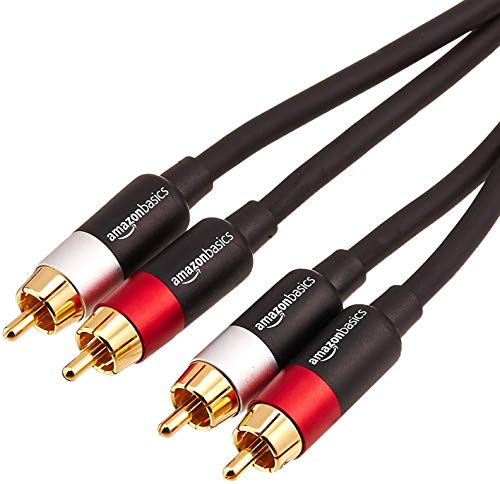
Gold-plated dual RCA cables with superior shielding reducing interference. 1.2m length ideal for turntable connections. Reliable performance.
As an Amazon Associate, we earn from qualifying purchases.
Products Mentioned in This Guide
Find Your Perfect Setup
Answer a few quick questions and get personalised recommendations.
Start the QuizFrequently Asked Questions
What does a phono preamp do?
A phono preamp (or phono stage) amplifies the weak signal from your turntable's cartridge and applies RIAA equalization to restore the proper frequency balance. Vinyl records are cut with reduced bass and boosted treble; the preamp reverses this so the music sounds correct. Without one, the sound will be extremely quiet and tinny.
Does my turntable have a built-in preamp?
Check for a switch labelled "phono/line" on the back of your turntable. If present, it has a built-in preamp - set to "line" when connecting to powered speakers or a regular amplifier input. Models like the Audio-Technica AT-LP60X and AT-LP120X include built-in preamps. If unsure, check your manual.
Should I use the built-in preamp or buy an external one?
Built-in preamps are convenient but usually basic quality. If your turntable cost under £200, the built-in preamp is probably fine. For turntables over £300, an external preamp (£80-£200) will deliver noticeably better sound with lower noise, better dynamics, and improved detail.
What is the best budget phono preamp in the UK?
The Art DJ Pre II offers surprising performance for the price. The Cambridge Audio Alva Solo is a significant step up with lower noise and better detail. Stepping up, the Pro-Ject Phono Box S2 is excellent, while the Rega Fono Mini A2D adds digital output for recording vinyl.
Related Guides
How to Set Up a Record Player UK 2026 | Step-by-Step
Buying GuideBest Turntables Under £500 UK 2026: Rega vs Pro-Ject vs Audio-Technica vs Sony
Setup GuideTurntable Cartridge Upgrade Guide UK 2026 | From £50
How-ToRecord Player Beginners Guide UK 2026 | Start from £200
How-ToPhono Preamp Guide 2026 | Do You Need One? From $39
Ready to find your perfect setup?
Our quiz matches you with the right turntable, speakers, and accessories.
Take the Quiz - It's FreeNo email required