Crosley vs Audio-Technica 2026 | Which Should You Buy?

Vinyl collector for over thirty years. Found my first turntable and a box of records in the loft at twelve — Nashville Skyline, After the Gold Rush, Disraeli Gears. Still spinning on a vintage Sony PS-X600.
Just so you know, some links on this page are affiliate links. If you buy something via them, we get a small kickback. You don't pay more, but it helps toward the next record.
This comparison exists because Crosley turntables are everywhere. Target, Walmart, Urban Outfitters, Amazon, Barnes & Noble, every holiday gift guide. They're cheap, they look vintage, and they're genuinely terrible for your records. Here's why, and what to buy instead.
Quick Guide
| Pick | Best For |
|---|---|
| Audio-Technica AT-LP60X | Best entry-level safe turntable: protects your records |
| AT-LP60XBT | Same record protection with Bluetooth wireless output |
| AT-LP120X | Enthusiast platform: upgradeable cartridge, direct drive |
| Crosley Cruiser / Voyager | Only for records you don't care about: damages vinyl with every play |
The Short Version
A Crosley Cruiser is cheap. An Audio-Technica AT-LP60X costs a bit more. That $80 difference protects your vinyl collection from permanent damage. If you've already got a Crosley, this guide will tell you what to do with it. If you're about to buy one, read this first.
Why Crosleys Are Everywhere (And Why That's a Problem)
Crosley Audio is good at one thing: making turntables that look attractive in photos and retail displays. The retro suitcase design photographs well. The price point gets them onto "gifts under $100" lists. They're stocked at Urban Outfitters alongside vintage aesthetic products. They sell, in massive quantities, to people who want to get into vinyl without thinking too hard about it.
None of that is the buyer's fault. Crosley markets these as legitimate turntables. The packaging looks fine. The reviews on Amazon are mostly from people who've never owned a proper turntable and have no baseline for comparison. The gift-giver did their best.
The problem is that Crosley's entry-level products, the Cruiser, the Voyager, the Bluetooth suitcase models, are built to a price point that makes proper audio engineering impossible. The result is a product that plays records while slowly destroying them.
The Engineering Problem
Most Crosley turntables use ceramic cartridges that track at 5-7 grams of stylus force. Proper turntables track at 1.5-2.5 grams.
That difference matters because the stylus sits in the groove of your record like a needle in a channel. The heavier the tracking force, the more pressure the stylus applies to the groove walls with every rotation. At 5-7 grams, you're putting two to three times the recommended force onto a piece of vinyl. The groove walls wear down. The high-frequency detail that lives in the fine groove modulations gets destroyed first.
The damage is cumulative. You won't hear it after five plays. After fifty, maybe slightly. After a few hundred plays, your records sound noticeably duller and more distorted on any turntable, not just the Crosley. The grooves are permanently degraded. No cleaning, no new stylus, no better turntable can reverse it. The information is gone.
The tonearms compound this. Crosley's plastic tonearms have no counterweight, meaning tracking force cannot be adjusted or verified. You're getting whatever the factory set, which varies by unit. The stylus itself is a crude sapphire or ceramic tip rather than a cut diamond. Diamond styli are harder, more precisely shaped, and track more accurately in the groove.
The built-in speakers make everything worse. They're mounted directly to the same chassis as the platter. When music plays through them, the speaker vibrations feed back into the needle through the turntable body. This is acoustic feedback at its most basic, and it adds distortion and muddiness to everything you hear. It also means the speakers sound terrible in isolation, since they're designed for a $70 product.
The AT-LP60X: What Proper Entry-Level Looks Like
The Audio-Technica AT-LP60X is the minimum viable turntable for safe vinyl playback, and it's been the default recommendation for good reason since Audio-Technica introduced it.

The baseline for safe vinyl playback. Protects your records, sounds good, easy to use.
The differences that matter:
Diamond stylus. A genuine diamond tip, precisely cut to trace the groove with minimal force. Audio-Technica sets the tracking force at 3.5 grams for the stock cartridge. That's on the heavier side for a magnetic cartridge but still within the safe range. It won't cause cumulative damage with regular use.
Properly isolated motor. Both the LP60X and the Crosley use belt drive, but the AT’s motor is mounted in an isolated chassis rather than Crosley’s suitcase-style casing where motor vibrations transfer into the signal chain. The result is a lower noise floor and cleaner audio. Belt drive is fine for home listening; the engineering around it is what matters.
Built-in phono preamp. Records output an extremely quiet, bass-reduced signal called PHONO level. Before a turntable signal can play through regular speakers, it needs to be amplified and equalized back to normal LINE level. The LP60X has this preamp built in, so you can connect directly to powered speakers or a receiver's AUX input without needing separate equipment.
Fully automatic operation. Press the button, the tonearm drops and plays. It reaches the end of the record and the tonearm lifts and returns. Exactly as simple as a Crosley, just without destroying your vinyl.
No built-in speakers. This is a feature, not a limitation. No feedback, no vibration, no compromise. You connect to separate speakers, which at any price point sound better than Crosley's built-ins.
Head-to-Head
| Feature | Crosley Cruiser | AT-LP60X | Why It Matters | Impact on Records |
|---|---|---|---|---|
| Tracking force | 5–7g (damaging) | around 3.5g (safe) | Safe range is 1.5–3g for magnetic | Crosley causes measurable groove wear per play |
| Stylus type | Ceramic/sapphire | Diamond, precision cut | Diamond traces grooves accurately with less friction | Ceramic tip degrades high-frequency groove detail |
| Drive type | Belt-drive (low quality) | Belt-drive | AT motor properly isolated | Crosley motor vibration audible due to chassis design |
| Built-in speakers | Yes (causes feedback) | No (external required) | Speaker vibrations feed back through chassis | Adds distortion; stylus picks up speaker output |
| Built-in preamp | Sort of | Yes (switchable) | Proper RIAA equalization required | N/A |
| Record safety | Damages over time | Safe for decades | Groove damage is irreversible | Your records lose detail permanently on Crosley |
| Sound quality | Poor | Good | Magnetic cartridge + proper tracking = better audio | N/A |
| Cartridge type | Ceramic | Magnetic (AT3600L) | Magnetic tracks accurately; ceramic drags | Ceramic increases friction per groove contact |
| Counterweight | None | Fixed (non-adjustable) | Adjustable force is a sign of real engineering | Crosley tracking force varies unit-to-unit |
| Speeds | 33/45 RPM | 33/45 RPM | N/A | N/A |
The Real Cost of a Crosley
A good LP from a used record shop runs $10-25. A sealed new pressing runs $25-40. Audiophile pressings go higher.
If the Crosley degrades your records over 200-300 plays, you're potentially damaging a collection worth hundreds or thousands of dollars to save $80 on the turntable. The math only works if your entire collection is thrift store finds you don't care about.
If you have any records you actually value, the AT-LP60X pays for its price difference almost immediately.
What to Do With Your Crosley
Don't throw it away. A few options:
Keep it for records you don't care about. Thrift store finds, dollar-bin curiosities, albums you want to sample before tracking down a better pressing. The Crosley won't ruin them any faster than they already are.
Sell it. There's always a market for Crosleys among people who haven't done this research yet. Get $30-40 back toward your LP60X.
Keep it as a display piece. The suitcase aesthetic genuinely looks good on a shelf. You don't have to use it.
Just keep your good vinyl away from it.
Not All Crosleys Are Bad
The Crosley C6, C62, and C10 are legitimate turntables with proper magnetic cartridges. Crosley's higher-end models use Audio-Technica or Ortofon cartridges and proper engineering. They're fine products.
The problem is that "Crosley" for most people means the suitcase players, and those are what get gifted and bought in volume. The C62 is a completely different product from the $70 Cruiser. If someone recommends a Crosley specifically by model and it's from the C-series, verify it uses a magnetic cartridge before dismissing it.
Common Questions
Will my records be permanently damaged from Crosley use? It depends on how much. A handful of plays won't ruin them. Regular use over months will noticeably degrade the grooves on good vinyl. If you've been playing your good records on a Cruiser, switch now and stop the damage from compounding. The records you've already played are slightly worse than they were, but probably still listenable.
What speakers do I need with the AT-LP60X? The LP60X has a built-in phono preamp, so any powered or active speakers work directly. The Edifier R1280T is the standard pairing. The Klipsch ProMedia 2.1 is a step up. If you already have a stereo receiver with a phono input, switch the LP60X's preamp off via the switch on the bottom.
Can I upgrade the cartridge on the AT-LP60X? No. The AT3600L cartridge on the LP60X is non-removable. If cartridge upgrades matter to you, the AT-LP120X accepts standard half-inch mount cartridges and is worth the jump. It's the top pick in our best turntables under $500 guide once you're ready to spend more.
Is the Crosley C62 any good? Yes. It uses a proper magnetic cartridge and is a completely different product from the Cruiser. At that price, the AT-LP120X is still better value, but the C62 won't damage your records.
Does the AT-LP60X come in a Bluetooth version? Yes. The AT-LP60XBT adds Bluetooth for about $50 more. Useful if you have wireless speakers. The sound quality is the same; Bluetooth just adds wireless convenience.
Why do people still buy Crosleys if they're so bad? Price and aesthetics. A $70 turntable that looks retro is an easy gift. Most buyers have no frame of reference for what a good turntable costs or why it matters. The record industry's resurgence has brought in millions of new vinyl buyers, and Crosley captures the impulse buyers at the bottom of the funnel.
What to Buy at Every Budget
Tightest budget: Audio-Technica AT-LP60X. The minimum quality level for safe vinyl playback. Start here.
With Bluetooth: Audio-Technica AT-LP60XBT or Sony PS-LX310BT. Wireless convenience without sacrificing record safety.
Room to grow: Audio-Technica AT-LP120X. Upgradeable cartridge, manual operation, direct drive. Built for years of use and improvement.
For complete setup guidance including speakers and accessories, see our beginners guide. For a deeper comparison of Audio-Technica models, the LP60X vs LP120X guide breaks it down properly.
Setting Up the AT-LP60X
The LP60X ships ready to use. You'll need:
Powered speakers or an amplifier. The turntable has no speakers of its own. Powered/active speakers (those with their own amplifier built in) connect directly via RCA cables. The Edifier R1280T is the most commonly recommended pairing and the combination sounds genuinely good for the price. If you have a stereo receiver or amplifier, connect via RCA and make sure the LP60X's preamp switch is set to the appropriate position (LINE for a standard AUX input, PHONO if your amp has a dedicated phono stage).
An RCA cable. The LP60X comes with one, so you're covered out of the box.
That's it. Unbox it, place it on a stable surface away from speakers (speaker vibrations can cause feedback), connect the RCA cable to your speakers, set the speed (33 or 45 RPM), and press play. The tonearm does the rest.
One thing to check: the protective foam under the tonearm during shipping. Some people forget to remove it and wonder why the tonearm won't drop. Remove it before first use.
Looking After Your Records Going Forward
If you've been using a Crosley, your records have some degree of groove wear. Not catastrophic, but real. A few things help going forward:
Clean your records before playing. A carbon-fiber brush ($15-20 from Amazon) removes dust and static before the needle touches the groove. Dust particles act like sandpaper on the stylus and groove walls. This matters on any turntable.
Replace the stylus periodically. The AT-LP60X's stylus lasts around 300-500 hours of play time. Audio-Technica sells a replacement (ATN3600L, around $15-20). A worn stylus causes more groove damage than a fresh one, so replacing it every couple of years of regular use is worthwhile.
Store records vertically. Flat storage causes warping over time. Upright in a crate or shelf, not leaning at an angle.
Keep records in inner sleeves. The paper inner sleeves that come with most records are fine. Anti-static polyethylene sleeves (around $20 for 50) are better if you're serious about preservation.
None of this is complicated. The point is that a good turntable and basic care will keep your records sounding good for decades. The Crosley undoes all of that.
The Verdict
Buy the AT-LP60X. Spend the extra $80. Your records will thank you.
If you've already got a Crosley, keep it for junk records and buy the LP60X for anything you actually care about. If you're considering the Crosley as a gift for someone, buy them the LP60X instead. The recipient might not appreciate the difference immediately, but their vinyl collection will.
How Tracking Force Damage Actually Happens
The damage from high-tracking-force players is not dramatic. Your records do not shatter or visibly degrade. The grooves simply wear faster than they should. Microscopic groove walls compress and flatten under the stylus's excess weight. After a few hundred plays, the record sounds slightly duller and more distorted on any turntable. After a thousand plays, the degradation is obvious.
The Crosley's ceramic cartridge tracks at 5 to 7 grams. A quality magnetic cartridge tracks at 1.5 to 3 grams. That extra pressure applies during every second of every play. The AT-LP60X tracks at 3.5 grams with its stock stylus, within the safe range for standard vinyl. If you have records you care about, this difference matters.
The built-in speaker problem compounds the tracking issue. Speakers vibrate. When speakers share an enclosure with a turntable's platter and tonearm, those vibrations couple directly into the playback chain. The stylus picks up the speaker's output as feedback, adding resonance and smearing the sound. The AT-LP60X connects to external speakers, eliminating this feedback loop entirely.
What to Avoid
Avoid these brands entirely for any records you value: - Victrola (most models under $100 use ceramic cartridges with 5g+ tracking force) - Jensen (all suitcase models have the same ceramic cartridge problem) - 1byone portable models - Any "record player" with built-in speakers under $80, the built-in speaker design fundamentally causes feedback and record damage - "Portable" or briefcase turntables regardless of brand, same bad engineering at every price
The pattern to recognise: Built-in speakers + ceramic cartridge + no counterweight = record damage. This combination is not about price range; it is an engineering choice that manufacturers make to cut costs below $100.
Crosley models that are actually fine: Crosley's C6, C62, and C10 use proper magnetic cartridges and are legitimate entry-level turntables. The problem is the Cruiser, Voyager, and Scout, the suitcase models that dominate retail and gift guides. If evaluating any Crosley, check for "magnetic cartridge" in the specs. Ceramic = avoid.
Frequently Asked Questions
Is there any situation where a Crosley makes sense? If you are buying a display piece that will never be used to play records you care about, the visual appeal at low cost is understandable. For any real vinyl listening, even occasional casual use, the AT-LP60X is the minimum starting point. The damage Crosley players cause is cumulative and permanent.
Can I replace the stylus on a Crosley to improve it? Some Crosley models accept replacement styli, but the fundamental problems remain: the tonearm geometry is poor, the tracking force is not adjustable, and the ceramic cartridge body cannot be upgraded to a magnetic design on most models. Replacement styli improve longevity marginally but do not fix the core engineering problems.
Does the AT-LP60X play 45rpm records? Yes. The AT-LP60X plays both 33 and 45rpm records. A button on the front switches between speeds. A 45rpm adapter is included for playing 7-inch singles.
Can we use the AT-LP60X with a stereo receiver? Yes. The built-in phono preamp outputs a standard line-level signal through the RCA outputs. Connect these to any line-level or auxiliary input on a stereo receiver. Do not use the phono input on a receiver, which would double-amplify the signal and cause distortion.
How long will the AT-LP60X last? The mechanism is durable. Users regularly report 7 to 10 years of daily use without mechanical failure. The stylus wears out and gets replaced, but the turntable itself keeps working. It is a significantly better long-term investment than spending less on a Crosley that damages records with every play.
The cheap Crosley is a trap. It looks like a turntable, it acts like a turntable, and it will ruin your records while appearing to do nothing wrong. The AT-LP60X is what a turntable should actually be, and it's the cheapest point at which you can play vinyl safely.
What You'll Need With It
Clean records before playing on the AT-LP60X. A 30-second brush before play removes the surface particles that cause the clicks and pops people associate with vinyl. The AT-LP60X tracks cleanly on clean records; giving it dirty ones wastes the advantage of buying a proper turntable.
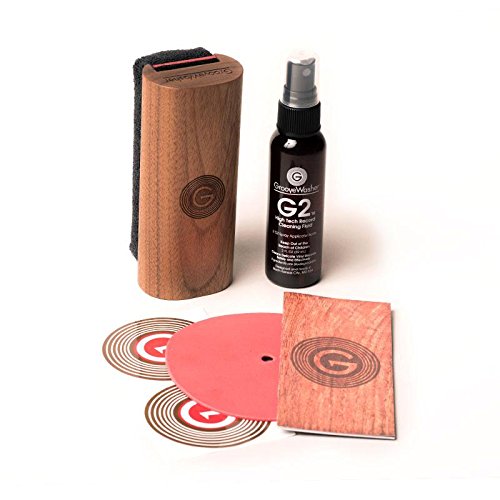
Professional cleaning system with microfibre brush, cleaning solution, and storage pouch. Safe for all vinyl types. Essential maintenance for preserving record quality.
Replace paper inner sleeves with anti-static polyethylene ones. Static from paper sleeves attracts dust back between plays, gradually degrading the records the AT-LP60X's proper tracking force is trying to preserve.
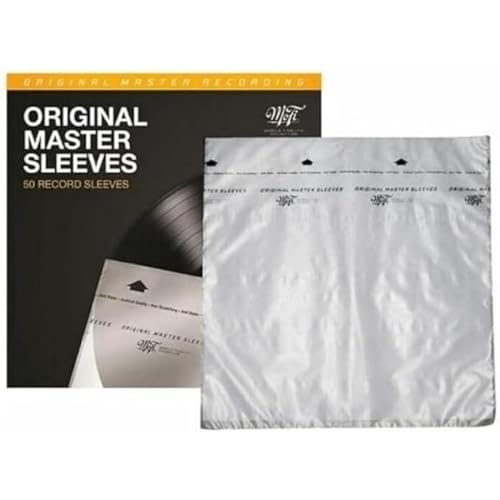
Audiophile-grade polyethylene sleeves preventing static buildup and dust accumulation. Archival quality protecting records for decades. Essential for serious collectors.
Find Your Perfect Setup
Answer a few quick questions and get personalised recommendations.
Start the QuizFrequently Asked Questions
Is Crosley bad for records?
Yes. Most Crosley turntables use ceramic cartridges with 5-7 grams of tracking force - far higher than the 1.5-2.5g recommended. This wears grooves faster, causing permanent damage over hundreds of plays.
Is Audio-Technica better than Crosley?
Significantly better. Even the entry-level Audio-Technica AT-LP60X uses proper tracking force, a diamond stylus, and a belt-drive mechanism. Your records will last decades instead of degrading.
Why are Crosley turntables so cheap?
Crosley cuts costs on the components that matter: cheap ceramic cartridges, plastic tonearms, and built-in speakers that vibrate the platter. The low price comes at the cost of your record collection.
What is the best cheap turntable that won't damage records?
The Audio-Technica AT-LP60X is the cheapest turntable we recommend. It uses proper tracking force (around 3.5g with its cartridge design) and won't damage your vinyl.
Related Guides
Best Record Players 2026: Expert Picks at Every Budget
Buying GuideBest Budget Turntables 2026: Top Picks Under $200
How-ToRecord Player Beginners Guide 2026 | Start from $250
Buying GuideBest Turntables with Speakers 2026 | Complete Setup from $250
ComparisonCrosley vs Audio-Technica UK 2026 | Compared
Ready to find your perfect setup?
Our quiz matches you with the right turntable, speakers, and accessories.
Take the Quiz - It's FreeNo email required