Best Turntables with Speakers 2026 | Complete Setup from $250

Vinyl collector for over thirty years. Found my first turntable and a box of records in the loft at twelve — Nashville Skyline, After the Gold Rush, Disraeli Gears. Still spinning on a vintage Sony PS-X600.
Just so you know, some links on this page are affiliate links. If you buy something via them, we get a small kickback. You don't pay more, but it helps toward the next record.
When vinyl sounds right, it fills the room differently from anything else. Records played through quality speakers carry a weight and presence that streaming through a Bluetooth speaker simply cannot match. Getting to that sound is not complicated. You need a turntable, separate speakers, and one RCA cable connecting them.
For most people starting out in the US, that means the Audio-Technica AT-LP60X paired with Edifier R1280T powered speakers. The pairing is fully automatic and sounds genuinely good. Everything below explains why, and what to choose if you want something different. And if you're still weighing which deck should anchor the system, my ranking of the best record players for US buyers compares the strongest options at every level.
Quick Picks
Not sure which setup is right for you?
Take Our QuizWhy These Setups Use Separate Components
Speakers make sound by vibrating. When those speakers are built into a turntable, as in a suitcase player, those vibrations travel through the chassis to the stylus. The stylus picks them up and feeds them back through the speakers. More vibrations. More feedback. Bass turns to mush. Definition is lost across the frequency range.
Beyond feedback: the speakers in all-in-ones are small and cheap. Physics has no workaround for cramming small drivers into a cramped box. You get thin, tinny audio regardless of what the box says.
The most common offenders are the Crosley Cruiser and Victrola suitcase turntables, everywhere at Target and Walmart, on every gift list, retro-styled and visually appealing. They also use ceramic cartridges that track at 5 to 7 grams of stylus force, three to four times what a quality magnetic cartridge applies. Combined with the feedback loop, every play quietly degrades your records. Not overnight, not dramatically, but groove walls compress with every session and detail is lost over hundreds of plays.
The fix is simple: two components, one cable. Turntable into speakers via RCA. Each piece does its job in isolation.
The Budget Setup
The combination most people starting in vinyl should buy.
The Audio-Technica AT-LP60X is fully automatic. Press play, the tonearm moves and drops itself. When the record ends, the arm lifts, returns, the motor stops. No counterweights, no tracking force adjustment. The internal phono preamp switches between PHONO and LINE, set it to LINE for any powered speaker connection.

Best budget automatic turntable, fully automatic, built-in preamp, treats records right
The Edifier R1280T powered speakers are the standard recommendation for budget vinyl. Two channels, 42 watts total, 4-inch woofers and 13mm tweeters in wood veneer cabinets. Sound is warm and musical, not analytical, not flat, just listenable. In a bedroom or small living room, they fill the space without strain.
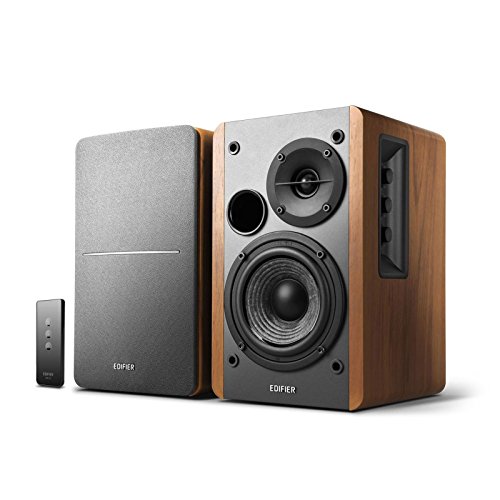
Best budget speakers for vinyl, warm sound, simple controls, wood finish
Setup time: 20 minutes from unboxing to playing records. One RCA cable (included with the turntable) from the turntable to the right Edifier. Power cable for each speaker. Done.
What this gets you. Sound that beats any all-in-one by a meaningful margin. Records play back safely, the AT-LP60X tracks at 3.5 grams with its stock stylus, well within the safe range for standard vinyl. When you want to upgrade, each piece can be replaced independently.
The honest limitations. The AT-LP60X has a fixed cartridge. When the stylus wears out after 500 to 1000 hours of play, you replace the stylus for around $15 to $20. You cannot upgrade to a different cartridge, for that, you need the AT-LP120X. The Edifiers are solid at their price but they won't reveal everything a more capable turntable can offer. Both are entry-level, both are good at what they do.
The Mid-Range Setup
Spend up to the mid-range setup instead of the budget one and you get a system that genuinely grows with you.
The Audio-Technica AT-LP120X is the upgrade path. Direct drive, removable headshell, adjustable tonearm. The headshell means you can swap cartridges, from the stock AT-VM95E to the Nagaoka MP-110, or the Ortofon 2M Blue, without replacing the turntable. The internal phono preamp is bypassable, so you can add an external phono stage later without changing anything else.

Best mid-range turntable, direct drive, removable headshell, cartridge upgrade path built in
The Edifier R1700BT steps up from the R1280T with genuine bass weight. 66 watts total, 5-inch woofers. Medium living rooms fill without strain. Bluetooth is built in, useful when you want to stream from a phone alongside vinyl.
The honest limitations. The AT-LP120X is manual, you place the tonearm yourself, and the motor keeps running until you stop it. Anyone coming from a fully automatic setup sometimes forgets this and returns to find the needle running against the label. The R1700BT's Bluetooth can occasionally pick up interference in busy wireless environments. Neither is a serious problem, but both are worth knowing.
The Wireless Option
If cables are genuinely a problem, the Sony PS-LX310BT has Bluetooth output alongside standard RCA. Pair it with any Bluetooth speaker you own. Sound quality through standard Bluetooth is below wired, audio is compressed noticeably, but it's convenient for spaces where running cables is awkward.
For wireless without the quality compromise, the Sony PS-LX5BT uses aptX Adaptive. The gap between wired and wireless at this codec level is small enough that most listeners cannot reliably tell the difference.
The Compact Premium Option: Klipsch The Fives
If you want one powered unit to handle amplification and speakers alongside a separate turntable, the Klipsch The Fives is the US market option worth knowing. It accepts a turntable's phono-level signal directly through its dedicated PHONO input, no separate preamp needed. The 5.25-inch woofers deliver real bass weight, and the Klipsch horn-loaded tweeter delivers detail and efficiency that most powered speakers at this price can't match.
It's a different proposition from the Edifier range: more money, notably better sound, and built-in phono that simplifies setup with any turntable. If you're pairing with a Rega Planar 1 or similar turntable without a built-in preamp, The Fives handles everything in one unit.
What to Avoid
Crosley Cruiser and similar suitcase players. Ceramic cartridge, 5 to 7 grams of tracking force, speakers bolted to the same chassis as the platter. Records sound fine at first. The damage is cumulative, groove walls compressed with every play, detail and dynamics gradually lost. Crosley products look like record players. They are not, in any meaningful sense.
Victrola all-in-ones. Same fundamental engineering problems. The retro styling is appealing; the cartridge and speaker quality are the same corner-cutting. For a decorative item: acceptable. For records you care about: no.
Any turntable under $100. Below this price, cartridges are generally ceramic or very low-quality magnetic, tracking force is set too high and often not adjustable, and mechanisms wear quickly. Nothing good happens below $100 for a turntable.
No-name USB turntables. USB output is a feature, not a quality signal. A poorly-built turntable with a USB chip is still a poorly-built turntable. If you need to digitise vinyl, look at the Audio-Technica AT-LP120XUSB or ION Audio Max LP, which combine USB with proper engineering.
Buyer's Guide: What to Look For
Built-in phono preamp. The signal from a turntable cartridge is tiny. A phono stage amplifies it to line level for powered speakers. The AT-LP60X and AT-LP120X both have switchable internal preamps, set to LINE for powered speakers. If a turntable lacks a built-in preamp, add a standalone phono stage: the Behringer PP400 or ART DJ Pre II are reliable budget options. The Pro-Ject Phono Box E is a meaningful step up.
Powered versus passive speakers. Powered speakers have an amplifier built in. Plug in your turntable and they work. Passive speakers need a separate integrated amplifier or receiver. Beginners should start with powered. If you already own a receiver from a home theater system, passive bookshelf speakers can be a cost-effective option.
Magnetic versus ceramic cartridge. This matters more than most specifications. Magnetic cartridges track at 1.5 to 3 grams and reproduce groove detail accurately. Ceramic cartridges track at 5 to 7 grams and wear records faster. Every turntable recommended here uses magnetic. Anything under $100 is likely ceramic, verify before buying.
Phono input on speakers. Some powered speakers include a built-in phono stage, allowing turntables without internal preamps to connect directly. The Klipsch The Fives and Kanto YU4 both have this. Not essential when buying the AT-LP60X or AT-LP120X, but useful with Rega or Pro-Ject turntables.
Positioning the Setup
The turntable needs a stable, level surface. A solid shelf, dedicated hi-fi stand, or sturdy table all work. Avoid furniture that wobbles when you press it.
Keep speakers on different furniture from the turntable where possible. The same surface works if the turntable has good isolation feet and the surface is genuinely rigid. What doesn't work: speakers vibrating directly onto the surface the turntable sits on.
Minimum distance between turntable and speakers: about a foot. Most rooms handle this easily with turntable and speakers on separate shelving.
Speakers at ear level when seated. Angled slightly toward your listening position. A rough equilateral triangle between your head and the two speakers gives the best stereo image.
What I'd Buy Today
For most people starting out: the Audio-Technica AT-LP60X paired with the Edifier R1280T. The pairing is fully automatic, has a built-in preamp, and sounds genuinely good. One RCA cable, two power plugs, done in twenty minutes. The AT-LP60X treats records correctly, 3.5 gram tracking force, magnetic cartridge. The Edifiers fill a bedroom or small living room without strain.
If you want a system to grow with: the AT-LP120X and Edifier R1700BT. The 120X has a removable headshell for cartridge upgrades and bypassable preamp for a future external stage. The R1700BTs add bass weight and Bluetooth for streaming alongside vinyl.
Frequently Asked Questions
Do I need a separate amplifier? Not with powered speakers. The AT-LP60X and AT-LP120X connect directly to powered speakers via RCA, powered speakers have amplification built in. You would only need a separate amplifier if you chose passive speakers or had a turntable without a built-in phono stage.
Can I use my existing Bluetooth speaker? Yes, with the right turntable. The Sony PS-LX310BT and PS-LX5BT have Bluetooth output and pair with any Bluetooth speaker. Alternatively, a Bluetooth transmitter plugs into the RCA output of most turntables. Sound quality through standard Bluetooth is acceptable for casual listening but below wired connection.
What is the minimum I need to spend for a decent setup? The entry pairing is the AT-LP60X and Edifier R1280T. Below that, cartridge quality or speaker quality drops to where you're either risking your records or not getting sound worth hearing. This combination sounds genuinely good.
Will the speakers cause feedback through vibration? Not with normal placement. A foot of distance and separate furniture surfaces break the feedback path. Playing at very high volume with speakers directly next to a turntable on the same surface can occasionally cause bass resonance, move the components apart if this happens.
Can I connect a turntable to a home theater receiver? Often yes. Check whether the receiver has an RCA or aux line-level input. Most home theater receivers have both. If your turntable has a built-in preamp, set it to LINE and connect via RCA to a line or AUX input. If the receiver has a dedicated PHONO input, set the turntable's switch to PHONO or off. Running both preamps simultaneously causes severe distortion.
What records should I start with? Start with albums you already know well, something you've heard dozens of times in digital form. The first job is calibrating your ears to the new setup. Classic well-recorded albums from the 1960s and 1970s reward this: Abbey Road, Kind of Blue, Rumours, Tapestry. They were engineered with the dynamic range that vinyl handles well, and the stereo imaging is something digital rarely replicates as convincingly.
Building From Here
Every component in these setups can be improved independently. The cartridge can be upgraded (if using the AT-LP120X), the speakers replaced, a dedicated phono stage added. No purchase commits you to a dead end.
For more on speaker selection, our best speakers for turntable US guide covers the full range. For getting the most from your setup, the record player setup guide covers placement, levelness, and tracking force.
What to expect from your first session. Put on something you've heard hundreds of times. The stereo image from well-positioned speakers and a properly-set-up turntable is physical, the band occupies a defined space in the room, not just a direction from the speakers. Abbey Road, Kind of Blue, Rumours, albums where the recording quality shows what the format can do. Clean the record first with a carbon fibre brush, check the stylus is dust-free, and give it 20 minutes to warm up. First sessions are about calibrating your ears as much as listening.
The difference between a proper two-component setup and a suitcase player isn't subtle. It's the difference between vinyl the way it sounds and vinyl the way it gets blamed for disappointing people. Get the two pieces right and you'll understand why anyone who hears a properly set-up system rarely goes back.
What to Expect From Your First Session
The first record through a properly set-up system is different from what most people expect, particularly if they've only heard vinyl through cheap all-in-one equipment. You'll notice the sound doesn't come from the speakers but from the space between them. On a well-recorded stereo album, the band occupies a defined position in the room. Miles Davis is to the left of center. Paul McCartney's bass is everywhere. You hear the room the recording was made in.
You'll also hear things you didn't notice on streaming. Not because vinyl is warmer, that quality is real but partly mythologised, but because the playback chain is different. String overtones, room ambience, the physical presence of percussion. Whether this is preferable to digital is a matter of taste. That it sounds different is not in question.
A few things to do in the first session:
Clean the record before playing. Even new records come from the pressing plant with mould-release compound. A quick pass with a carbon fibre brush removes loose particles and prevents them grinding into the grooves under the stylus. See our vinyl care guide for the full routine.
Check the stylus before every session. Front to back, one stroke with the stylus brush. Five seconds. Removes dust and debris that accumulates on the tip and would otherwise drag through your grooves. The single most valuable maintenance habit in vinyl.
Give the setup 20 minutes. The AT-LP60X and most turntables perform their best after the motor has been running for a short while. Play something familiar for the first side, Abbey Road, Kind of Blue, Rumours, something you know well enough to notice what the setup reveals.
Choose the right volume. Vinyl at a decent volume, loud enough to fill the room, sounds better than vinyl played quietly in the background. The Edifiers' sweet spot is around 60 to 70 percent of maximum volume in a small to medium room. Turn it up enough to hear what you bought.
What You'll Need With It
A shielded RCA cable between turntable and speakers matters more than most people expect. Unshielded cables pick up hum from nearby electronics. Gold-plated connectors prevent corrosion at the connection points and maintain clean signal transfer.
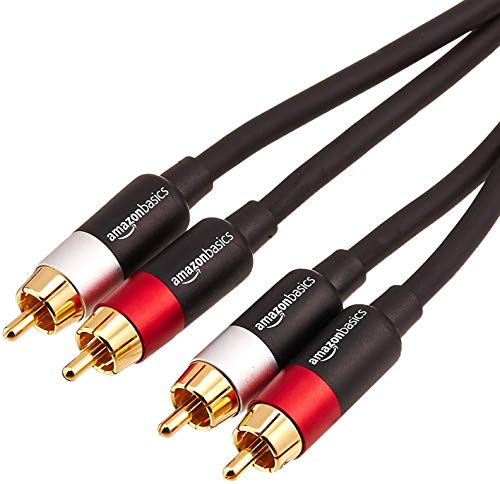
Gold-plated dual RCA cables with superior shielding reducing interference. 1.2m length ideal for turntable connections. Reliable performance.
Clean records before playing. Dust under the stylus causes surface noise and gradually wears both the stylus tip and the record groove. A quick brush before each play costs 30 seconds and protects both.
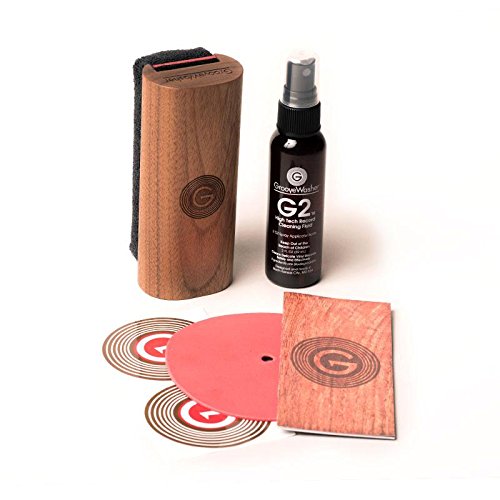
Professional cleaning system with microfibre brush, cleaning solution, and storage pouch. Safe for all vinyl types. Essential maintenance for preserving record quality.
As an Amazon Associate, we earn from qualifying purchases.
Products Mentioned in This Guide
Find Your Perfect Setup
Answer a few quick questions and get personalised recommendations.
Start the QuizFrequently Asked Questions
Are turntables with built-in speakers any good?
Most turntables with built-in speakers sacrifice sound quality for convenience. The speakers are small, low-powered, and mounted directly on the turntable causing vibration. Better options include buying a turntable and separate powered speakers, or choosing an all-in-one system from reputable brands.
What is the best all-in-one turntable and speaker setup?
For separate components, pair the Audio-Technica AT-LP60X with Edifier R1280T powered speakers for a complete system around $250 that sounds excellent. This approach gives you much better sound than any integrated unit.
Can I connect wireless speakers to a turntable?
Yes, but with caveats. Some turntables like the Sony PS-LX310BT have Bluetooth output, but wireless transmission compresses audio quality. Better options include powered speakers with Bluetooth input, or using a Bluetooth transmitter on the turntable's line output for flexibility with any wireless speakers.
How much should I spend on speakers for my turntable?
A good rule is to spend 50-100% of your turntable budget on speakers. If you bought a mid-range turntable, budget $150-$200 for speakers. Decent powered bookshelf speakers start with the Edifier R1280T, mid-range options run $150-$350 (Audioengine, Kanto), and premium choices start at $500+ (KEF, Q Acoustics).
Related Guides
Best Speakers for Turntables 2026 | From $99 to $500
Buying GuideBest Budget Turntables 2026: Top Picks Under $200
Buying GuideBest Record Players 2026: Expert Picks at Every Budget
Buying GuideBest Bluetooth Turntables 2026 | Wireless from $179
Buying GuideBest Turntables with Speakers UK 2026 | Complete Setup from £200
Ready to find your perfect setup?
Our quiz matches you with the right turntable, speakers, and accessories.
Take the Quiz - It's FreeNo email required