
Crosley vs Audio-Technica UK 2026 | Compared

Vinyl collector for over thirty years. Found my first turntable and a box of records in the loft at twelve — Nashville Skyline, After the Gold Rush, Disraeli Gears. Still spinning on a vintage Sony PS-X600.
Just so you know, some links on this page are affiliate links. If you buy something via them, we get a small kickback. You don't pay more, but it helps toward the next record.
Crosley turntables are cheap, they look like something from a better era, and they play records. They are also, without exception, the wrong choice if you care about the records you're playing on them. Here is what happens and what to do instead.
Quick Picks
Not sure which setup is right for you?
Take Our QuizThe Short Answer
Buy the Audio-Technica AT-LP60X. It protects your records, sounds better, and will last years longer. Crosley turntables wear out your vinyl with every play. Check Price on Amazon

The minimum turntable for protecting your vinyl, proper tracking force, magnetic cartridge, belt drive
If you already own a Crosley, don't panic. The damage is gradual. But consider upgrading before your favourite records are permanently degraded.
Why Crosley Damages Records
Three problems make most Crosley turntables harmful to vinyl:
1. Excessive Tracking Force
The stylus (needle) presses into the record groove. Proper turntables use 1.5-2.5 grams of force. Most Crosley models use 5-7 grams - sometimes more.
This extra pressure wears the groove walls faster. Over hundreds of plays, you'll hear increasing noise, distortion, and loss of detail. The damage is permanent.
2. Ceramic Cartridges
Quality turntables use magnetic cartridges that glide through grooves. Crosley uses cheap ceramic cartridges that drag through them. More friction means more wear.
3. Non-Adjustable Tonearms
Proper turntables let you adjust tracking force and anti-skate. Crosley tonearms are fixed - you can't reduce the pressure even if you wanted to.
The Audio-Technica Difference
The Audio-Technica AT-LP60X fixes all three problems:
Proper Tracking Force: 3.5g with its AT3600L cartridge - designed to work together without damaging vinyl.
Magnetic Cartridge: Diamond stylus on a magnetic cartridge. Gentler on grooves, better sound quality.
Properly Isolated Motor: Both use belt drive, but the AT-LP60X’s motor is mounted on an isolated chassis rather than the Crosley’s suitcase-style construction where vibrations transfer into the signal chain. Cleaner sound, less noise floor.
Built-in Preamp: Connect directly to powered speakers or amplifiers.
Head-to-Head Comparison
| Feature | Crosley Cruiser | Audio-Technica AT-LP60X | Why It Matters | Record Impact |
|---|---|---|---|---|
| Value | Cheapest upfront | A modest step up | Small price gap, big quality gap | N/A |
| Tracking Force | 5–7g (damaging) | 3.5g (safe) | Safe range is 1.5–3g | Crosley causes measurable groove wear every play |
| Cartridge Type | Ceramic | Magnetic (AT3600L) | Magnetic tracks accurately; ceramic drags | Ceramic strips high-frequency detail over time |
| Stylus Tip | Sapphire/unpolished | Diamond, precision cut | Diamond is harder, more accurate | Crosley tip contacts wider groove area, more friction |
| Drive Type | Belt-drive (low quality) | Belt-drive | AT motor properly isolated | Crosley motor vibration audible due to chassis design |
| Built-in Speakers | Yes (cause feedback) | No (external required) | Speaker vibrations retransmit through chassis | Adds distortion; reduces stylus accuracy |
| Upgradeable | No | Stylus only | LP120X allows full cartridge swaps | N/A |
| Record Safe | No | Yes | Crosley damage is cumulative, irreversible | Your records degrade with every play on a Crosley |
The £30-50 difference protects a record collection worth hundreds or thousands.
But Crosley Sounds Fine to Me
It might, at first. The problems with Crosley aren't immediately obvious:
- New records hide early wear - Built-in speakers mask distortion - You don't notice what you've never heard
Play the same record on an AT-LP60X with decent speakers. You'll hear detail, clarity, and dynamics that Crosley hides.
More importantly, your records won't be slowly grinding away.
What If I Already Own a Crosley?
Don't throw out your records. Damage happens gradually. A few dozen plays on a Crosley won't ruin a record.
Upgrade when you can. The sooner you switch to a proper turntable, the more life your collection retains. Our vinyl care guide covers how to look after your records once you've got decent equipment.
Don't buy more records until you upgrade. Every new record you play on a Crosley starts its wear journey immediately.
Keep the Crosley for decoration. Some people use them as display pieces or for playing charity shop records they don't care about.
Audio-Technica Options
**Budget: AT-LP60X**
Fully automatic, built-in preamp, belt-drive. The minimum spec worth buying for protecting vinyl. Perfect for beginners. Check Price on Amazon
**With Bluetooth: AT-LP60XBT**
Same turntable with wireless streaming. Pair with Bluetooth speakers for a cable-free setup. Check Price on Amazon
**Upgrade Path: AT-LP120X**
Direct-drive, adjustable counterweight, removable headshell for cartridge upgrades. For those who want to grow into the hobby. See our LP60X vs LP120X comparison for the full breakdown. Check Price on Amazon
What to Avoid
Crosley isn't the only brand to avoid, the entire suitcase turntable category causes the same problems.
Avoid these brands entirely for any records you value: - Victrola (most models under £100 use ceramic cartridges) - Jensen (virtually all models use ceramic cartridges with excessive tracking force) - 1byone suitcase models - Any "record player" with built-in speakers under £80 - Any "portable" or "briefcase" turntable at any price, the built-in speaker design is fundamentally flawed
The pattern to recognise: Built-in speakers + ceramic cartridge + no counterweight = record damage. This is not a price issue, it is an engineering choice. At under £80, these three components always come together.
One Crosley line worth knowing about: Crosley's higher-end products, the Nomad, the T400, the Spinnerette, use magnetic cartridges and lower tracking forces. Some are genuinely decent entry-level turntables. The problem is that Crosley's best-selling products (Cruiser, Voyager, Scout) are the harmful suitcase models. If you're evaluating a Crosley, check the cartridge type before buying.
The Bottom Line
Crosley turntables are designed to be cheap. They achieve that by using components that damage vinyl.
The Audio-Technica AT-LP60X costs a bit more than most Crosleys. That difference buys:
- Records that last decades instead of degrading - Noticeably better sound quality - A turntable that works properly for years
Your record collection is worth more than £30. The AT-LP60X costs the same as a few records. Buy one, protect the rest.
The records you play on the right equipment will still sound good in twenty years. The same records played on the wrong equipment will not. That’s the full story. The AT-LP60X is not a luxury. It’s the minimum investment in preserving something worth preserving.
If you already own good records, the upgrade is urgent. If you’re just starting out and considering what to buy: spend the extra £30-50. It will be the best vinyl decision you make.
Setting Up Your AT-LP60X
The AT-LP60X requires minimal setup. Connect the RCA cables to powered speakers or an amplifier’s line input. Flip the switch on the back to LINE (since powered speakers don’t have a phono input). Place the turntable on a stable surface away from speakers. That’s it.
The LP60X is automatic, the tonearm lifts, moves to the record, and drops itself. It returns and lifts at the end of the side. You don’t touch the tonearm. This is a feature, not a limitation, at this price point. The motor and bearing quality in the LP60X would make a manual operation at this price less satisfying, not more.
Clean the record before playing (a carbon fibre brush removes surface dust). Clean the stylus every few sessions (one stroke with the stylus brush). That’s the full maintenance routine for an LP60X owner. Our vinyl care guide covers this in full. The whole routine takes under two minutes per session and becomes habit within a week.
The Science of Groove Wear
It’s worth understanding exactly what happens when a ceramic cartridge with 5-7g tracking force plays a record.
A vinyl groove is a physical object. Its walls contain the music, encoded as microscopic lateral and vertical modulations. When the stylus traces this groove, it presses against those walls. The friction involved is proportional to tracking force and stylus sharpness.
At 1.5-2.5g (correct for a magnetic cartridge with a quality stylus), the interaction is gentle. The stylus tip is polished to a precise radius. It follows the groove modulations accurately. Each play removes a very small amount of vinyl, at 1000 hours of playing time, the groove walls are still essentially intact.
At 5-7g with a ceramic cartridge and unpolished conical tip, the stylus drags. The higher force means more friction. The less precise tip contacts a larger area of the groove wall. Each play removes more material. After 100 plays, the groove walls are measurably worn. After 300 plays on a favourite record, the high-frequency detail is permanently gone.
The effect is cumulative and irreversible. You don’t hear it happening. You hear the result when your records sound like they’ve aged twenty years in three months.
What About Crosley’s Better Models?
Crosley produces a range, and not all models are equally harmful. Their higher-end products, the Nomad, the Rondo, the T400, use magnetic cartridges and lower tracking forces. Some are genuinely decent entry-level turntables.
The confusion is that Crosley’s best-selling models (the Cruiser, the Voyager, the Scout) are the harmful ones. These are the brightly coloured suitcase turntables that dominate gift shops and department stores. They use ceramic cartridges with excessive tracking force by design.
If someone gives you a Crosley as a gift, the first thing to check is whether it has a magnetic or ceramic cartridge. A ceramic cartridge at 5g+ means you should either replace it or not play records you care about.
What About Vintage Turntables?
The alternative to buying an AT-LP60X is sometimes a vintage turntable from a car boot sale, charity shop, or Gumtree. This is legitimate, a 1970s or 1980s Technics, Pioneer, or Dual in good condition is genuinely excellent equipment.
The caveat is condition. A vintage turntable needs a new belt (if belt-drive), a new stylus, and ideally a service. Total cost: £30-80 on top of the purchase price. Without these, a vintage deck with a 30-year-old stylus tip will damage your records as badly as a cheap Crosley.
If you’re buying vintage, factor in the service cost. A well-serviced Technics SL-1200 from 1980 is better than any modern turntable under £500. A neglected one is not.
For most beginners, the AT-LP60X is the right choice: known condition, manufacturer warranty, no guesswork.
What I'd Buy Today
The Audio-Technica AT-LP60X for most people. Around £120, fully automatic, magnetic cartridge, belt drive. It protects your records, sounds noticeably better than any Crosley through a decent speaker, and will still be working correctly in ten years. The short answer has always been the same: the LP60X costs £30–50 more than a Crosley Cruiser, and that difference buys you a turntable that doesn’t damage your records.
If you know you want to stay with vinyl long-term and you want a cartridge upgrade path, the AT-LP120X is worth the extra. Removable headshell, adjustable counterweight, bypassable preamp. Around £270, and it’s the platform most enthusiasts stay on for years before moving up to a Rega or Pro-Ject.
Frequently Asked Questions
Is the Crosley Cruiser really that bad? Yes. The Cruiser has a ceramic cartridge, 5-7g tracking force, and no adjustment capability. It’s designed to be cheap to manufacture, not to protect records. Every record you play on it accumulates groove damage. For records you don’t care about, this is fine. For records you value, it’s not.
Can I fix a Crosley by replacing the cartridge? Only if the turntable has standard half-inch mounting. Most suitcase Crosleys do not, their tonearms are fixed and proprietary. Some Crosley models (the full-size ones on plinths) can accept cartridge upgrades. Check the specifications before attempting this.
What if I just want something to play records at a party? Then a Crosley is fine for that specific purpose. Use records you don’t care about, or charity shop finds. If the records aren’t precious to you, the groove damage doesn’t matter. The problem is when people use these turntables on records they love and want to keep.
Does the built-in speaker on a Crosley cause problems? Yes, beyond the sound quality issue. Speaker vibrations travel through the chassis into the turntable platter. This causes the stylus to skip on the record, which creates additional physical groove damage. The speaker and the turntable physically interfere with each other. This is why every separate-component turntable, from the AT-LP60X upward, has external speakers.
What’s the minimum I should spend to protect my records? The AT-LP60X at around £120 is the entry point for a record-safe turntable. It tracks at 3.5g with a magnetic cartridge. The Sony PS-LX310BT is similar in price and quality. Below this price point, you’re in ceramic cartridge territory.
What Crosley Does Well
In fairness: Crosley is good at a few things.
They make turntables that look appealing to people who aren’t yet vinyl enthusiasts. The retro aesthetic, the compact form, the low price, these reduce the barrier to entry for someone who is curious about vinyl but not ready to commit. Some people buy a Crosley, get hooked, and upgrade. In that sense, Crosley functions as a gateway.
The real cost difference over two years
A Crosley Cruiser seems like a bargain until you factor in what it costs your record collection. The heavy tracking force (around 5-7 grams versus the AT-LP60X's 3.5 grams) accelerates groove wear. Records played repeatedly on a Crosley develop audible degradation, surface noise increases, high frequencies dull, and groove damage is permanent. You cannot un-wear a record.
If you buy 2-3 records per month at typical prices, your annual record investment is $600-900. Running those records through a turntable that damages them is false economy. The AT-LP60X costs more than a Crosley Cruiser but protects every record you play on it. Over two years, the Crosley's damage to a modest collection of 50 records represents hundreds of dollars in degraded value.
Sound quality: what you actually hear
The Crosley Cruiser has a built-in speaker roughly the size of a smartphone speaker. It reproduces a narrow frequency range with significant distortion at any volume above quiet background listening. Bass is absent. Treble is harsh. Stereo separation is nonexistent because there is one speaker.
The AT-LP60X connected to even a basic pair of $50 powered speakers produces full-range stereo sound with actual bass, clear mids, and treble detail. The difference is not subtle. Anyone in the room will notice it immediately. Playing the same record on both setups is the most effective demonstration of why turntable quality matters.
Who should actually buy a Crosley
Crosleys work as decoration, as gifts for people who want the aesthetic of vinyl without caring about sound quality, and for playing thrift store records that are already worn. If the record collection is sentimental or valuable, or if you actually want to hear what the artist recorded, the AT-LP60X is the minimum viable turntable. They also make products that are genuinely appropriate in specific contexts. A Crosley as a display piece. A Crosley in a student room for playing charity shop records you bought for 50p. A Crosley as a gift for someone who might never engage with vinyl seriously. In these scenarios, the record damage matters less because the stakes are lower.
The problem is when Crosley turntables are sold as legitimate vinyl equipment to people who care about their collections. At that point, the category confusion does real damage, both to records and to new listeners’ perception of what vinyl sounds like.
The Long Game: Records as Investments
A vinyl collection that gets regularly played on a Crosley loses value. Not quickly, but inevitably.
A mint copy of Abbey Road bought new today and played 200 times on a Crosley might grade out as VG (rather than VG+) in three years. On Discogs, that’s often a £6-8 price difference per record. Across a 200-album collection, the difference in resale value runs to £1,000 or more.
This isn’t an argument for treating your records as assets rather than music. It’s an argument for understanding the actual economics. The £30 saved on a Crosley vs an AT-LP60X costs multiples of that amount in collection depreciation over time.
More importantly: records that you love are worth preserving for their own sake. The experience of putting on a well-preserved copy of an album you’ve had for twenty years is different from the experience of a degraded one. The difference is in the grooves.
See our vinyl care guide for a complete guide to protecting your collection, and our record player setup guide for getting the most from whatever turntable you own.
What You'll Need With It
Clean the record first on whatever turntable you own. The AT-LP60X tracks more accurately on clean vinyl, and a 30-second brush before play removes the surface particles that cause the clicks and pops people associate with vinyl.
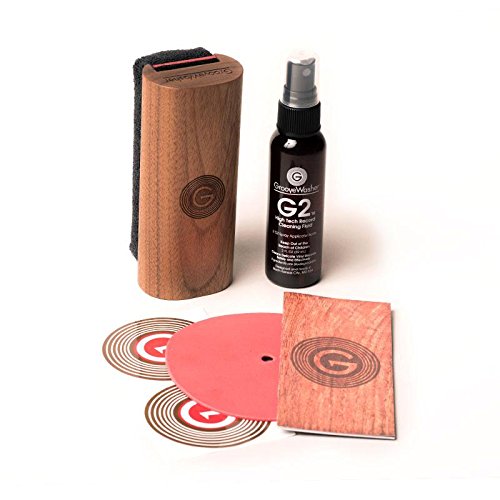
Professional cleaning system with microfibre brush, cleaning solution, and storage pouch. Safe for all vinyl types. Essential maintenance for preserving record quality.
Replace paper inner sleeves with anti-static ones. The static generated by paper sleeves attracts dust back to the record surface between sessions, gradually undoing whatever cleaning you did before the previous play.
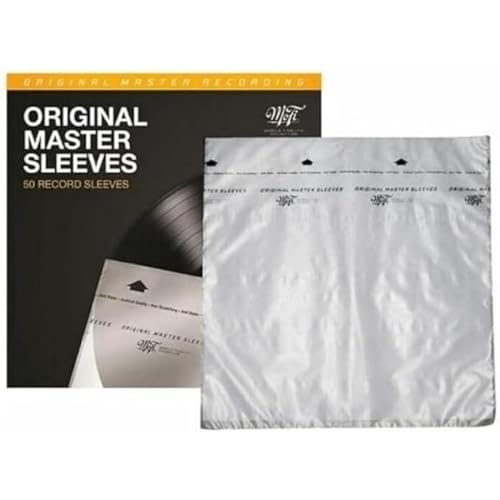
Audiophile-grade polyethylene sleeves preventing static buildup and dust accumulation. Archival quality protecting records for decades. Essential for serious collectors.
As an Amazon Associate, we earn from qualifying purchases.
Products Mentioned in This Guide
Find Your Perfect Setup
Answer a few quick questions and get personalised recommendations.
Start the QuizFrequently Asked Questions
Is Crosley bad for records?
Yes. Most Crosley turntables use ceramic cartridges with 5-7 grams of tracking force - far higher than the 1.5-2.5g recommended. This wears grooves faster, causing permanent damage over hundreds of plays.
Is Audio-Technica better than Crosley?
Significantly better. Even the entry-level Audio-Technica AT-LP60X uses proper tracking force, a diamond stylus, and belt-drive mechanism. Your records will last decades instead of degrading.
Why are Crosley turntables so cheap?
Crosley cuts costs on the components that matter: cheap ceramic cartridges, plastic tonearms, and built-in speakers that vibrate the platter. The low price comes at the cost of your record collection.
What is the best cheap turntable that won't damage records?
The Audio-Technica AT-LP60X is the cheapest turntable we recommend. It uses proper tracking force (3.5g with its cartridge design) and won't damage your vinyl.
Related Guides
Best Record Players UK 2026: Expert Picks at Every Budget
Buying GuideBest Budget Turntables UK 2026: Under £200 Picks That Protect Your Vinyl
How-ToRecord Player Beginners Guide UK 2026 | Start from £200
Buying GuideBest Turntables with Speakers UK 2026 | Complete Setup from £200
ComparisonCrosley vs Audio-Technica 2026 | Which Should You Buy?
Ready to find your perfect setup?
Our quiz matches you with the right turntable, speakers, and accessories.
Take the Quiz - It's FreeNo email required