
Best Amplifier for Turntable UK 2026 | Budget to Audiophile

Vinyl collector for over thirty years. Found my first turntable and a box of records in the loft at twelve — Nashville Skyline, After the Gold Rush, Disraeli Gears. Still spinning on a vintage Sony PS-X600.
Just so you know, some links on this page are affiliate links. If you buy something via them, we get a small kickback. You don't pay more, but it helps toward the next record.
A great turntable through a poor amplifier sounds poor. The same deck through a matched amplifier sounds like a different machine. Most people spend hours choosing the right turntable, then connect it to the first amplifier they find. That is where the sound goes wrong, and it is entirely fixable.
My recommendation for most setups: the Cambridge Audio AXA35. Built-in phono stage, headphone output, five-star reviews from What Hi-Fi? across multiple years. It will not colour the sound your turntable is actually making. Everything else on this list is the right answer for specific situations.
Who this is for: You have passive speakers, or you are building a full system from scratch. If you already have powered (active) speakers like Edifier R1280s, you do not need a separate amplifier, connect the turntable directly to them. This guide is for everyone else.
One thing to check before you read on: does your turntable have a built-in phono preamp? Look at the back panel. A switch labelled "Phono/Line" or "Internal/External preamp" means yes. If the only output is a pair of RCA cables with no switch, almost certainly no. All four amplifiers below have a built-in phono input, none requires a separate preamp regardless of which turntable you have.
My Picks at a Glance
Not sure which setup is right for you?
Take Our QuizTake our quiz if you want a personalised recommendation based on your turntable, speakers, and budget.
Why These Picks
Based on everything I've read across What Hi-Fi?, Stereophile, r/audiophile, and years of owner reviews, these are the four amplifiers that consistently earn their reputation at each price point. My criteria: genuine phono input, no unnecessary complexity at the budget end, real differentiators at the upper end, and enough reviewer consensus that I am confident recommending them to someone spending real money. I excluded anything with fewer than a few hundred owner reviews, anything that earns complaints about reliability within two years, and anything without a proper phono stage.
Cambridge Audio AXA35: The Best Amplifier for Most Turntable Setups
The Cambridge Audio AXA35 has been the default recommendation for entry-level hi-fi for several years now, and nothing at this price has managed to knock it off. What Hi-Fi? awarded it five stars and called it "one of the best stereo amplifiers you can buy at this price." That verdict has held.
Thirty-five watts per channel is more than enough for most living rooms with bookshelf speakers. Cambridge Audio's design philosophy is transparency, the AXA35 adds very little of its own character to the signal. What the turntable produces, the AXA35 passes through cleanly.
The built-in MM phono stage is the practical highlight for turntable users. Connect a Rega Planar 1, an AT-LP120X, or any turntable with phono outputs and the signal is correctly amplified and RIAA-equalised without any additional equipment. Pair it with the Rega Fono Mini if you want to upgrade the phono stage later; the AXA35 will reveal the improvement.
The headphone output on the front panel is a genuine addition that many amps at this price lack. Late-night listening without wireless compression is one of vinyl's underrated pleasures.
The trade-offs are honest ones: no Bluetooth, no DAC, no streaming capability. If streaming matters to you, the cleaner route is to keep the amp simple and add a dedicated source: the best music streamer guide covers the boxes I would actually pair with one of these amps. Cambridge Audio made a choice to put the budget into the analogue signal path rather than connectivity features. If you want Bluetooth, choose the Denon below. If you want the cleanest possible vinyl playback without digital processing in the signal chain, the AXA35 is the right decision.
Pairs naturally with Rega and Pro-Ject turntables on the basis that all three brands prioritise sonic performance over features. Check Price on Amazon

Integrated stereo amplifier with built-in MM phono stage. 35 watts per channel. Connects directly to any turntable without a separate preamp. Award-winning entry-level hi-fi amp.
Sony STR-DH190: The Budget Entry Point
The Sony STR-DH190 does exactly what it needs to: it amplifies a turntable, drives a pair of passive speakers, and adds Bluetooth so you can stream from a phone when vinyl feels like effort.
The phono input is the most important feature at this price. Many receivers and amplifiers in this range do not include one, they assume you have a turntable with a built-in preamp, or a separate phono stage. The STR-DH190 includes a proper phono input without caveats.
Four analogue inputs cover most systems: turntable on Phono, CD player on Line 1, TV on Line 2, and a fourth input for anything else. Bluetooth adds a direct connection from phone to speakers when you want background music without changing records.
The honest limitation: the STR-DH190 is a receiver, not a pure integrated amplifier. The receiver format includes an AM/FM tuner, which most people will never use. It also means the chassis is larger and heavier than comparable integrated amplifiers. The sound quality is competent rather than remarkable, connect it to a £400 turntable and you will hear the amp become the weakest link. But connect it to an AT-LP60X or a Sony PS-LX310BT and the pairing is well-matched.
The right audience for the Sony is someone spending under £200 on a turntable who wants to drive passive bookshelf speakers without spending more on the amp than the deck. At that combination, it works well and represents genuine value. Check Price on Amazon

Entry-level stereo receiver with phono input and Bluetooth. 100W per channel into 6 ohms. Affordable route to a proper hi-fi amplifier with turntable input.
Denon PMA-600NE: The Feature-Complete Mid-Range Choice
The Denon PMA-600NE earns its place with one feature the others cannot match: Analog Mode.
Press Analog Mode and the PMA-600NE shuts off all its digital circuitry. The DAC, Bluetooth receiver, and digital signal processing go dark. What remains is a pure analogue signal path from your turntable to your speakers. For vinyl listeners who care about the absence of digital interference in the signal chain, this is a meaningful differentiator, and it is rare at this price.
The rest of the specification covers everything you need in a modern system. The built-in phono stage handles MM cartridges. The DAC handles digital sources, CD, streaming device, or TV, when you are not listening to vinyl. Bluetooth adds wireless streaming. A subwoofer output lets you add a sub if your speakers lack bass extension.
Seventy watts per channel into 4 ohms gives the PMA-600NE more headroom than the Cambridge AXA35's 35W. In practice, both are sufficient for most rooms, you are unlikely to approach the power limits of either with standard bookshelf speakers in a normal listening environment. Where the extra headroom matters is with speakers that are harder to drive, or in larger rooms where volume demands more from the amp.
Reviewers consistently position the PMA-600NE as the benchmark at its price. What Hi-Fi? awarded it five stars and it has held that rating across several years and model revisions. The combination of analogue purity when you want it, and full digital integration when you do not, is a practical solution for mixed-source systems.
Pairs best with a turntable in the £200–£500 range, Rega Planar 1, AT-LP120X, or Pro-Ject Debut Carbon EVO. Below that range the amp becomes the strong link; above it, consider stepping up to the Yamaha. Check Price on Amazon

Integrated amplifier with built-in phono preamp, DAC, and Bluetooth. 70W per channel. Analog Mode bypasses all digital circuitry for purer vinyl playback. The benchmark mid-range amp for turntable setups.
Yamaha A-S301: The Long-Term Investment
The Yamaha A-S301 justifies it through build quality, sound engineering, and a track record of Yamaha reliability that stretches back decades.
Pick up the A-S301 and the weight tells you something before you hear a note. The aluminium chassis, oversized capacitors, and discrete power transistors are built for continuous use over a very long time. Yamaha has been making amplifiers like this since the 1970s and the A-S301 inherits that engineering lineage rather than cutting corners for margin.
Pure Direct is Yamaha's equivalent of Denon's Analog Mode, it routes the audio signal through the shortest possible path, bypassing the tone controls, loudness circuitry, and any processing that adds nothing to the signal. For vinyl, this means hearing what the turntable actually produces without amplifier colouration. The A-S301 has very low self-noise in Pure Direct mode, which reveals low-level detail in quieter recordings that busier amps obscure.
The built-in MM phono stage connects any standard turntable. The DAC handles digital sources at up to 192kHz/24-bit. The remote control is a genuine quality-of-life improvement over amplifiers that ship without one.
The honest limitation compared to the Denon: no Bluetooth. If wireless streaming matters, the Denon PMA-600NE is the better choice. If you are committed to wired sources, turntable, CD, DAC from streamer, and want the best-engineered amplifier at this price, the Yamaha is harder to argue against. If it is these two specifically you are weighing up, the Denon PMA-600NE vs Yamaha A-S301 head-to-head settles it.
People who buy A-S301s tend to keep them for ten or fifteen years and upgrade other components around them. That is the mark of a well-made thing. Check Price on Amazon

Integrated amplifier with built-in MM phono stage and DAC. 60W per channel. Pure Direct mode routes through the shortest signal path for minimal colouration. Legendary Japanese build quality.
Stepping Up: The Audiophile Amplifiers
Those four amps cover almost everyone. But if your turntable and speakers are good enough, or you already know you want a system you will not outgrow, two amplifiers are worth the stretch into proper separates territory.
The Cambridge Audio CXA81 MkII is the obvious step up. Eighty watts a channel, and a hundred and twenty into four ohms, means it drives demanding speakers without strain, and the ESS Sabre DAC plus a balanced XLR input put it on a different tier from the budget and mid-range amps above. One thing to know for a turntable system: there is no phono stage on board. Pair it with a deck that has its own, add a separate phono stage, or feed it from a source like the WiiM Ultra in my music streamer guide that includes one. This is the amp you grow into rather than out of.

Reference-grade integrated amp: 80 watts a channel, an ESS Sabre DAC, a balanced XLR input and aptX HD Bluetooth. No phono stage on board, so pair it with a deck that has one or add a separate stage. The amp you grow into, not out of.
If you want that next-tier sound but would rather keep the turntable side simple, the NAD C 328 is the more vinyl-friendly choice. It has a proper moving-magnet phono stage built in, so your deck plugs straight in, and NAD's HybridDigital design runs cool while delivering the relaxed, room-filling sound the brand is known for. It gives up some outright power to the Cambridge and has no USB input, but for a turntable-first system it is arguably the easier fit.

A 50-watt HybridDigital amp with a built-in moving-magnet phono stage and Bluetooth. Runs cool, drives most speakers with ease, and has the relaxed, room-filling sound NAD is known for. The turntable-friendly step up from budget receivers.
Both are genuine destination amplifiers. Buy either and the amp stops being the part of the system you think about, which is exactly the point.
How the Amplifiers Compare
| Amplifier | Power per channel | Phono stage | DAC / Bluetooth | Best for |
|---|---|---|---|---|
| Sony STR-DH190 | 100W | Yes | No DAC, Bluetooth | The budget entry |
| Cambridge AXA35 | 35W | Yes | No DAC, no Bluetooth | Most setups, cleanest signal path |
| Denon PMA-600NE | 70W | Yes | DAC and Bluetooth | Vinyl purists who want Analog Mode |
| Yamaha A-S301 | 60W | Yes | DAC, no Bluetooth | Buying once for the long term |
| Cambridge CXA81 | 80W | No | DAC and aptX HD Bluetooth | Stepping into proper separates |
| NAD C328 | 50W | Yes | DAC and Bluetooth | A turntable-first system, next tier |
What This Money Buys vs Using Powered Speakers
If you use powered speakers like the Edifier R1280DB, you have a built-in amplifier already. Adding a separate integrated amp would add another amplifier in the chain, which makes no sense. Powered speakers and integrated amplifiers serve different needs:
- Powered speakers: Simpler setup, fewer components, lower total cost. Best for most beginners and anyone who wants to minimise complexity. - Passive speakers + separate amplifier: More flexibility in upgrading. Better sound per pound at the mid-range and above. The standard path for anyone building a long-term hi-fi system.
A Cambridge Audio AXA35 with Q Acoustics 3020i passive bookshelf speakers is a significantly better-sounding combination than any powered speaker at the same combined price. The separate components each do one job rather than compromising.
Matching Guide: Turntable to Amplifier
| Turntable | Budget | Recommended Amp |
|---|---|---|
| AT-LP60X, Sony PS-LX310BT | Under £200 | Sony STR-DH190 |
| AT-LP120X, Sony PS-LX5BT | £200–400 | Cambridge Audio AXA35 |
| Rega Planar 1, Pro-Ject Debut Carbon EVO | £250–450 | Cambridge Audio AXA35 or Denon PMA-600NE |
| Rega Planar 2, Rega Planar 3 | £450–900 | Denon PMA-600NE or Yamaha A-S301 |
What to Avoid
Micro systems and soundbars: These are not amplifiers in any meaningful hi-fi sense. They cannot accept a phono input and the sound quality does not scale.
AV receivers for stereo vinyl: AV receivers (5.1, 7.1 channels) are designed around home cinema. Their stereo performance at a given price is lower than a dedicated stereo amplifier. They are also larger, more complex, and typically lack phono inputs. If you want surround sound as well as vinyl, they make sense. For pure stereo vinyl listening, a dedicated stereo integrated amplifier is the right tool.
Amps without phono inputs: Many well-reviewed amplifiers, including some Cambridge Audio and Naim models, do not include a phono input. They are designed for use with a separate phono preamp. Check before buying. Every amplifier in this guide includes a phono input.
Valve amplifiers at this price: Valve (tube) amplifiers under £500 are almost universally poor value. The transformers and tubes that determine valve amp sound quality cost money, below £1,000, the value proposition does not hold up against solid-state alternatives like the Yamaha and Denon reviewed here.
How to Connect a Turntable to an Amplifier
The wiring is straightforward. Follow these steps and the job takes ten minutes:
Step 1, Check your turntable output
Look at the back of your turntable. You will see a pair of RCA cables (red and white, also called phono cables). These carry the signal to the amplifier. Some turntables have a fixed cable with RCA plugs; others have a detachable cable. Either is fine.
Step 2, Identify the correct input on the amplifier
If your turntable has a built-in phono preamp (most budget models do): connect to any Line input, Line 1, AUX, CD. Not the Phono input.
If your turntable does not have a built-in phono preamp (Rega, Pro-Ject, most audiophile decks): connect to the Phono input specifically. This input includes the RIAA equalisation circuit your turntable needs.
Connecting a turntable without a preamp to a Line input is the most common mistake. The symptom is thin, quiet, bass-free sound, the exact opposite of what vinyl should sound like.
Step 3, The earth wire
Many turntables have a thin bare wire with a spade connector, separate from the RCA cables. This is the earth (ground) wire. Connect it to the earth terminal on the amplifier, usually a small brass post labelled "GND" or "Earth" near the Phono input. Without it, you may hear a low hum from the speakers. Not every turntable has one; not every amplifier has a terminal. If yours does, use it.
Step 4, Test with the volume low
Turn the amplifier on, select the correct input, and bring the volume up slowly. You should hear music cleanly with no hum. If you hear hum, check the earth wire first. If you hear thin, quiet sound, check which input you have selected.
Speakers to Pair With These Amplifiers
An amplifier is only half the equation. The speakers you connect determine as much of the sound as the amp. Rough matching guide:
Sony STR-DH190: Pair with bookshelf speakers in the £80–£200 range. The Edifier R1700BT (passive version) or the Q Acoustics 3010i are natural partners. The Sony has enough power for any standard bookshelf speaker in a normal room.
Cambridge Audio AXA35: Pair with speakers in the £150–£300 range. The Q Acoustics 3020i is the textbook pairing, both brands are owned by the same parent company and voiced to complement each other. The Wharfedale Diamond 12.1 is a warmer-sounding alternative. Avoid speakers below £100 at this price of amplifier; the amp will outperform them.
Denon PMA-600NE: Pair with speakers in the £200–£400 range. The Monitor Audio Bronze 100 rewards the Denon's power and resolution. The Elac Debut 2.0 B6.2 is a flatter, more analytical pairing that suits critical listening. The Denon's subwoofer output pairs well with a small sub alongside smaller bookshelf speakers.
Yamaha A-S301: Pair with speakers in the £250–£500 range. The Dali Spektor 2 is warm and musical and suits the Yamaha's precision well. The KEF Q150 is more detailed and revealing. The A-S301's 60W will drive most speakers effortlessly, a solid foundation for a system that will grow.
The Phono Preamp Question
Three scenarios where you might want a separate phono preamp rather than using the built-in one:
You have a Rega or Pro-Ject turntable: Rega and Pro-Ject voice their turntables with specific phono preamps in mind. The Rega Fono Mini is the budget Rega recommendation. The Pro-Ject Phono Box E pairs naturally with Pro-Ject turntables. Both are meaningfully better than the built-in phono stages in the amplifiers above when used with the matching turntable.
You have an MC cartridge: Moving coil (MC) cartridges output a much lower signal than moving magnet (MM) cartridges. None of the amplifiers above include an MC phono stage, they are all MM only. If you have an MC cartridge, you need a separate phono preamp with MC capability (Cambridge Audio Duo at around £100, Rega Fono MC at around £195).
You want to upgrade incrementally: Add a dedicated phono preamp later and use the amplifier's Phono input as a bypass. The Cambridge Audio AXA35 and Yamaha A-S301 both work well with outboard phono stages, connect the phono preamp output to any Line input rather than the Phono input.
Put on a record you know well through whatever you have now, then put it on again through a properly matched amplifier. I have seen people describe this as the moment they understood what vinyl was actually about. The music does not change. The system just stops getting in the way of it. That is what the right amplifier does.
What You'll Need With It
A shielded RCA cable between turntable and amplifier prevents hum that a quality amplifier will reproduce faithfully. Gold-plated connectors maintain clean contact at the most-handled connection points in the system.
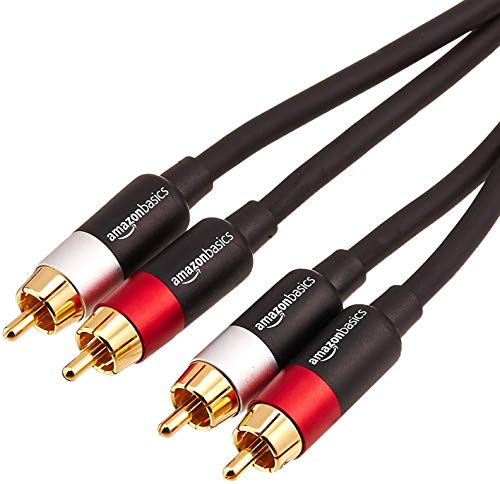
Gold-plated dual RCA cables with superior shielding reducing interference. 1.2m length ideal for turntable connections. Reliable performance.
Clean records before play. Surface particles tracked into the groove are what the amplifier and speakers will reproduce faithfully. A 30-second cleaning habit keeps the source material as clean as the rest of your system.
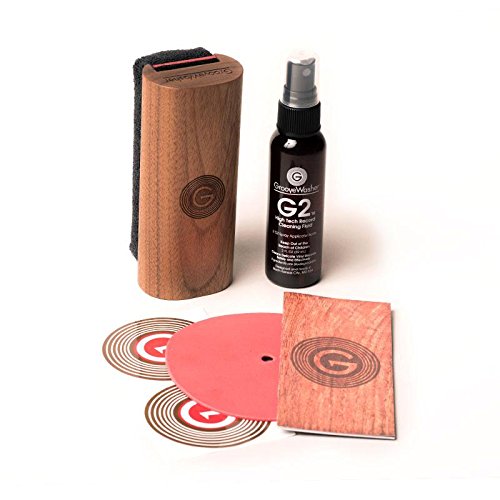
Professional cleaning system with microfibre brush, cleaning solution, and storage pouch. Safe for all vinyl types. Essential maintenance for preserving record quality.
As an Amazon Associate, we earn from qualifying purchases.
Products Mentioned in This Guide
Find Your Perfect Setup
Answer a few quick questions and get personalised recommendations.
Start the QuizFrequently Asked Questions
Do I need an amplifier for my turntable?
It depends on your setup. If you have powered (active) speakers with a built-in amplifier, you connect the turntable directly to them — no separate amp needed. If you have passive speakers, you need an amplifier. You also need to check whether your turntable has a built-in phono preamp, or whether the amplifier has a phono input.
What is a phono stage and do I need one?
A phono stage (or phono preamp) boosts the turntable signal to line level and applies RIAA equalisation. Without one, vinyl sounds thin and quiet. Most budget turntables (like the AT-LP60X) include a built-in phono preamp. Higher-end turntables (like Rega) do not. Check your turntable first — if it has a phono preamp, any amplifier works. If it does not, you need an amplifier with a phono input, or a separate phono preamp.
How much should I spend on an amplifier for a turntable?
Match your amplifier budget to your turntable. Budget £50–150 for a turntable? The Sony STR-DH190 (around £170) is fine. Budget £200–400 for a turntable? The Cambridge Audio AXA35 (around £279) is the right match. Budget £300–500+? The Denon PMA-600NE (around £349) or Yamaha A-S301 (around £449) will reveal everything your turntable can do.
Can I use a hi-fi amp with any turntable?
Yes, with one check: does your turntable have a built-in phono preamp? If yes (most budget models do), connect to any Line input on the amplifier. If no (most Rega and Pro-Ject models), connect to the Phono input on the amplifier, or add a separate phono preamp between turntable and amp. Check your turntable manual — it will say whether it has a built-in preamp.
Is the Cambridge Audio AXA35 good with a Rega turntable?
Yes — it is one of the most recommended pairings. The AXA35 has a built-in MM phono stage, so you connect the Rega directly without needing a separate preamp. The AXA35 is transparent enough not to colour the Rega sound. Reviewers at What Hi-Fi? consistently pair both brands as natural partners.
Related Guides
Best Turntables Under £500 UK 2026: Rega vs Pro-Ject vs Audio-Technica vs Sony
Buying GuideBest Speakers for Turntables UK 2026 | Active & Passive
How-ToPhono Preamp Guide UK 2026 | Do You Need One? From £35
Setup GuideHow to Set Up a Record Player UK 2026 | Step-by-Step
ComparisonRega vs Pro-Ject Turntables UK 2026 | From £300
Buying GuideBest Amplifier for Turntable 2026 | From $150 to $500
Ready to find your perfect setup?
Our quiz matches you with the right turntable, speakers, and accessories.
Take the Quiz - It's FreeNo email required