Top 10 Soul Albums on Vinyl | Essential Records for Collectors

Vinyl collector for over thirty years. Found my first turntable and a box of records in the loft at twelve — Nashville Skyline, After the Gold Rush, Disraeli Gears. Still spinning on a vintage Sony PS-X600.
Just so you know, some links on this page are affiliate links. If you buy something via them, we get a small kickback. You don't pay more, but it helps toward the next record.
Soul music was made during vinyl’s golden age by engineers who understood the format completely. Motown’s house engineer worked in a converted garage with acoustic treatments designed specifically for how the recordings would translate to wax. Stax’s engineers built their sound around the physical constraints of vinyl, the way bass frequencies need to be handled at lower volumes on inner grooves, the way the mono centre image carries voice. When you play these records on a good turntable, you’re hearing exactly what those engineers intended.
These ten albums represent the critical consensus on soul’s finest recordings.
Not sure which setup is right for you?
Take Our QuizBefore buying, consider previewing first. Amazon Music Unlimited’s 30-day free trial has every album on this list. Some audiophile pressings cost £20–£80, worth knowing what you’re buying before committing. (I earn a flat fee if you sign up through that link, which doesn’t affect my recommendations.)
1. What's Going On – Marvin Gaye (1971)
The greatest album ever made, according to Rolling Stone's 2020 revision. What's Going On transformed Marvin Gaye from Motown hitmaker to conscious artist, addressing social issues with unprecedented sophistication for soul music.
Gaye conceived the album as one continuous piece, songs flowing into each other through orchestral transitions. On vinyl, you experience it as intended, two unbroken suites rather than shuffled tracks.
The production combines Motown's precision with jazz influences. The Detroit Symphony Orchestra adds weight; percussion hastexture. Gaye's multi-tracked vocals create harmonies with himself, a technique that influenced decades of R&B production.
On vinyl, the album's warmth is essential. The strings have presence; Gaye's voice floats above the instrumentation with intimacy that digital sometimes loses.
The Mobile Fidelity pressing is the audiophile reference. The standard Motown reissue sounds excellent. This album changed what soul music could address.

The most humane soul record, four-part vocal harmony over jazz orchestration
2. I Never Loved a Man the Way I Love You – Aretha Franklin (1967)
Aretha Franklin had recorded for Columbia since 1960 with modest success. Moving to Atlantic and travelling to Muscle Shoals, Alabama changed everything. The title track, recorded in a single session, announced the greatest voice in American popular music.
The Muscle Shoals rhythm section had loose, soulful feel that New York sessions couldn't replicate. Franklin's piano playing adds musicianship too often overlooked.
On vinyl, Franklin's voice has presence that captures dynamic peaks without distortion. The room ambience around the musicians adds warmth.
The Rhino 50th anniversary pressing sounds excellent. Original Atlantic pressings are highly collectible. This album launched the Queen of Soul.
The Atlantic debut that transformed soul, raw, unrestrained, essential
3. Songs in the Key of Life – Stevie Wonder (1976)
Wonder's masterpiece: a double album plus bonus EP containing more ideas than most artists manage in careers. At 105 minutes across four sides, it represents the most ambitious soul album ever attempted.
Wonder played most instruments himself, overdubbing with attention to groove that session musicians spend careers seeking. The bass demonstrates pocket that defines funk.
On vinyl, the format's constraints help. Four sides provide natural breaks across two hours of music. The analogue warmth suits Wonder's layered synthesiser textures.
The Universal reissue sounds excellent. Original Tamla pressings remain the benchmark. This album won Album of the Year and remains the standard for ambitious pop music.

The double album that justifies every side, the peak of 1970s soul production
4. There's a Riot Goin' On – Sly & the Family Stone (1971)
Sly Stone's masterpiece abandoned earlier optimism for something murkier and more personal. There's a Riot Goin' On features drum machines, atmospheric production, and lyrics addressing the gap between 1960s idealism and 1970s reality.
Sly played most instruments himself during extended sessions. The results sound both meticulously constructed and loose, a paradox that suits the material.
On vinyl, the murky production makes sense. This isn't an album that benefits from digital clarity; the warmth and compression of analogue suit its aesthetic perfectly.
The Epic reissue sounds appropriate to the material. Original pressings are collectible. This album influenced everyone from Prince to D'Angelo.
The darkest soul record, studio-as-instrument taken to its radical extreme
5. Innervisions – Stevie Wonder (1973)
Wonder's third consecutive masterpiece addressed social issues with musical sophistication. Innervisions features some of his finest songs wrapped in production that pushed Moog synthesisers into new territory.
Wonder's synthesiser programming was revolutionary, these sounds had never appeared on soul records. The clavinet became one of funk's defining tones.
On vinyl, the synthesisers have warmth that digital playback sometimes lacks. The bass has weight; the production reveals layers on repeated listening.
The Mobile Fidelity pressing is excellent. Original Tamla pressings are collectible. Wonder was in a car accident three days after this album's release; his recovery inspired further masterpieces.
Synthesisers and acoustic instruments in perfect balance, 1973’s masterpiece
6. Otis Blue – Otis Redding (1965)
Otis Redding's third album established him as soul's greatest male voice. Otis Blue combines originals with covers, each transformed by Redding's emotional intensity. The Stax house band hasperfect support.
The Stax sound, warm, present, built on organ and guitar, translates to vinyl perfectly. On a good pressing, Redding's voice has presence that captures every vocal nuance.
The Analogue Productions pressing is the audiophile choice. Original Volt pressings are collectible. Redding died two years later in a plane crash; this album captures him at his peak.
The definitive Stax session, Otis Redding at the absolute peak of his powers
7. Lady Soul: Aretha Franklin (1968)
Franklin, s follow-up maintained momentum with songs that became standards. Lady Soul features Chain of Fools with its relentless guitar riff that, s been sampled hundreds of times, (You Make Me Feel Like) A Natural Woman closing Side One with one of the most emotionally devastating vocal performances ever recorded, and Ain, t No Way, a duet with sister Carolyn that proves the family talent ran deep.
The production split between Muscle Shoals and New York sessions, both approaches working. The Muscle Shoals rhythm section gives Chain of Fools its relentless drive. The New York sessions add orchestral sophistication to Natural Woman. On vinyl, Franklin, s voice has warmth and presence that digital playback compresses. The production allows her to dominate while the musicians support without competing.
The Atlantic reissue sounds excellent. Original pressings are collectible and increasingly expensive. This album solidified Franklin, s position as soul, s undisputed queen.
Natural Woman and Chain of Fools on the same record, the Atlantic peak
8. Stand!: Sly & the Family Stone (1969)
Before the darkness of Riot, Sly Stone made the most joyous album of the 1960s. Stand! combines psychedelic rock with soul, funk, and gospel, its interracial, mixed-gender band embodying the era, s optimism. Everyday People became a number-one single. I Want to Take You Higher became Woodstock, s defining moment. The title track turned a civil rights anthem into something you could dance to.
The production combines rock energy with soul warmth. Larry Graham, s bass playing on this record is widely credited with inventing slap technique, the percussive thumb-pop style that became funk, s rhythmic foundation. Rose Stone, s keyboards add gospel dimension that grounds the psychedelic experimentation.
On vinyl, the production, s psychedelic elements have space. The bass has physical weight; the horns have bite. The album sounds like a band playing together in a room rather than overdubbing separately, because largely they were.
The Epic reissue sounds excellent. Original pressings are collectible. This album represents 1960s optimism at its peak.
The optimistic counterpart to Riot, full-band energy before the darkness
9. Curtis: Curtis Mayfield (1970)
Mayfield, s first solo album after leaving the Impressions addressed social issues with musical sophistication that anticipated the Blaxploitation soundtracks he, d later define. Curtis features songs that combined social commentary with irresistible grooves, Move On Up builds over seven minutes from quiet guitar to full orchestral funk, one of the genre, s great slow-burn arrangements.
Mayfield, s falsetto voice cuts through productions that anticipate disco, s orchestral leanings. The string arrangements add cinematic scope while maintaining the intimacy of Mayfield, s songwriting. The wah-wah guitar on If There, s a Hell Below essentially invented the sound that defined 1970s soul-funk.
On vinyl, the strings and horns have presence and warmth. The bass has weight; Mayfield, s voice floats above the productions with a clarity that rewards the format.
The Curtom reissue sounds excellent. Original pressings are collectible. This album established Mayfield as a solo artist and directly influenced his masterpiece soundtrack for Superfly two years later.
Political commentary over the most musical production in the genre
10. Off the Wall: Michael Jackson (1979)
The album that transformed Michael Jackson from child star to adult artist. Off the Wall combined disco production with songwriting sophistication, producer Quincy Jones crafting the template for 1980s pop. Don, t Stop , Til You Get Enough opens with Jackson, s ad-libbed spoken word before exploding into the most joyous disco track ever recorded. Rock with You slows the tempo without losing momentum. She, s Out of My Life shows vocal maturity that nobody expected from a former child star.
The production set new standards. Jones assembled A-list session musicians, the Brecker Brothers on horns, Louis Johnson on bass, Greg Phillinganes on keys, while keeping focus on Jackson, s voice. The result sounds polished yet warm, every element placed with precision.
On vinyl, the production has warmth and depth that CD versions flatten slightly. The bass has weight; the strings have presence; the brass has bite. The album translates to various playback systems while rewarding quality equipment.
The Epic reissue sounds excellent. Original pressings are collectible. This album sold ten million copies; Thriller would quintuple that success.
Jackson, s first fully adult album, Quincy Jones at his absolute peak
Soul on Vinyl
Soul music was created for vinyl. The genre's warmth, its emphasis on voice, its production techniques all assumed analogue playback. These albums sound as their creators intended on a decent turntable.
Start with Aretha if voice matters most, Stevie Wonder for musical ambition. Soul on vinyl has a warmth that makes sense the moment you hear it.
Why Soul Sounds Different on Vinyl
These albums were recorded direct to tape and mastered for vinyl pressing. The engineers cutting these records were optimising for exactly the format you’re using. The wide stereo image of Stevie Wonder’s orchestral arrangements, the intimacy of Aretha Franklin’s vocal placement, the spatial separation in Marvin Gaye’s string overdubs, all of these were decisions made with vinyl playback in mind.
CD and streaming versions of these albums typically involve additional processing: limiting, EQ adjustments, loudness normalisation. The vinyl versions, particularly quality reissues from labels like Mobile Fidelity, Craft Recordings, or Rhino, often present the original mix with less intervening processing.
The difference is most audible on voice. Franklin’s attack, Gaye’s falsetto breaks, Wonder’s vocal layering, these have a physical presence on vinyl that’s harder to replicate digitally. If you’ve only ever heard these albums on streaming, a proper vinyl pressing will reintroduce you to music you thought you knew.
The Setup This Soul Collection Deserves
Soul music is voice first. The mid-range, where Aretha Franklin’s phrasing lives, where Otis Redding’s power lives, must be reproduced accurately and warmly. A setup that flatters the mid-range flatters soul.
My recommendation: the Rega Planar 1. Rega’s warm house sound suits the Motown and Stax recordings on this list, slightly full in the mid-range, never harsh. Belt-drive design eliminates the motor noise that quiet soul passages reveal.

Belt-drive simplicity with warm, musical sound that suits Motown and Stax vocal recordings
For speakers, the Edifier R1700BT have the midrange warmth that Aretha Franklin and Marvin Gaye deserve. Not analytical to the point of being clinical, but honest enough to reveal why the Stax recordings sound different from Motown ones.
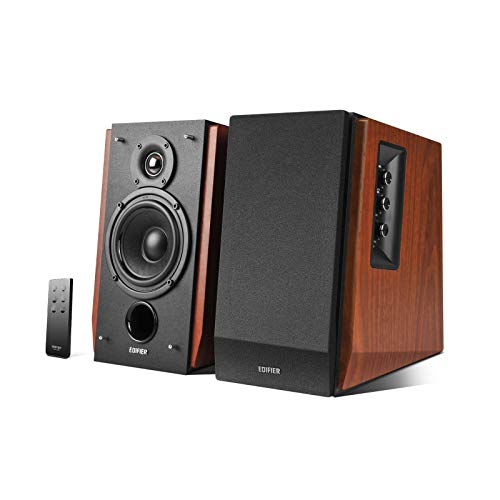
Warm bookshelf speakers with midrange that flatters soul vocals, non-fatiguing over long sessions
What to Avoid
Generic ‘golden oldies’ reissues of Motown and Stax albums. Budget reissue labels frequently license classic soul and press on thin vinyl with no-name digital transfers. The Motown and Stax catalogues deserve better. Look for properly licensed reissues from the original labels or from audiophile imprints.
Cheap cartridges on 1960s soul records. Early Aretha and Otis Redding pressings have relatively delicate grooves by modern standards. A rough or worn stylus damages them irreversibly. Treat them with a properly maintained, correctly weighted cartridge.
Playing mono recordings in stereo mode. Many early 1960s soul records, Aretha’s first Atlantic sessions, Otis Blue, were mixed in mono. Some turntable setups introduce noise playing mono in stereo. If you have a switchable mono cartridge or preamp, use it for these recordings.
Ignoring condition grading when buying second-hand. Soul records from the 1960s and 1970s were played hard, they were party music, danced to. Surface noise on worn soul records is noticeable. Buy VG+ or better.
Start with Marvin Gaye’s What’s Going On. The most humane album on this list, and the one most people return to most often.
Find Your Perfect Setup
Answer a few quick questions and get personalised recommendations.
Start the QuizFrequently Asked Questions
What is the best soul album on vinyl?
Marvin Gaye's What's Going On (1971) is Rolling Stone's pick for the greatest album ever made. It was conceived as a continuous suite, songs flowing into each other — on vinyl, you experience it as intended, two unbroken sides rather than shuffled tracks.
Why does soul music suit vinyl?
Soul's golden era — Motown, Stax, Atlantic — was recorded specifically for vinyl playback. Engineers like Jim Stewart at Stax built their sound around the physical constraints of the format. The warmth that vinyl adds to voices and horn sections is not a side effect; it's what the recordings were designed to produce.
What turntable suits soul music?
The Rega Planar 1 (around £300) suits soul music well — the warm house sound flatters Motown and Stax vocal recordings. Belt-drive design keeps motor noise below what quiet soul passages reveal, and Rega's mid-range warmth matches how these albums were engineered.
Related Guides
Ready to find your perfect setup?
Our quiz matches you with the right turntable, speakers, and accessories.
Take the Quiz - It's FreeNo email required