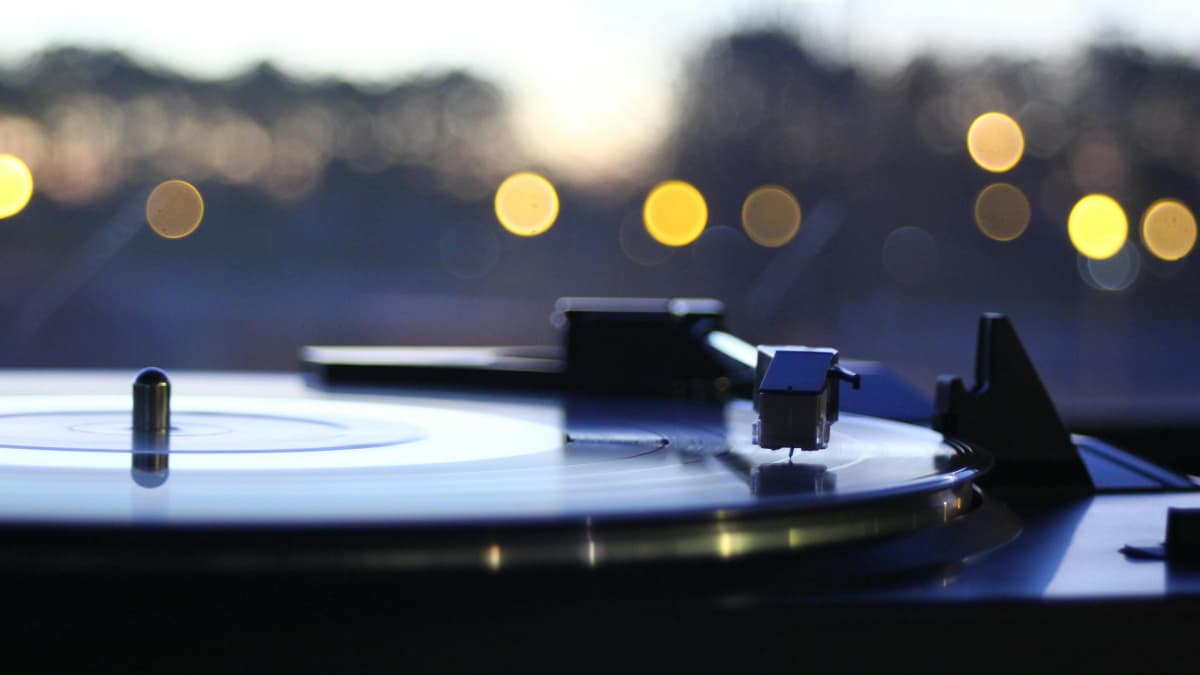
Top 10 Jazz Albums on Vinyl 2026 | Essential Records for Collectors

Vinyl collector for over thirty years. Found my first turntable and a box of records in the loft at twelve — Nashville Skyline, After the Gold Rush, Disraeli Gears. Still spinning on a vintage Sony PS-X600.
Just so you know, some links on this page are affiliate links. If you buy something via them, we get a small kickback. You don't pay more, but it helps toward the next record.
Jazz on vinyl isn't nostalgia. It's physics. The genre's golden era coincided with analogue recording's peak, and engineers like Rudy Van Gelder spent careers learning how to capture acoustic jazz on lacquer, the spatial depth, the dynamic range, the weight of a drum kit in a room. Put on Kind of Blue and listen to Bill Evans' piano decay between phrases. The crackle between tracks isn't a defect. It's the studio Miles Davis was standing in.
These ten albums are the critical consensus on jazz's finest moments on wax. Start anywhere. Return often.
Not sure which setup is right for you?
Take Our QuizBefore buying, consider previewing first. Amazon Music Unlimited's 30-day free trial has every album on this list. Some audiophile pressings cost £30–80, worth knowing what you're buying before committing. (I earn a flat fee if you sign up through that link, which doesn't affect my recommendations.)
1. Kind of Blue – Miles Davis (1959)
The best-selling jazz album of all time requires little introduction. Kind of Blue represents the perfect convergence of virtuoso musicians, revolutionary composition, and exceptional recording. Miles Davis assembled John Coltrane, Cannonball Adderley, Bill Evans, Wynton Kelly, Paul Chambers, and Jimmy Cobb, seven now-legendary players at the peak of their abilities.
The album pioneered modal jazz, abandoning traditional chord progressions for scales that gave musicians freedom to explore. Davis famously gave his band only sketches, not finished arrangements. What you hear is largely first-take improvisation from musicians discovering the music in real-time. This spontaneity is why the album remains fresh after sixty-five years.
Engineer Fred Plaut recorded the sessions at Columbia's 30th Street Studio, a converted church whose acoustics remain legendary. On vinyl, you hear the room, the space around the instruments, the decay of notes, the breath between phrases. "So What" opens with Bill Evans' piano and Paul Chambers' bass establishing a groove that Coltrane and Adderley weave through with apparent effortlessness.
"Blue in Green" has the album's most intimate moment, possibly co-written by Evans though credited to Davis. "Flamenco Sketches" closes with each musician taking a solo turn through five scales, the transitions so subtle you might miss them.
The Mobile Fidelity 45RPM pressing is the audiophile benchmark. The Analogue Productions UHQR has similar quality at premium price. Standard Columbia Legacy pressings sound excellent for casual listening. This album inducted into the Grammy Hall of Fame in 1992 and selected for the National Recording Registry by the Library of Congress.
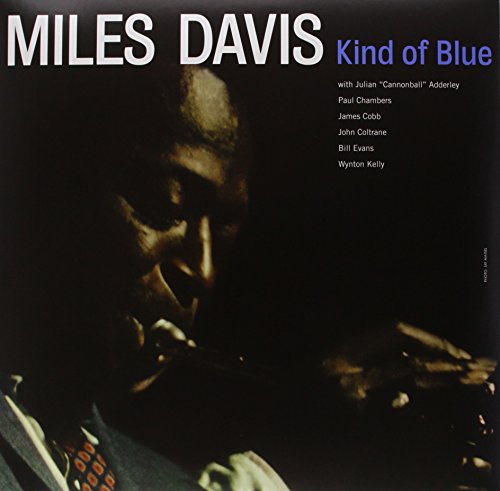
The greatest jazz record deserves the vinyl treatment
2. A Love Supreme – John Coltrane (1965)
Coltrane's spiritual masterpiece arrived six years after Kind of Blue, by which point he'd evolved from virtuoso sideman to visionary leader. A Love Supreme is a four-part suite expressing gratitude to God, recorded in one session with his classic quartet: McCoy Tyner, Jimmy Garrison, and Elvin Jones.
The album opens with a gong and bass before Coltrane enters with the famous four-note motif, "A Love Supreme", repeated as both melody and mantra. "Acknowledgement" builds intensity gradually, the quartet locked into grooves that hypnotize. "Resolution" follows with urgent post-bop. "Pursuance" features Elvin Jones' most explosive drumming on record. "Psalm" closes with Coltrane "speaking" through his saxophone, each phrase corresponding to a poem he wrote and included in the liner notes.
The recording captures the quartet's telepathic interplay. On vinyl, Tyner's piano hasharmonic foundation with remarkable clarity. Garrison's bass has weight that digital versions sometimes lack. Jones' drums surround everything, the cymbals shimmering in analogue warmth.
This album changed what jazz could mean. The spiritual intensity pointed toward free jazz without abandoning accessibility. The suite format demonstrated jazz could sustain long-form composition. Every serious jazz collection begins here.
The Analogue Productions 45RPM pressing is definitive. The Impulse! Back to Black reissue sounds excellent at reasonable price. Original orange-label Impulse! pressings are highly collectible. This album remains the most celebrated jazz recording of the 1960s.
Spiritual intensity that vinyl captures perfectly
3. Time Out – The Dave Brubeck Quartet (1959)
Time Out was the first jazz album to sell a million copies, achieved through the radical move of using unusual time signatures. "Take Five" made 5/4 time famous, while "Blue Rondo à la Turk" opens in 9/8 before resolving to standard swing. Brubeck and alto saxophonist Paul Desmond created sophisticated music that somehow remained accessible.
The genius was making odd meters feel natural. "Take Five", written by Desmond, has become so familiar that its rhythmic innovation goes unnoticed. Joe Morello's drum pattern defines the piece, and Eugene Wright's bass locks everything together. On vinyl, the interplay between rhythm section and soloists reveals itself more clearly than on compressed digital versions.
Columbia's recording captures Desmond's tone, often described as "cool" or "dry", with remarkable fidelity. His alto sax sounds almost vocal, each phrase articulated with precision that rewards careful listening. Brubeck's piano hasboth harmonic foundation and melodic counterpoint.
"Strange Meadow Lark" has the album's most lyrical moment. "Three to Get Ready" alternates between 3/4 and 4/4 with playful ease. "Everybody's Jumpin'" showcases the quartet's ability to swing despite unconventional structures.
The Analogue Productions 45RPM pressing is audiophile-approved. Standard Columbia Legacy reissues sound excellent. Original six-eye Columbia pressings are collectible if clean. This album proved jazz could be intellectual and popular simultaneously.

4. Blue Train – John Coltrane (1958)
Coltrane's only album as leader for Blue Note features him with a stellar sextet including Lee Morgan on trumpet and Curtis Fuller on trombone. The title track opens with one of jazz's most recognizable themes, a blues line that Coltrane transforms through extended improvisation.
At this point, Coltrane was developing "sheets of sound", dense flurries of notes that overwhelmed conventional harmony. Blue Train captures him at the transitional moment between hard bop and the innovations to come. His solo on the title track builds from bluesy restraint to ecstatic intensity over thirteen minutes.
Blue Note's Rudy Van Gelder recorded the session at his legendary Hackensack studio. The sound is quintessential Blue Note, warm, present, with drums and bass balancing perfectly against horns. On vinyl, the Van Gelder touch translates beautifully. Morgan's trumpet has bite without harshness; Fuller's trombone has body without muddiness.
"Moment's Notice" showcases the sextet's ability to navigate complex chord changes. "Locomotion" hasuptempo contrast. "Lazy Bird" and "we're Old Fashioned" offer more conventional beauty, reminding listeners that Coltrane could play inside as masterfully as outside.
The Analogue Productions 45RPM pressing is definitive. The Blue Note Tone Poet series delivers excellent sound at accessible price. Original Blue Note pressings with deep groove and RVG in the runout are highly sought after. This album established Coltrane as a bandleader capable of matching his mentor Miles Davis.

Hard bop perfection - vinyl brings out every instrument
5. Mingus Ah Um – Charles Mingus (1959)
Charles Mingus was jazz's most volcanic personality, and Mingus Ah Um captures him at his most accessible. The album pays tribute to his influences, "Goodbye Pork Pie Hat" mourns Lester Young, "Open Letter to Duke" honors Ellington, "Jelly Roll" celebrates Morton, while maintaining Mingus's distinctive voice.
The compositions combine written passages with guided improvisation. Mingus called his approach "spontaneous composition," giving musicians themes and moods rather than rigid charts. The result sounds simultaneously polished and dangerous, as if anything could happen.
"Better Git It in Your Soul" opens with gospel-tinged exuberance, hand claps and shouting suggesting church more than nightclub. "Goodbye Pork Pie Hat" follows with heartbreaking beauty, one of jazz's most perfect ballads. The contrast demonstrates Mingus's range.
The bass playing throughout is exceptional, Mingus was among the instrument's greatest practitioners, and he places himself prominently in the mix. On vinyl, his bass has weight and presence that anchors even the wildest ensemble passages. The saxophones and brass have warmth that suits the celebratory material.
The Analogue Productions pressing sounds excellent. The Impex reissue has audiophile quality. Original Columbia six-eye pressings are collectible. This album hasthe best entry point into Mingus's challenging catalog.

Complex arrangements that vinyl lets you hear in full
6. The Black Saint and the Sinner Lady – Charles Mingus (1963)
If Mingus Ah Um is accessible Mingus, The Black Saint and the Sinner Lady is Mingus unleashed. This extended suite, written for an eleven-piece ensemble with arrangements by Bob Hammer, represents jazz's most ambitious merger of composition and improvisation.
The album was conceived as ballet music, though no ballet was ever staged. The four "movements" (spread across six tracks) explore what Mingus called "ethnic folk-dance music," incorporating flamenco, gospel, blues, and classical influences into something unprecedented.
The recording is dense and powerful. Multiple saxophones weave around each other; brass sections punch and sustain; the rhythm section anchors chaos with groove. On vinyl, the dynamics are remarkable, quiet passages genuinely quiet, climaxes genuinely overwhelming. This is music that demands to be played loud.
Charlie Mariano's alto sax hasmany of the album's most lyrical moments. The rhythm section, Dannie Richmond on drums, Jay Berliner on guitar, maintains coherence through Mingus's radical tempo and mood shifts.
The Analogue Productions pressing captures the complexity beautifully. The Impulse! reissue sounds excellent for the price. Original Impulse! stereo pressings are sought after by collectors. This album influenced everyone from Frank Zappa to Kendrick Lamar.

Orchestral jazz that demands the dynamic range vinyl provides
7. Getz/Gilberto – Stan Getz & João Gilberto (1964)
The album that launched bossa nova internationally. Stan Getz's tenor saxophone meets João Gilberto's whispered vocals and nylon-string guitar, with Antônio Carlos Jobim's compositions providing the material. "The Girl from Ipanema", featuring Astrud Gilberto's debut vocal, became one of the best-selling jazz singles ever.
The combination of American jazz and Brazilian rhythm created something unprecedented. Getz's cool tone, developed through decades in bebop and cool jazz, proved perfect for Jobim's sophisticated harmonies. Gilberto's guitar and vocals established the intimate atmosphere.
On vinyl, the album sounds warm and immediate. The guitar and voice occupy the center while Getz's saxophone floats around them. The rhythm section, drums and bass, is subtly present without overwhelming the delicate textures.
"Desafinado" showcases Getz's melodic invention. "Corcovado" features Gilberto at his most hypnotic. "The Girl from Ipanema" needs no introduction, Astrud Gilberto's English vocal made her famous despite this being her first recording.
The Analogue Productions 45RPM 2LP pressing is the definitive version. The Verve reissue sounds excellent. Original Verve pressings with deep groove are collectible. This album won Grammy Album of the Year, rare for any jazz recording.

Bossa nova warmth that vinyl was made for
8. Somethin' Else – Cannonball Adderley (1958)
Though credited to Adderley, this Blue Note session features Miles Davis in sideman mode, one of the few times he appeared on another leader's album during his prime. The result is some of the most relaxed, beautiful jazz ever recorded.
"Autumn Leaves" opens with a statement of the theme before Davis and Adderley trade choruses. The contrast between Miles's restraint and Cannonball's ebullience defines the session. Hank Jones's piano hassophisticated accompaniment; Sam Jones and Art Blakey hold down the rhythm.
The pacing throughout is deliberate. These musicians have nothing to prove; they play for the music rather than to impress. On vinyl, the Blue Note sound surrounds you, warm, present, with each instrument occupying distinct space.
"Love for Sale" has extended improvisation. "Somethin' Else" hasthe album's most uptempo moments. "One for Daddy-O" demonstrates Adderley's compositional ability.
The Blue Note Tone Poet pressing sounds exceptional. The Classic Records 45RPM edition is the audiophile choice. Original Blue Note pressings with the lexington address are highly collectible. This album captures two legends at the height of their powers.

Miles Davis guesting on a flawless hard bop session
9. Moanin' – Art Blakey and the Jazz Messengers (1958)
Art Blakey's Jazz Messengers served as jazz's university, graduating musicians who defined subsequent decades. This edition, with Lee Morgan, Benny Golson, Bobby Timmons, and Jymie Merritt, is the most celebrated lineup.
The title track opens with Bobby Timmons's gospel-tinged piano vamp, establishing the "soul jazz" sound that would influence generations. Morgan's trumpet solo is brilliant; Golson's tenor hascontrast. Blakey's drums propel everything with ferocious swing.
For soul music on vinyl, the top 10 soul albums on vinyl covers the essential records.
"Along Came Betty" has melodic beauty, one of Golson's finest compositions. "The Drum Thunder Suite" showcases Blakey's technique across extended sections. "Blues March" became a jazz standard, its simplicity belying sophisticated arrangement.
For blues specifically, the top 10 blues albums on vinyl covers the essential recordings.
Blue Note's recording captures Blakey's drums with particular fidelity. The cymbals shimmer; the bass drum has weight; the snare cracks. On vinyl, the dynamics of Blakey's playing, from whisper to roar, translate powerfully.
The Blue Note Tone Poet pressing is excellent. The Music Matters 45RPM edition is the audiophile reference. Original Blue Note pressings are collectible. This album defines hard bop at its most accessible and powerful.
Buy on Amazon UK
10. Head Hunters – Herbie Hancock (1973)
Hancock's fusion landmark divided jazz purists and delighted everyone else. Head Hunters combined jazz improvisation with funk grooves, electronic keyboards, and African rhythms. It became the first jazz album to go platinum.
"Chameleon" opens with a bass line that every funk band since has borrowed. Hancock's Fender Rhodes and clavinet create textures that defined the decade's keyboard sound. Bennie Maupin's saxello (a modified soprano sax) hasmelodic interest; Harvey Mason and Mike Clark share drum duties.
"Watermelon Man" reimagines Hancock's earlier hit with African hindeewhu (a type of flute) and polyrhythmic percussion. The transformation demonstrates how far jazz-funk could travel from conventional jazz.
On vinyl, the album's bass frequencies demand decent speakers. The syncopated rhythms benefit from analogue playback's warmth. The electronic keyboards sound more organic on vinyl than on CD.
The Analogue Productions 45RPM pressing captures every detail. Standard Columbia reissues sound excellent for the price. Original Columbia pressings are less sought after than audiophile editions but offer period character. This album proved jazz could embrace popular music without losing its identity.

Funk-jazz fusion with bass that vinyl reproduces brilliantly
The Setup This Jazz Collection Deserves
Jazz is almost entirely acoustic music, piano, bass, drums, horns, room ambience. It reveals setup shortcomings that rock recording forgives. A worn stylus muddies the decay of Coltrane's saxophone. A harsh tweeter makes Bill Evans' piano fatiguing over a full side. The silence between notes is part of the music.
The good news: you don't need to spend a fortune. You need to avoid the wrong things.
My recommendation for getting into jazz vinyl seriously is the Rega Planar 1. Rega's house sound is warm and musical, and belt-drive turntables have lower motor noise than budget direct drives, which matters on quiet jazz passages where even slight background hum becomes audible.

Belt-drive simplicity with the warm, musical sound that suits acoustic jazz
For speakers, the Edifier R1700BT suit jazz well, warm in the midrange, non-fatiguing on sustained listening, and active (no amplifier needed). Jazz is built on midrange: piano, horn, voice. Speakers that flatter that frequency range let the music breathe.
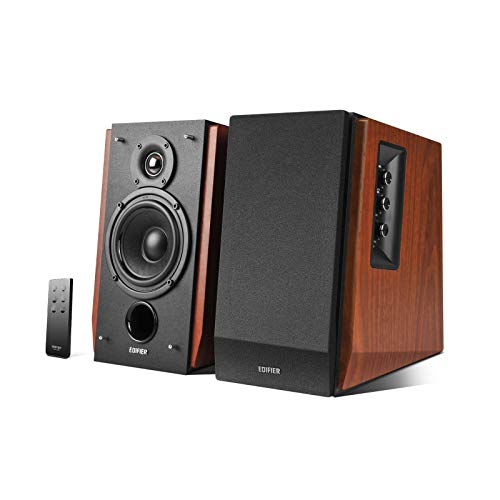
Warm, active bookshelf speakers with midrange that flatters acoustic jazz
If you want to step further up, the Pro-Ject Debut Carbon Evo adds significantly more detail retrieval, worth it when you're ready to hear everything Van Gelder put into those Blue Note recordings.
What to Avoid
Crosley suitcase players and cheap all-in-ones. They apply 4–6g of tracking force when proper turntables use 1.5–2g. Every play grinds your records. A record like Kind of Blue isn't cheap. Treating it with a Crosley is a false economy.
Budget direct-drive decks under £100. Motor noise is audible on quiet jazz passages. The silence between Coltrane's notes is part of the music. You won't hear it on a noisy drive system.
Bootleg pressings of Kind of Blue and A Love Supreme. They're the two most counterfeited jazz records. If buying used, check the matrix number and original label details before paying collector prices. Bootlegs sound noticeably flat and compressed.
Cheap generic reissues on thin vinyl. Look for 180g pressings, the Tone Poet Blue Note series, Analogue Productions editions, or Speakers Corner reissues. They cost more because the quality difference is audible.
Why Jazz and Vinyl Belong Together
The recordings on this list were engineered for vinyl. Van Gelder spent a career learning how acoustic jazz translated to lacquer. The dynamic range, the room ambience, the weight of Elvin Jones' drums, these survive the tape-to-vinyl transfer in ways that digital conversion sometimes compresses.
More than that, jazz rewards the ritual. Selecting a record, placing the needle, sitting with nothing else demanding attention, this matches the music's demands. Kind of Blue doesn't work as background. It works when you listen.
Pick one album from this list. Put it on. The rest of the collection can wait.
Find Your Perfect Setup
Answer a few quick questions and get personalised recommendations.
Start the QuizFrequently Asked Questions
What is the best jazz album to start with on vinyl?
Kind of Blue by Miles Davis is the most accessible entry point. It's the best-selling jazz album of all time, the recording is exceptional, and standard Columbia Legacy pressings sound excellent for casual listening. Most people who get serious about jazz vinyl end up owning it twice — once as a starter and once as an audiophile pressing.
Why does jazz sound so good on vinyl?
Jazz's golden era (1955–1970) coincided with analogue recording's peak. Engineers like Rudy Van Gelder developed techniques specifically for capturing acoustic jazz on vinyl — the spatial depth, warmth, and dynamic range that digital formats sometimes compress. On vinyl, you hear the room the musicians were playing in.
What are Blue Note Tone Poet editions?
Blue Note's Tone Poet series are audiophile-quality reissues of classic jazz albums, pressed on 180g vinyl with all-analogue mastering by Joe Harley and Bernie Grundman. They cost more than standard reissues but the sound quality difference is audible — particularly on Blue Note recordings like Moanin' and Blue Train.
What pressing of Kind of Blue should I buy?
The Mobile Fidelity Sound Lab (MFSL) 45RPM pressing is the audiophile benchmark but costs £80+. For most people, the Columbia Legacy reissue (around £20) sounds excellent and is widely available. Avoid the budget-label reissues on thin vinyl — they're noticeably flat. Kind of Blue is also the most counterfeited jazz record on vinyl, so buy from a reputable seller.
Do I need a special turntable for jazz vinyl?
Not special — but quality matters more for jazz than for most other genres. Jazz is almost entirely acoustic music, which reveals setup shortcomings that rock recording forgives. A belt-drive turntable with low motor noise and a quality cartridge makes a real difference. The Rega Planar 1 (around £300) is the minimum I'd recommend for serious jazz listening.
Related Guides
Top 10 Vinyl Albums of All Time | Essential Records for Collectors
Buying GuideTop 10 Blues Albums on Vinyl | Essential Records for Collectors
Buying GuideBest Record Players UK 2026: Expert Picks at Every Budget
Buying GuideBest Turntables Under £500 UK 2026: Rega vs Pro-Ject vs Audio-Technica vs Sony
How-ToPhono Preamp Guide UK 2026 | Do You Need One? From £35
Ready to find your perfect setup?
Our quiz matches you with the right turntable, speakers, and accessories.
Take the Quiz - It's FreeNo email required