
Belt Drive vs Direct Drive Turntables 2026 | Compared

Vinyl collector for over thirty years. Found my first turntable and a box of records in the loft at twelve — Nashville Skyline, After the Gold Rush, Disraeli Gears. Still spinning on a vintage Sony PS-X600.
Just so you know, some links on this page are affiliate links. If you buy something via them, we get a small kickback. You don't pay more, but it helps toward the next record.
Two ways to spin a record exist: belt drive and direct drive. Belt drive uses a rubber belt between the motor and the platter; direct drive puts the motor right underneath. Both work. Both sound good for home listening. The AT-LP120X (direct drive) and Rega Planar 1 (belt drive) are the most popular contenders at similar price points, and both excel. The "which is better" debate has raged for decades, and the honest answer is: it depends on your priorities and use case, not the technology itself.
Quick Picks
Not sure which setup is right for you?
Take Our QuizBelt Drive: How It Works
A separate motor connects to the platter via a rubber belt; the belt absorbs motor vibrations before they reach the platter, resulting in quieter operation. Less motor noise means cleaner sound, especially on quiet passages. The platter is mechanically isolated from the motor's vibrations, which is why belt drive has dominated audiophile turntables for the past 40 years.
Rega, Pro-Ject, and Thorens all build primarily belt-drive decks at reference-level price points. Audio-Technica's budget-friendly AT-LP60X uses belt drive, as does the respected entry-level Fluance RT80. If you walk into an upscale audio shop, most turntables on the wall under around $1000 will be belt-drive.
Honest note: Belt-drive motors run cooler than direct-drive motors (less electrical stress) but the belt itself wears over time. A belt that should last 3-5 years may degrade to 2-3 years in warm climates or if the turntable sits unused for months, allowing the rubber to harden.
Pros: - Superior vibration isolation creates a quieter background (the "black silence" audiophiles prize) - Generally preferred for home listening and music enjoyment - Often simpler mechanically; fewer things can fail - Many acclaimed turntables are belt-drive - Better isolation for speaker-mounted turntables (less feedback)
Cons: - Belts stretch and need replacement every 2-5 years - Slower start-up (platter takes 1-2 seconds to reach full speed) - Speed can drift very slightly as belts age (affects pitch subtly) - Not suitable for DJing or scratching (no pitch control, no instant start) - Belt tension can drift and require occasional adjustment
Direct Drive: How It Works
The motor is directly beneath the platter; the platter essentially sits on the motor spindle. No belt. No intermediary. The motor maintains speed through constant electronic feedback, adjusting power delivery to maintain dead-accurate rotation speed. This is the technology behind Technics SL-1200 and Audio-Technica's AT-LP120X.
Direct-drive decks don't isolate vibration the way belt drives do, but good direct-drive design compensates with a rigid platter and large mass beneath. At identical price points, the speed stability on direct drive is genuinely superior. Wow and flutter (tiny speed variations) are significantly lower on quality direct-drive turntables.
Honest note: Budget direct-drive turntables (under around $200) often have audible motor vibration because manufacturers skip the mass and isolation required to tame a direct motor. This is why direct drive is rare below $300; the engineering cost is real. Cheap direct-drive turntables sound worse than cheap belt-drive turntables.
Pros: - Superior speed stability (objectively measurable via wow/flutter specs) - Instant start; platter at full speed immediately - No belts to replace (zero belt maintenance) - Better for DJing, scratching, and mixing (pitch control essential) - Generally more durable long-term (motor will outlast a 50-year-old belt) - Better for users who pause/restart frequently
Cons: - Motor vibration can transmit to the stylus if not properly engineered - Higher-quality direct drives cost more (engineering tax is real) - Budget direct-drive turntables have audible motor noise - Less effective on light shelves (vibration can couple into speakers) - Heavier turntable (motor adds mass)
Side-by-Side Comparison: Belt vs Direct Drive
| Factor | Belt Drive | Direct Drive |
|---|---|---|
| **Speed stability** | Good (±0.3% typical) | Excellent (±0.05% typical) |
| **Start time** | 1-2 seconds | Instant (within 50ms) |
| **Motor vibration** | Minimal | Present but manageable |
| **Maintenance** | Belt replacement every 3-5 years | None (no belts) |
| **Long-term durability** | 20+ years if belt replaced | 30+ years typically |
| **DJing capability** | Not suitable | Excellent with pitch control |
| **Cost (entry-level)** | around $150-300 | around $300+ |
| **Cost (premium)** | around $500-3000 | around $500-4000 |
| **Best use case** | Home listening, music first | Versatility, DJing, features |
Which Sounds Better?
For home listening, neither has an inherent advantage at the same price point. A well-engineered belt-drive turntable (Rega Planar 1) and a well-engineered direct-drive (AT-LP120X) both sound excellent. The differences are more about design philosophy and engineering budget than the fundamental drive mechanism.
Belt-drive fans argue the motor isolation creates a "blacker" background (more silence between notes, better clarity on quiet passages). Direct-drive fans argue the speed stability creates better pitch accuracy and tighter, more controlled bass. Both arguments contain truth. Neither is decisive.
Your cartridge, speakers, tonearm quality, and room acoustics make a bigger difference than drive type. Upgrading from a $30 cartridge to a $150 cartridge will improve sound more than switching between a good belt drive and a good direct drive at the same price point.
Which Should You Buy?
Choose belt drive if: - You're focused on home listening and sound quality above all else - You don't need instant start, pitch control, or DJing features - You're considering turntables from Rega, Pro-Ject, Fluance, or Thorens - You prefer the "minimal electronics" audiophile philosophy - You'll leave your turntable on a dedicated audio shelf (not a light desk)
Choose direct drive if: - You DJ, scratch, or mix records (even occasionally) - You value low maintenance (no belt replacement) - You want USB digitizing or audio interface features - You like the AT-LP120X's versatility and upgradeable cartridge - You want true pitch control for creative playback - Your turntable will be moved or repositioned frequently
Either works if: - You just want to play records and enjoy them - You're buying your first turntable - Sound quality is your only priority (both deliver at similar price points) - You're uncertain about long-term vinyl commitment
The Budget Question
Under around $200, belt drive dominates. The AT-LP60X is belt-drive and the best budget turntable available; great direct-drive options don't exist at this price. Cheap direct-drive turntables (under around $250) tend to have audible motor noise that betrays their cost-cutting. Audio manufacturers can't engineer away motor vibration at low price points, so they focus on belt drive where isolation comes naturally.
In this range, you have real choices. The AT-LP120X (direct) competes directly with the Rega Planar 1 (belt) and Pro-Ject Debut Carbon EVO (belt). Different philosophies, all excellent results. See our turntable under $500 guide for detailed comparisons.
Above around $1000, the Technics SL-1200GR direct-drive competes head-to-head with belt-drive decks from Rega, VPI, and others. At this price, execution matters more than drive type. All turntables at this level are well-engineered enough that drive mechanism becomes a preference, not a performance factor.
Belt Replacement: Not a Big Deal
If belt replacement worries you, let it go. It takes about two minutes: lift the platter, remove the old belt, loop on the new one, replace the platter. Belts cost around $12-25 and typically last 2-5 years depending on use and climate. Most turntable manufacturers sell replacement belts directly, and Amazon stocks replacements for all popular models (search "[model] turntable belt" and you'll find it within 30 seconds).
It's about as complex as changing batteries in a TV remote. Seriously. This is not a dealbreaker.
The Technics Question
The Technics SL-1200 is the most famous direct-drive turntable ever made. It defined DJ culture and has been in continuous production since 1972. The modern reissues (SL-1200GR, SL-1200G) are also outstanding home listening turntables, though expensive. The SL-1200 proves that direct drive can sound exceptional for music listening, not just DJing.
If someone tells you direct drive is "just for DJs," the SL-1200G's audiophile reputation and critical acclaim prove otherwise. If someone says belt drive is "always better for listening," the SL-1200 and other high-end direct-drive decks from Technics, KUZMA, and Continuum prove that wrong too.
Good engineering trumps drive type. Every single time. You can build an excellent turntable either way.
What to Avoid
- Mismatched expectations: Don't expect direct drive to eliminate all vibration or belt drive to deliver perfect speed stability at budget prices - Ignoring your use case: If you DJ even occasionally, direct drive is non-negotiable (belt drive can't reliably start instantly or handle pitch adjustment) - Believing belt drive "always sounds better": This marketing claim ignores engineering quality and budget constraints (cheap belt drives exist too) - Overlooking maintenance plans: If belt replacement bothers you emotionally, commit to direct drive; if you don't mind simple maintenance every few years, belt drive opens more options - Comparing across price points: A around $600 belt-drive deck and a around $300 direct-drive deck are not equivalent; compare turntables at the same price before deciding based on drive type
FAQ
Does belt drive really sound better? Not inherently. At the same price point and quality level, the differences are subtle and often personal preference. Your cartridge, speakers, and room matter far more. See our guide to turntable upgrade paths for what actually improves sound.
Can we use direct drive for home listening? Yes, absolutely. The AT-LP120X is a direct-drive turntable beloved by music listeners who never touch the pitch control. Direct drive is perfectly fine for home listening; it's just not essential the way it is for DJing.
How often do I actually need to replace a belt? Typically 2-5 years depending on climate and how often you use the turntable. Warm climates degrade belts faster. Heavy daily use wears belts faster. If your turntable sits unused for 6 months, the rubber can harden. Plan for replacement every 3 years on average.
Does belt drive vibration really hurt sound quality? At the level most listeners notice? No. Good belt-drive design isolates vibration so effectively that the motor noise is imperceptible. This is why belt drive dominates the audiophile market; isolation works.
Which is more reliable long-term? Direct drive (no belts to replace) lasts longer without maintenance. Belt drive (with belt replacement) also lasts decades. Both are reliable if maintained. The Technics SL-1200 in clubs worldwide are now 50+ years old; belt-drive Rega turntables from the 1980s still play beautifully with new belts.
Should drive type be my main buying decision? No. Brand reputation, cartridge quality, tonearm design, and your specific use case matter far more. Pick the turntable you like first; belt vs direct drive is the secondary question.
Is there a speed difference you can actually hear? Direct drive maintains speed more precisely (measurably around 0.05% wow/flutter vs 0.3% on belt drive). Can you hear it? Maybe on extremely quiet passages or audiophile test tracks. On normal music playback? Most listeners can't detect the difference. The cartridge and speakers have bigger impact on pitch perception than drive type.
What happens if a belt breaks mid-song? The platter slows gradually; the record doesn't stop abruptly. You'll notice the music dragging (slowing down) and remove the record. This is rare; belts typically degrade slowly over months rather than fail suddenly. Most people replace belts proactively before failure.
Final Thoughts
The belt versus direct drive question has no universal answer. Both approaches work beautifully when engineered well. The best turntable is the one that matches your priorities: budget, features, use case, and maintenance tolerance.
Maintenance differences
Belt drive turntables require occasional belt replacement. Belts stretch over time (typically 2-5 years of regular use), causing speed instability, the turntable runs slightly slow and pitch drops. Replacement belts cost $10-20 and installation takes five minutes on most models. This is the only maintenance item specific to belt drives.
Direct drive turntables have no belt to replace. The motor connects directly to the platter. Maintenance is limited to occasional lubrication of the bearing (every few years) and general cleaning. The trade-off is that direct drive motors cost more to repair if they fail, though failures are rare in quality units.
Speed stability and wow/flutter
Direct drive turntables maintain more consistent speed because the motor corrects in real time using servo feedback. Belt drives are subject to minor speed variation as the belt stretches and the motor fluctuates. This variation, measured as wow and flutter, is typically inaudible on quality belt drive turntables (under 0.15%) but can become noticeable on cheap ones (above 0.25%). If you are sensitive to pitch stability, particularly on sustained piano notes or orchestral music, direct drive holds speed more consistently. For first-time vinyl buyers, the AT-LP60X (belt) or AT-LP120X (direct) both deliver excellent value. For audiophiles committed to pure sound, Rega's belt-drive Planar series has a 50-year reputation. For DJs and creatives, direct drive is essential for pitch control and reliable starts. For long-term reliability, both options last decades with minimal care.
Getting the Most from Either Drive Type
Whichever technology you choose, setup quality determines how well your turntable performs. Both belt and direct drive tables respond to the same fundamentals.
Level your turntable. Use a small bubble level on the platter surface. An unlevel deck causes the stylus to track grooves at an angle, increasing wear on both the record and the stylus over time. Adjust the feet until the platter reads level in both directions.
Set tracking force correctly. Budget turntables arrive pre-set for their included stylus. If you upgrade the cartridge, use a digital stylus force gauge to set the new weight precisely. Incorrect tracking force is the most common cause of skipping on belt drive and distortion on direct drive.
Isolation from speaker vibration. Place the turntable away from your speakers, or at minimum on a separate surface. Speaker vibration transmits through furniture into the platter and causes audible resonance, particularly on bass-heavy records. This affects belt and direct drive equally.
The real upgrade path. When you want better sound, upgrade in this order: cartridge first, then phono stage, then turntable. A quality cartridge on a budget deck beats a stock cartridge on a mid-range one. The AT-LP120X accepts standard half-inch mount cartridges, which opens a wide range of options from around $50 to over $300. Start there before spending more on a new deck.
Stop worrying about drive type. Start focusing on the turntable itself, the cartridge quality, and the speakers. Those decisions matter infinitely more than whether a rubber belt or a motor spindle spins your platter.
What You'll Need With It
Whichever drive type you settle on, clean records before playing. Surface contamination is audible on any well-set-up turntable and is often misattributed to the mechanism. A 30-second cleaning habit protects both stylus and groove regardless of what spins the platter.
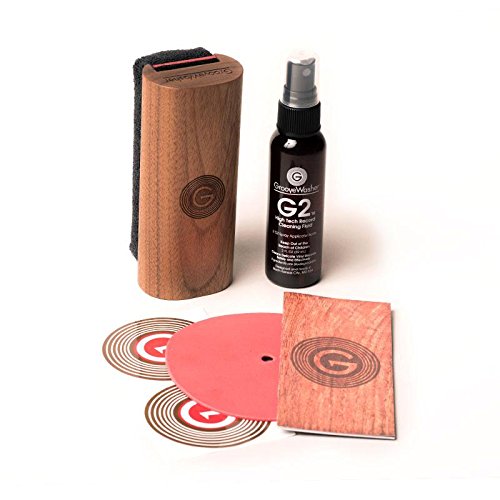
Professional cleaning system with microfibre brush, cleaning solution, and storage pouch. Safe for all vinyl types. Essential maintenance for preserving record quality.
Set tracking force correctly on whichever turntable you buy. This gauge reads to 0.01g. Both belt and direct drive decks benefit from accurate tracking force, and the two-minute calibration check pays off across years of accurate stylus wear.

Accurate digital gauge ensuring optimal tracking force for cartridge longevity and sound quality. LCD display with 0.01g precision. Essential tool for turntable setup.
Find Your Perfect Setup
Answer a few quick questions and get personalised recommendations.
Start the QuizFrequently Asked Questions
What is the difference between belt and direct drive turntables?
Belt drive turntables use a rubber belt to connect the motor to the platter, isolating vibrations. Direct drive turntables have the motor directly attached to the platter spindle, offering faster start-up and more precise speed control. Belt drive is preferred for home listening (better isolation); direct drive for DJing (no motor lag).
Do belt drive turntables sound better?
Generally yes, for home listening. The belt isolates motor vibrations that can muddy the sound, resulting in a quieter background and clearer detail. However, high-quality direct drive turntables like the Audio-Technica AT-LP120X and Technics SL-1200 series can match or exceed belt-drive performance with proper engineering.
Are direct drive turntables more reliable?
Direct drive turntables have fewer moving parts (no belt to stretch or break), making them more reliable long-term. Belts typically need replacement every 2-5 years ($12-25). However, if a direct drive motor fails, repairs are expensive. Both types are reliable from quality manufacturers.
Which turntable drive type should I buy?
For home listening and audiophile use, choose belt drive (Rega Planar 1, Pro-Ject Debut Carbon). For DJing, scratching, or if you value instant start/stop, choose direct drive (Audio-Technica AT-LP120X, Technics SL-1210). Either type can sound excellent - focus on overall build quality rather than drive type alone.
Related Guides
Record Player Beginners Guide 2026 | Start from $250
Buying GuideBest Record Players 2026: Expert Picks at Every Budget
ComparisonAudio-Technica LP60X vs LP120X 2026 | Which to Buy
Buying GuideBest Turntables Under $500 2026: Rega vs Pro-Ject vs Audio-Technica
ComparisonBelt Drive vs Direct Drive Turntables UK 2026 | Compared
Ready to find your perfect setup?
Our quiz matches you with the right turntable, speakers, and accessories.
Take the Quiz - It's FreeNo email required