Top 10 Classical Albums on Vinyl | Essential Recordings

Vinyl collector for over thirty years. Found my first turntable and a box of records in the loft at twelve — Nashville Skyline, After the Gold Rush, Disraeli Gears. Still spinning on a vintage Sony PS-X600.
Just so you know, some links on this page are affiliate links. If you buy something via them, we get a small kickback. You don't pay more, but it helps toward the next record.
Classical music was engineered for dynamic range. The distance between a single violin and a full orchestra at full power is enormous, and vinyl handles those extremes with a naturalness that no compressed format can fully match. Conductors like Kleiber and Karajan built their recordings around what the format could do. When you hear a full orchestral crescendo on a well-pressed classical record, you understand why audiophiles spend more on classical vinyl than any other genre.
These ten recordings are the critical consensus on classical music’s finest vinyl experiences.
Not sure which setup is right for you?
Take Our QuizBefore buying, consider previewing first. Amazon Music Unlimited’s 30-day free trial has every album on this list. Some audiophile pressings cost £20–£80, worth knowing what you’re buying before committing. (I earn a flat fee if you sign up through that link, which doesn’t affect my recommendations.)
1. Beethoven: Symphonies Nos. 5 & 7 – Carlos Kleiber / Vienna Philharmonic (1974-1976)
Carlos Kleiber recorded so rarely that each release became an event. His Beethoven Fifth, often called the greatest recording of the work, captures a conductor at the height of his powers leading one of the world's finest orchestras.
The famous four-note opening has never sounded more inevitable. Kleiber finds momentum that drives the first movement without rushing. The orchestra responds with precision that borders on telepathic. The finale's triumphant C major emerges as genuine liberation after 33 minutes of tension.
The Seventh Symphony receives equally compelling treatment. Kleiber's tempo for the second movement (often played as funeral march) maintains forward motion while preserving gravity. The finale is ferociously energetic without losing control.
On vinyl, the Vienna Philharmonic's legendary string tone has warmth that digital versions sometimes lose. The brass has bite without harshness. The Musikverein's acoustics provide natural reverb.
The Original Source Series LP reissue sounds exceptional. Vintage DG pressings are collectible. These recordings remain the benchmark against which all Beethoven symphony recordings are measured.

Electrifying performances that vinyl brings to life
2. Wagner: Der Ring des Nibelungen – Georg Solti / Vienna Philharmonic (1958-1965)
The first complete studio recording of Wagner's Ring Cycle remains, for many, definitive. Producer John Culshaw revolutionised opera recording, using stereo to create theatrical space. Over seven years, Decca captured sixteen hours of music with casting that reads like a dream team: Birgit Nilsson, Wolfgang Windgassen, Hans Hotter, Kirsten Flagstad.
The recording quality was unprecedented. Culshaw placed microphones to create dramatic staging, characters move through the stereo field, Wotan's spear strikes audibly pierce the orchestra. On vinyl, these effects have presence that CD versions sometimes flatten.
Solti's conducting divided opinion at release, some found it aggressive, lacking Wagner's long breath. Time has vindicated his approach. The energy and clarity reveal orchestral details that more reverential performances obscure.
The Decca 180g reissue spread across dozens of LPs captures the scope of the achievement. Original UK wide-band Deccas are extremely collectible. This recording made opera recording an art form.

The first complete Ring on record - a monumental vinyl box set
3. Bach: Goldberg Variations – Glenn Gould (1955 & 1981)
Gould recorded the Goldbergs twice, the 1955 debut that made him famous, and the 1981 version recorded months before his death. Both are essential; they represent different approaches to the same masterpiece.
The 1955 recording is fleet, virtuosic, almost ecstatic. The young Gould plays with breathtaking speed and clarity, making the variations dance rather than processional. The mono recording captures his unconventional touch, percussive attacks, independent voicing of lines.
The 1981 recording is contemplative, almost twice as long. Gould had spent 26 years living with these variations; his final statement has the weight of a lifetime's consideration. The stereo digital recording (released on vinyl from digital masters) hasdifferent sonic character.
On vinyl, the 1955 recording's mono has warmth and presence. Gould's famous humming, which digital versions often suppress, becomes part of the performance's humanity.
The Analogue Productions pressing of the 1955 recording is the audiophile reference. Original Columbia pressings are collectible. These recordings define keyboard Bach.

The 1955 recording that changed piano playing forever
4. Mahler: Symphony No. 2 "Resurrection" – Leonard Bernstein / New York Philharmonic (1963)
Bernstein made Mahler mainstream in America, and his Second Symphony recording captured the conductor's theatrical instincts perfectly. The 85-minute symphony, ending with chorus and soloists proclaiming resurrection after death, suited Bernstein's taste for grand statements.
The first movement's funeral march has weight without dragging. The Ländler second movement dances with Viennese charm. The scherzo builds towards explosion. The fourth movement's "Urlicht" features mezzo-soprano Janet Baker in her American debut.
The finale builds from near-silence through orchestral apocalypse to choral transfiguration. On vinyl, the dynamic range, from whispered strings to full orchestra, chorus, and organ, demands quality playback. The climax should overwhelm.
The Speakers Corner reissue captures the recording's power. Original Columbia two-eye pressings are collectible. Bernstein recorded this symphony multiple times; this remains his most urgent statement.
Bernstein's Mahler on vinyl is a spiritual experience
5. Elgar: Cello Concerto – Jacqueline du Pré / LSO / Barbirolli (1965)
Jacqueline du Pré recorded Elgar's Cello Concerto at age 20, and her interpretation remains definitive despite the countless recordings that followed. The concerto was written in 1919, Elgar mourning the world lost to World War I. Du Pré captured that elegiac quality with emotional directness that more mature cellists often lack.
The opening statement, a single cry from the cello, sets the tone. Du Pré's vibrato is intense, her tone almost vocal. Barbirolli's accompaniment supports without overwhelming, the London Symphony providing autumnal colour.
The slow movement is heartbreaking. Du Pré plays as if communicating something words cannot express. On vinyl, her cello has presence that places it in the room with you. The EMI recording captures both the instrument's depth and its intensity.
The Hi-Q Records 180g pressing sounds exceptional. Original UK HMV ASD pressings are highly sought after. This recording's poignancy increased after du Pré's multiple sclerosis ended her career at 28; she died at 42, this recording her most enduring legacy.
Buy on Amazon UK
6. Mozart: Horn Concertos – Dennis Brain / Philharmonia (1953)
Dennis Brain rewrote the French horn rulebook. Before his tragic death at 36, he recorded Mozart's four concertos with a grace that made the notoriously difficult instrument sound effortless.
Brain's tone, warm, centred, with no hint of strain, set standards players still chase. His articulation allowed phrases to breathe naturally. The Philharmonia under Herbert von Karajan haselegant accompaniment, never competing with the soloist.
The mono recording captures Brain's horn with remarkable fidelity. On vinyl, the instrument sounds present and natural, the sound EMI's engineers achieved with period microphones and techniques.
The Testament LP reissue sounds excellent. Original UK Columbia pressings are collectible. Brain died in a car accident in 1957; these recordings preserve an artist who had no peers.
Golden-tone horn playing that vinyl preserves with warmth
7. Puccini: Tosca – Maria Callas / Victor de Sabata / La Scala (1953)
The finest recording of any opera, made by artists at the height of their careers. Callas's Tosca is passionate and vulnerable; Giuseppe di Stefano's Cavaradossi is ardent and doomed; Tito Gobbi's Scarpia is terrifying. Victor de Sabata conducts La Scala with theatrical instinct that recording often kills.
Callas's "Vissi d'arte" in Act 2 is revelatory, a prayer offered in desperation, every word colored with meaning. The confrontation with Gobbi's Scarpia has erotic menace that later recordings rarely match.
The mono recording was groundbreaking for its time. Walter Legge's production achieved clarity and presence that rival modern sessions. On vinyl, the voices have immediacy that digital remasters sometimes smooth away.
The Hi-Q Records 180g box set sounds exceptional. Original UK Columbia pressings are extremely valuable. This recording set standards that opera recordings have chased ever since.
Operatic drama at its most intense - Callas at her peak
8. Brahms: Ein deutsches Requiem – Otto Klemperer / Philharmonia (1961)
Klemperer's Brahms Requiem captures the work's architectural grandeur. The slow tempos that characterised late Klemperer serve this music perfectly, the first movement unfolds with patient inevitability, the finale achieves genuine transfiguration.
Elisabeth Schwarzkopf and Dietrich Fischer-Dieskau provide vocal solos of unusual distinction. Schwarzkopf's "Ihr habt nun Traurigkeit" has ethereal beauty; Fischer-Dieskau's "Herr, lehre doch mich" has philosophical weight.
The Philharmonia plays with warmth that suits Brahms's orchestration. The Kingsway Hall recording has spacious acoustics without excessive reverb. On vinyl, the chorus has presence and depth.
The Testament reissue sounds excellent. Original UK Columbia SAX pressings are collectible. This recording represents the last gasp of central European tradition before period practice changed how we hear Brahms.
Monumental choral work given a suitably grand vinyl treatment
9. Holst: The Planets – Herbert von Karajan / Vienna Philharmonic (1961)
Karajan's Planets captures the suite's cinematic scope. "Mars, the Bringer of War" has mechanical menace; "Venus" has sensual contrast; "Jupiter" brings the famous hymn tune with appropriate grandeur.
The Vienna Philharmonic plays with warmth that suits "Venus" and "Neptune" while providing the power "Mars" requires. The Decca recording, engineered by the team that produced the Solti Ring, captures orchestral detail with unusual clarity.
On vinyl, the bass of "Mars" and the celestial choirs of "Neptune" demonstrate the orchestra's range. The dynamic contrasts are impressive; the quiet ending, female voices fading to silence, benefits from vinyl's low noise floor.
The Speakers Corner reissue sounds exceptional. Original UK wide-band Deccas are collectible. This recording remains the orchestral showpiece against which others are measured.
Orchestral colour and power that vinyl delivers spectacularly
10. Vivaldi: Four Seasons – Nigel Kennedy / English Chamber Orchestra (1989)
Kennedy's Four Seasons sold two million copies, unprecedented for classical music. The success resulted from Kennedy's charismatic playing and a recording that balanced scholarly awareness with emotional directness.
Kennedy's ornamentation is tasteful; his rubato is expressive without mannerism. The English Chamber Orchestra hastransparent accompaniment. The recording captures the harpsichord continuo with unusual clarity.
"Spring" has irresistible energy. "Summer's" storm erupts with genuine violence. "Autumn" hunts with excitement. "Winter" shivers convincingly.
On vinyl, Kennedy's violin has sweetness and presence. The EMI recording translates well to the format, the strings having warmth without artificial enhancement.
The EMI reissue sounds excellent. Original UK pressings are readily available. This recording made Kennedy famous and proved classical music could reach wide audiences without dumbing down.
The bestselling classical record sounds vibrant on vinyl
Classical Music and Vinyl
Classical recordings benefit from vinyl's dynamic range and warmth. The format's enforced attention, you can't shuffle a symphony, suits music that rewards concentrated listening.
Seek out audiophile pressings where budget allows. For casual listening, standard reissues sound excellent. The music matters more than the pressing; these performances transcend format considerations.
Getting the Most from Classical Vinyl
Classical recordings present unique challenges for vinyl playback. Dynamic range is enormous, from whispered chamber passages to full orchestral fortissimo, and a well-aligned cartridge matters more here than with any other genre. Check your anti-skate setting before a serious listening session.
Pressing quality varies significantly across classical catalogue. Deutsche Grammophon, Decca, and EMI original pressings are highly sought; their mastering engineers understood the format. Modern audiophile reissues from labels such as Speakers Corner and Analogue Productions reproduce the originals faithfully at reasonable prices.
Classical listeners often prefer playing records in complete movements without interruption. Queue the record, settle into your chair, and resist the urge to skip. The format imposes exactly the listening discipline that classical music rewards.
The Setup This Classical Collection Deserves
Classical music demands the lowest noise floor of any genre. The dynamic range between a single oboe in a quiet passage and a full orchestra fortissimo is enormous, background hum from a cheap motor becomes audible in the silences that matter most.
My recommendation: the Rega Planar 1. Belt-drive design keeps motor noise below the audible threshold on quiet classical passages. Rega’s house sound is slightly warm without being coloured, well-suited to strings and acoustic instruments.

Belt-drive simplicity with warm, musical sound that suits acoustic classical instruments
For speakers, the Edifier R1700BT have the midrange accuracy that classical music requires. They’re not analytical to the point of being fatiguing, but they’re honest enough to reveal why the du Pré Elgar sounds different from a modern studio recording.
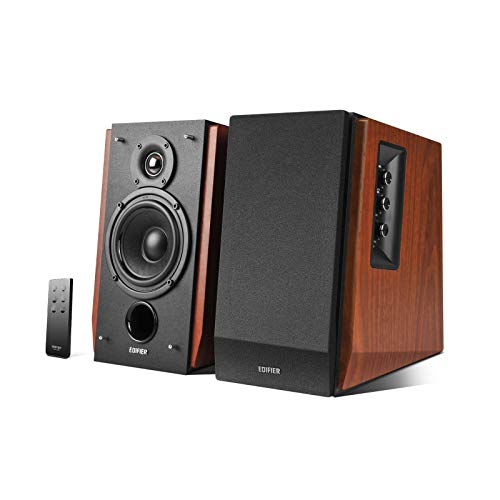
Warm, accurate bookshelf speakers, honest enough for classical without being harsh
What to Avoid
Budget digital transfer reissues. Many cheap classical vinyl releases are re-pressed from digital masters without disclosing this. Look for pressings that specifically state analogue mastering, original Deutsche Grammophon, Decca, and EMI pressings are the reference standard.
Any motor noise. Classical is torture on a noisy turntable. The pianissimo passages in Beethoven or Mahler are designed to be almost silent, background hum from a budget direct-drive deck destroys the effect.
Warped records. Classical recordings with long sustained notes suffer most from warped vinyl. Always check condition before buying second-hand. A slightly warped rock record is still playable; a warped orchestral recording becomes a distraction.
Wrong cartridge tracking force. Set your cartridge to the manufacturer’s recommended tracking weight, too light and the stylus will skip on loud orchestral passages; too heavy and you damage quiet inner-groove passages.
Start with Beethoven 5 conducted by Kleiber. Six minutes of music that explains the entire form. The rest of the collection follows naturally.
Find Your Perfect Setup
Answer a few quick questions and get personalised recommendations.
Start the QuizFrequently Asked Questions
What classical album should I start with?
Carlos Kleiber's Beethoven Symphonies 5 & 7 with the Vienna Philharmonic. Often called the greatest recording of Beethoven's Fifth, it demonstrates vinyl's ability to capture orchestral dynamics.
Why does classical music suit vinyl?
Classical music benefits from vinyl's dynamic range and warmth. The format's enforced attention suits music that rewards concentrated listening—you can't shuffle a symphony.
What are the best classical vinyl labels?
Speakers Corner, Testament, Hi-Q Records, and the original Decca and EMI pressings offer excellent sound. Deutsche Grammophon's Original Source Series provides modern alternatives.
What turntable is best for classical vinyl?
A belt-drive turntable with a low noise floor is essential for classical music. The Rega Planar 1 (around £300) is the right choice — belt drive keeps motor noise below what quiet classical passages reveal. The pianissimo passages in Beethoven or Mahler are designed to be almost silent; background hum from a cheap direct-drive motor destroys the effect.
Related Guides
Top 10 Jazz Albums on Vinyl 2026 | Essential Records for Collectors
Buying GuideBest Record Players UK 2026: Expert Picks at Every Budget
Buying GuideBest Turntables Under £500 UK 2026: Rega vs Pro-Ject vs Audio-Technica vs Sony
Buying GuideBest Speakers for Turntables UK 2026 | Active & Passive
Ready to find your perfect setup?
Our quiz matches you with the right turntable, speakers, and accessories.
Take the Quiz - It's FreeNo email required