Top 10 Reggae Albums on Vinyl | Essential Records for Collectors

Vinyl collector for over thirty years. Found my first turntable and a box of records in the loft at twelve — Nashville Skyline, After the Gold Rush, Disraeli Gears. Still spinning on a vintage Sony PS-X600.
Just so you know, some links on this page are affiliate links. If you buy something via them, we get a small kickback. You don't pay more, but it helps toward the next record.
Reggae was built on bass frequencies that vinyl handles better than any compressed format. The ‘one drop’ rhythm, kick drum on the third beat, open hi-hat on the off-beats, bass guitar carrying the primary groove, has a physical weight through a proper turntable and good speakers that streaming cannot fully reproduce. Lee ‘Scratch’ Perry and King Tubby developed dub mixing specifically around what vinyl could carry in the groove. These recordings were made for this format.
These ten albums represent the critical consensus on reggae’s finest vinyl recordings.
Not sure which setup is right for you?
Take Our QuizBefore buying, consider previewing first. Amazon Music Unlimited’s 30-day free trial has every album on this list. Some audiophile pressings cost £20–£80, worth knowing what you’re buying before committing. (I earn a flat fee if you sign up through that link, which doesn’t affect my recommendations.)
1. Catch a Fire – Bob Marley & The Wailers (1973)
The album that introduced reggae to international audiences. Chris Blackwell signed the Wailers to Island Records and gave them unprecedented creative control. The result was reggae's first major statement for mainstream audiences.
The original Island mix adds rock elements, guitar overdubs, keyboard flourishes, that helped crossover appeal without diluting the message. The rhythm section of the Barrett brothers creates the foundation that defines classic reggae sound.
On vinyl, the bass has physical weight. Aston Barrett's lines aren't just heard but felt. The guitars have presence; Marley's voice has warmth and urgency.
The 2001 Deluxe Edition includes both the Jamaican and Island mixes. For vinyl collectors, the zippo lighter sleeve original is highly prized, though expensive. Standard reissues sound excellent.
This album launched reggae worldwide. The songwriting, "Stir It Up," "Concrete Jungle", established templates that influenced generations.

The album that introduced reggae to the world - essential on vinyl
2. Funky Kingston – Toots & The Maytals (1973)
Toots Hibbert brought soul and gospel intensity to reggae. Funky Kingston captures him at peak power, a voice that could match Otis Redding's for emotional impact. The album combines originals with covers that Toots makes entirely his own.
The production has clarity that reveals the band's musicianship. The rhythm section is tight; the horn arrangements add punch. Toots's voice dominates but never overwhelms.
On vinyl, the warmth suits the soul influences. The bass has body; the horns have bite. The dynamic range lets Toots's voice soar.
The version of "Louie Louie" transforms a garage rock standard into something joyful. The title track and "Pressure Drop" are genre classics.
The Island pressing sounds excellent. This album demonstrates why Toots deserved mention alongside soul's greatest singers.

Joyful reggae energy that vinyl reproduces with infectious warmth
3. The Harder They Come – Soundtrack (1972)
The film introduced reggae to global audiences. The soundtrack introduced the artists. Jimmy Cliff's performances anchor the album, but the compilation format hasoverview of early 1970s Jamaican music.
The production varies, these are singles compiled rather than album recordings. But the energy is consistent. Every track captures musicians working at high level.
On vinyl, the singles-era recordings benefit from analogue warmth. The bass, crucial to reggae, has presence. The variety of production styles becomes coherent.
Jimmy Cliff's title track and "You Can Get It If You Really Want" became international hits. The Melodians, Desmond Dekker, and others demonstrate the scene's depth.
The Island pressing sounds good; recent remasters improve the sonics further. This soundtrack remains the introduction to classic reggae for many listeners.

The soundtrack that brought reggae to cinema - a vinyl classic
4. Equal Rights – Peter Tosh (1977)
After leaving the Wailers, Tosh made solo albums of uncompromising political consciousness. Equal Rights addresses apartheid, colonialism, and human rights with intelligence and anger that remains powerful.
The production is spare but effective. The rhythm section is tight; Tosh's guitar playing shows his skill. His voice carries authority, not Marley's smoothness but equal conviction.
On vinyl, the bass has weight and definition. The guitars have presence; the arrangements have clarity. The production suits the message, direct, uncompromising.
"Get Up, Stand Up" (co-written with Marley) appears here in definitive version. The album tracks address serious subjects without becoming preachy.
The Columbia pressing sounds excellent. This album demonstrates Tosh's stature as major artist, not merely Wailers sideman.

5. Heart of the Congos – The Congos (1977)
Lee "Scratch" Perry's Black Ark studio productions reached their peak with this album. The Congos' harmonies float over Perry's dense, layered productions. The result is psychedelic roots reggae that sounds like nothing else.
Perry's production techniques were revolutionary, layering, phasing, echo that creates space. The Congos' voices blend perfectly; the arrangements build atmosphere.
On vinyl, Perry's low-end has physical presence. The echo and reverb create dimension. The production rewards careful listening, new details emerge with each play.
The original Black Ark pressing is extremely rare. The Blood and Fire remaster captures the sound faithfully and is the recommended version for most collectors.
This album influenced dub, ambient, and electronic music. It demonstrates what was possible in a small Jamaican studio with creative vision.

Lee Perry's production genius - vinyl reveals every layer
6. Marcus Garvey – Burning Spear (1975)
Winston Rodney took the name Burning Spear and dedicated his music to Pan-African consciousness. Marcus Garvey pays tribute to the Jamaican national hero with music that combines spiritual depth with rhythmic power.
The production has clarity and space. The rhythm section creates hypnotic foundation; Burning Spear's voice has authority. The backing harmonies add texture without clutter.
On vinyl, the bass creates physical foundation. The repetitive rhythms become meditative. The album rewards attention, the arrangements reveal subtlety beneath apparent simplicity.
"Marcus Garvey" and "Slavery Days" address history with power that transcends their era. The consciousness never becomes didactic, the music carries the message.
The Island pressing sounds excellent. This album established Burning Spear as roots reggae's most serious voice.

Roots reggae at its most powerful - vinyl is the rightful format
7. Two Sevens Clash – Culture (1977)
Joseph Hill led Culture through one of roots reggae's most prophetic albums. Two Sevens Clash predicted upheaval when 7/7/77 arrived. The album combines apocalyptic imagery with musical sophistication.
The production by Joe Gibbs has clarity and punch. The rhythm section is tight; the harmonies are precise. Hill's voice carries conviction, he believes every word.
On vinyl, the bass has definition and weight. The production has warmth; the harmonies have presence. The album sounds contemporary despite its era.
The title track caused genuine concern in Jamaica as the date approached. The album tracks maintain the intensity without repetition.
The Joe Gibbs pressing sounds excellent. This album captures roots reggae at its most powerful and influential.

Prophetic roots reggae with bass that vinyl delivers perfectly
8. Blackheart Man – Bunny Wailer (1976)
The most reclusive Wailer made the most personal album. Blackheart Man addresses Rastafari spirituality with music that ranges from gentle to fierce. It's perhaps the most complete artistic statement from any original Wailer.
The production has space and clarity. The arrangements are sophisticated, strings, brass, percussion, but never overwhelm Bunny's voice. The album flows as complete work.
On vinyl, the production rewards quality playback. The bass has weight; the arrangements have dimension. The quiet passages have detail; the intense moments have power.
"Dreamland" and "Blackheart Man" are classics, but the album works as whole. Bunny's voice has distinctive quality, not Marley's smoothness or Tosh's edge but something more introspective.
The Island pressing sounds excellent. This album deserves recognition alongside any Wailers recording.

Former Wailer's solo masterpiece - deep roots on vinyl
9. Right Time – The Mighty Diamonds (1976)
Harmony trios are reggae tradition. The Mighty Diamonds, Donald Shaw, Fitzroy Simpson, Lloyd Ferguson, created one of the genre's finest vocal group albums. Right Time combines songwriting craft with vocal precision.
The production has clarity that showcases the harmonies. The rhythm section is tight; the arrangements support without overwhelming. The voices blend with precision.
On vinyl, the harmonies have presence and warmth. The bass has weight; the production has space. The album sounds expensive, careful recording that rewards careful playback.
"Right Time" and "I Need a Roof" became classics. The album tracks maintain the quality throughout, no filler.
The Virgin pressing sounds excellent. This album demonstrates why vocal harmony remains central to reggae's appeal.
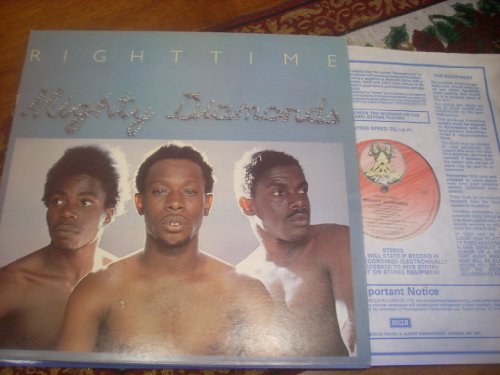
Harmony trio reggae with rhythm that vinyl makes irresistible
10. Handsworth Revolution – Steel Pulse (1978)
UK reggae announced itself with this debut. Steel Pulse came from Birmingham with music that addressed British racism with the power of Jamaican roots. The album connected Caribbean consciousness with British experience.
The production has polish that suited crossover ambitions. The band is tight; the arrangements sophisticated. Lead singer David Hinds has voice with authority and range.
On vinyl, the production rewards quality playback. The bass has weight; the guitars have presence. The album sounds contemporary, the production has aged well.
"Ku Klux Klan" addresses racism directly. The title track connects diaspora experience with revolutionary consciousness. The album works as complete statement.
The Island pressing sounds excellent. This album proved UK reggae could match Jamaica for quality and passion.

UK roots reggae - politically charged and sonically rich on vinyl
Reggae on Vinyl
Reggae and vinyl share emphasis on bass. The genre's low-frequency foundation sounds best with analogue warmth, where bass has weight rather than just definition. These albums demonstrate why many collectors consider reggae essential vinyl.
Start with Bob Marley for accessibility, Lee Perry for production innovation. Reggae bass on vinyl has a physicality that no streaming version quite captures.
Reggae Production and Vinyl Mastering
Reggae bass presents specific challenges for vinyl mastering that producers and engineers understood from the genre's earliest recordings. The dominant low frequencies require careful phase management to prevent the cutter from lifting from the groove. Jamaican sound system culture demanded bass that listeners could feel physically, not merely hear, and mastering engineers developed techniques to deliver that experience on vinyl.
Lee Perry's Black Ark studio used unconventional recording techniques that produced sounds difficult to reproduce digitally. The studio's atmospheric qualities contributed to a warmth that vinyl captures particularly well. Original Black Ark pressings are collector items partly because the recordings simply sound better on the medium for which they were made.
Modern reggae reissues have improved significantly. Pressure Sounds and Blood and Fire in the UK have invested in proper archival transfers from original tapes. These reissues reveal details buried in earlier digital transfers and justify the premium price over streaming access.
The Setup This Reggae Collection Deserves
Reggae’s bass frequencies are the genre’s foundation. The bass guitar in Catch a Fire and Funky Kingston is not background texture, it’s the primary instrument, carrying the groove while the other instruments accent around it. A setup that can’t reproduce bass accurately misses the point of the music.
My recommendation: the Audio-Technica AT-LP120X. Direct drive maintains platter speed consistency under the demands of bass-heavy reggae recordings. The built-in preamp handles bass frequencies accurately, and the AT-LP120X’s upgradeable cartridge means you can improve bass resolution over time.

Direct-drive reliability, consistent speed, upgradeable cartridge, built-in preamp
For speakers, the Edifier R1700BT deliver real bass rather than exaggerated boom. The bass in reggae is controlled and musical, you want speakers that reproduce that precision rather than adding their own colouration.

Active bookshelf speakers with real, controlled bass, reggae needs bass accuracy, not just bass quantity
What to Avoid
Speakers without genuine bass extension. Reggae played through speakers that roll off below 80Hz loses its defining characteristic. The bass lines in Burning Spear and Peter Tosh are structural, you need speakers rated to at least 60Hz to hear what’s in the groove.
Budget turntables that struggle with bass-heavy grooves. The deep bass frequencies in reggae recordings push bass-heavy grooves harder than most other genres. A stylus that can’t track accurately produces distortion rather than bass. The AT-LP120X with its stock cartridge handles this correctly.
Buying reggae at market stalls without inspecting condition. Original Jamaican pressings from the 1970s degrade quickly and are frequently sold in poor condition. Surface noise on worn reggae records is particularly audible because the quiet passages between bass hits need to be silent. Buy VG+ or better.
Ignoring the Jamaican dub side. Many original reggae albums had dub versions or dub mixes. These versions were designed specifically for vinyl playback and often sound better than the vocal versions on a good turntable. If you can find dub pressings, they’re worth seeking out.
Start with Catch a Fire. The album that introduced Jamaican music to an international audience, and still the purest entry point into the catalogue.
Find Your Perfect Setup
Answer a few quick questions and get personalised recommendations.
Start the QuizFrequently Asked Questions
What reggae album should I start with on vinyl?
Catch a Fire by Bob Marley & The Wailers. The album that introduced reggae internationally, with production that suits vinyl's warmth perfectly.
Why is reggae ideal for vinyl?
Reggae emphasises bass frequencies that vinyl handles exceptionally well. The low-end has physical presence on vinyl that digital often struggles to match.
Are original Jamaican pressings important?
Original Island and Black Ark pressings are collectible, but modern remasters sound excellent. The Blood and Fire label has released superb reggae reissues.
What turntable is best for reggae?
The Audio-Technica AT-LP120X (around £270) suits reggae’s bass-heavy recordings. Direct drive maintains consistent platter speed under the demands of deep bass grooves. Speakers matter just as much — reggae’s bass frequencies require speakers rated to at least 60Hz. Edifier R1700BT (around £150) are a good match.
Related Guides
Ready to find your perfect setup?
Our quiz matches you with the right turntable, speakers, and accessories.
Take the Quiz - It's FreeNo email required